Cross Border Logistics Explained: How Global Orders Reach Your Door
Most of us have become so used to international shopping that we barely think about it anymore. A phone case from China, skincare from Japan, sneakers from the US, placing an order feels no different from buying something locally.
The only time we start paying attention is when something goes wrong. A package gets stuck in customs. Tracking stops updating. Shipping suddenly costs more than expected. That's when people realize an international order involves far more than putting a box on a plane.
Behind every overseas shipment is a process called cross border logistics. It covers everything from warehousing and export procedures to customs clearance, international transportation, and final delivery. Understanding how those pieces fit together makes it much easier to understand why some shipments arrive in days while others take weeks.
In this article, we'll walk through how cross border logistics works, how it differs from international shipping, the models businesses use, and the strategies that keep products moving across borders.
What Is Cross Border Logistics?
Image by Pexels
Cross-border logistics refers to the process of moving goods from one country to another while coordinating every stage of the journey along the way. Rather than focusing solely on transportation, it covers everything needed to get an international order from the seller to the customer.
That process typically includes inventory storage, order fulfillment, export documentation, international transportation, customs clearance, and final delivery. Because each stage depends on the one before it, delays in warehousing, paperwork, or customs can quickly affect the entire shipment.
For businesses, effective cross-border logistics helps keep deliveries on schedule, control operating costs, and meet customs requirements in different markets. For customers, it simply means receiving the right product, at the right place, within the expected delivery window.
The Journey of a Cross-Border Order
An international order doesn't move directly from the seller to the customer. Instead, it passes through several checkpoints, with different teams handling different parts of the journey. While the exact process varies depending on the product and destination country, most cross-border shipments follow the same general path.
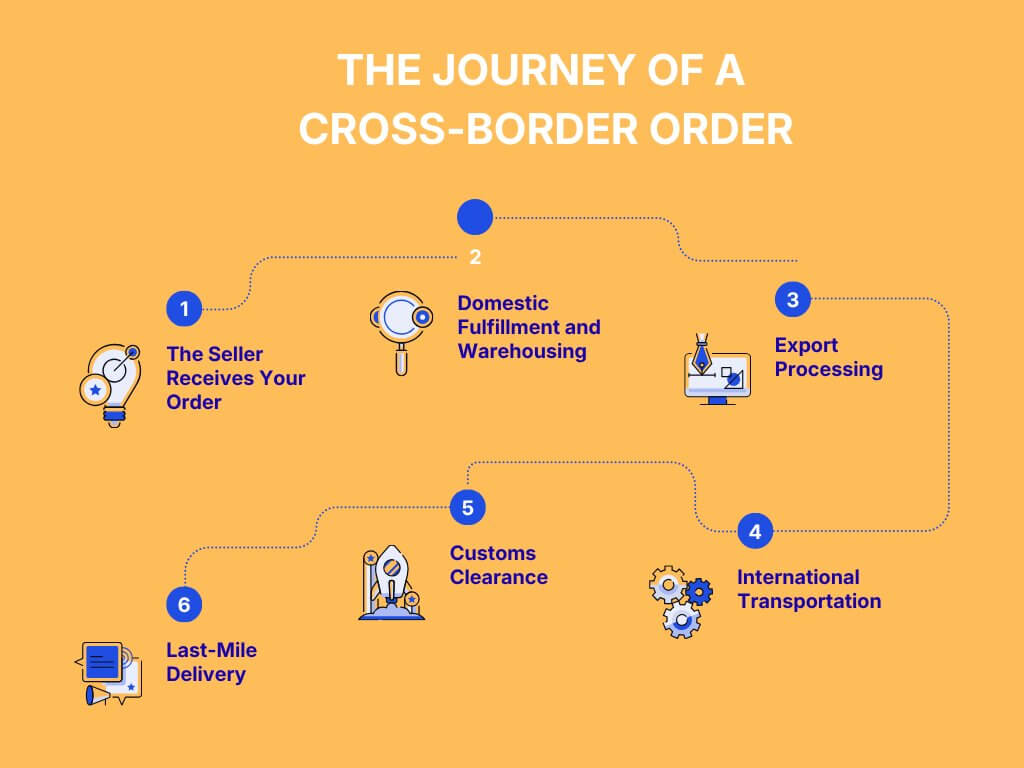
Step 1. The Seller Receives Your Order
The process begins as soon as a customer completes a purchase.
The seller verifies the payment, confirms product availability, and creates the order in its fulfillment system. Before anything can be shipped, the business needs to make sure the correct items are in stock and ready to be prepared for dispatch.
For companies handling large order volumes, much of this process is automated to reduce errors and speed up fulfillment.
Step 2. Domestic Fulfillment and Warehousing
Once the order is confirmed, warehouse staff locate the product, inspect it if necessary, and prepare it for shipping.
The item is picked from inventory, securely packed, labeled, and sorted with other outgoing shipments. During this stage, businesses also generate shipping labels and the documentation required for export.
How efficiently a warehouse operates has a direct impact on delivery speed. Delays at this point can affect every stage that follows.
Step 3. Export Processing
Before goods can leave the country of origin, they must meet export requirements.
Depending on the shipment, this may involve commercial invoices, customs declarations, export permits, or other supporting documents. Logistics providers also coordinate with carriers to prepare the shipment for international transport.
Only after these checks are completed can the package continue its journey overseas.
Step 4. International Transportation
This is the part of the journey most people associate with international shipping.
Packages travel by air, sea, rail, or road, depending on the destination, shipping method, and delivery timeline. Air freight offers faster delivery but generally costs more, while ocean freight is often chosen for larger or less time-sensitive shipments.
Throughout this stage, tracking information is updated as the shipment moves between transportation hubs.
Step 5. Customs Clearance
When the shipment arrives in the destination country, it enters customs for inspection.
Authorities review the accompanying documents, verify the declared value, and determine whether duties, taxes, or additional inspections are required. If everything is in order, the shipment is released to the local delivery network.
Incomplete paperwork or incorrect declarations are among the most common reasons international shipments are delayed at this stage.
Step 6. Last-Mile Delivery
The final stage begins after customs clearance.
A local courier receives the shipment, transports it to the destination area, and delivers it to the customer. Although this is the shortest part of the journey geographically, it's often considered one of the most important because it directly shapes the customer's delivery experience.
Once the package arrives safely, the cross-border logistics process is complete.
Read more: Best Cross-Border E-Commerce Platforms for International Shopping
Cross Border Logistics vs International Shipping
The terms cross-border logistics and international shipping are often used interchangeably, but they don't describe the same thing. Shipping focuses on moving goods between countries, while logistics covers the planning and coordination required to make that movement possible.
Aspect | Cross Border Logistics | International Shipping |
Scope | Manages the entire movement of goods across borders | Focuses on transporting goods from one country to another |
Main Activities | Warehousing, inventory management, export documentation, customs, transportation, last-mile delivery | Freight transportation and carrier services |
Parties Involved | Warehouses, customs authorities, freight forwarders, carriers, distributors, local couriers | Shipping carriers and freight companies |
Goal | Deliver products efficiently while balancing cost, speed, and compliance | Move shipments between countries |
Best For | Businesses managing international supply chains and ecommerce fulfillment | Individuals or businesses sending international shipments |
In simple terms, international shipping is one stage within the broader cross border logistics process.
For example, a package may spend several days being picked, packed, documented, and cleared through customs before it even boards a plane. After arriving in the destination country, it still needs to move through a local delivery network before reaching the customer. Every activity before and after transportation falls under cross border logistics rather than shipping alone.
Understanding the distinction helps businesses identify where delays, unexpected costs, or operational bottlenecks are occurring. A shipment may arrive late because of customs documentation or warehouse processing not because the transportation itself was slow.
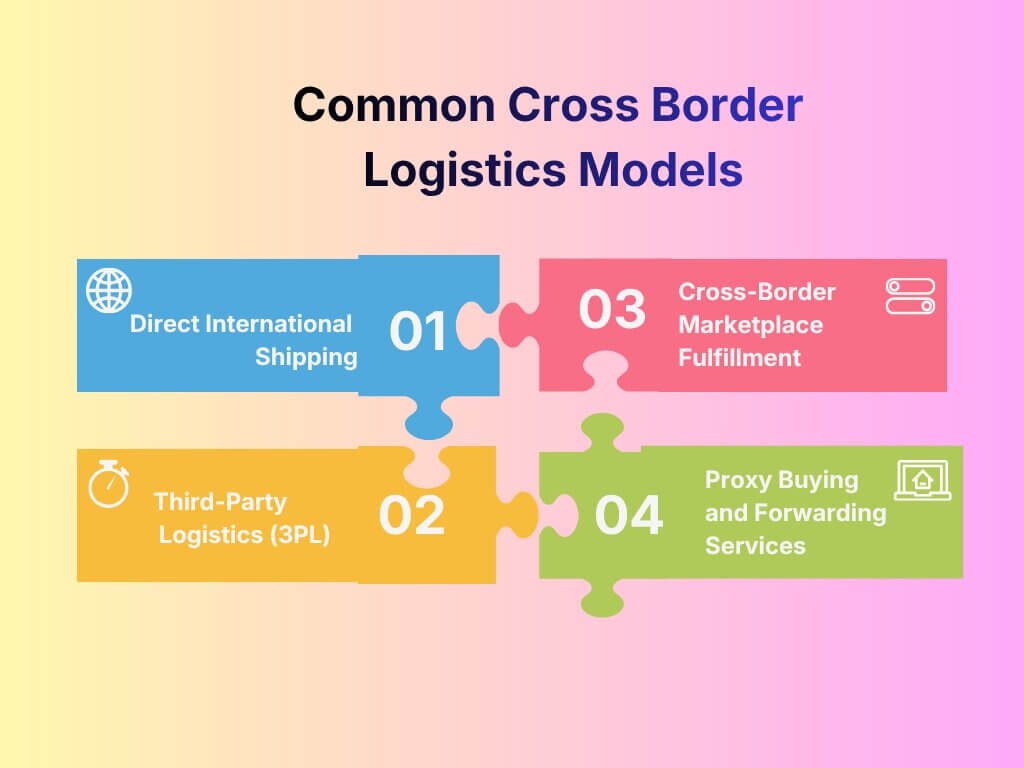
Common Cross Border Logistics Models
Not every international shipment follows the same logistics model. The right approach depends on who's selling the product, where inventory is stored, and how the goods are delivered across borders.
Here are four of the most common models used in global commerce today.
Direct International Shipping
With direct international shipping, the seller ships products straight from its own warehouse to customers in another country.
This model gives businesses complete control over inventory and fulfillment while keeping the supply chain relatively simple. It's commonly used by brands that already have the resources to manage international shipping, customs documentation, and customer support on their own.
The downside is that every international order must be processed individually, which can become expensive as shipping volumes grow.
Cross-Border Marketplace Fulfillment
Many online marketplaces have built their own fulfillment networks to simplify international selling.
Instead of handling warehousing and shipping themselves, merchants send inventory to the marketplace's fulfillment centers. Once a customer places an order, the marketplace manages picking, packing, international shipping, customs coordination, and final delivery.
This model reduces operational work for sellers while giving customers faster and more predictable delivery times.
Third-Party Logistics (3PL)
A third-party logistics provider, often called a 3PL, manages logistics operations on behalf of a business.
Services typically include inventory storage, warehouse management, order fulfillment, transportation, and returns. Many ecommerce brands rely on 3PL partners as they expand into new markets because it allows them to scale internationally without building their own logistics infrastructure.
Different providers specialize in different regions, so businesses often work with multiple 3PL partners to support global operations.
Proxy Buying and Forwarding Services
Not every cross-border purchase starts with an international checkout.
Take Japan market as an example. Many products sold through local marketplaces and specialty stores are intended for domestic customers only. A shopper overseas may find exactly what they're looking for, only to discover that the seller doesn't ship internationally or accept overseas payment methods.
This is where proxy buying and forwarding services fit into the broader cross border logistics ecosystem.
Instead of purchasing the product yourself, a proxy service buys it on your behalf using a local account and payment method. The order is delivered to a warehouse in the seller's country, where it can be inspected, consolidated with other purchases if needed, and prepared for international shipping.
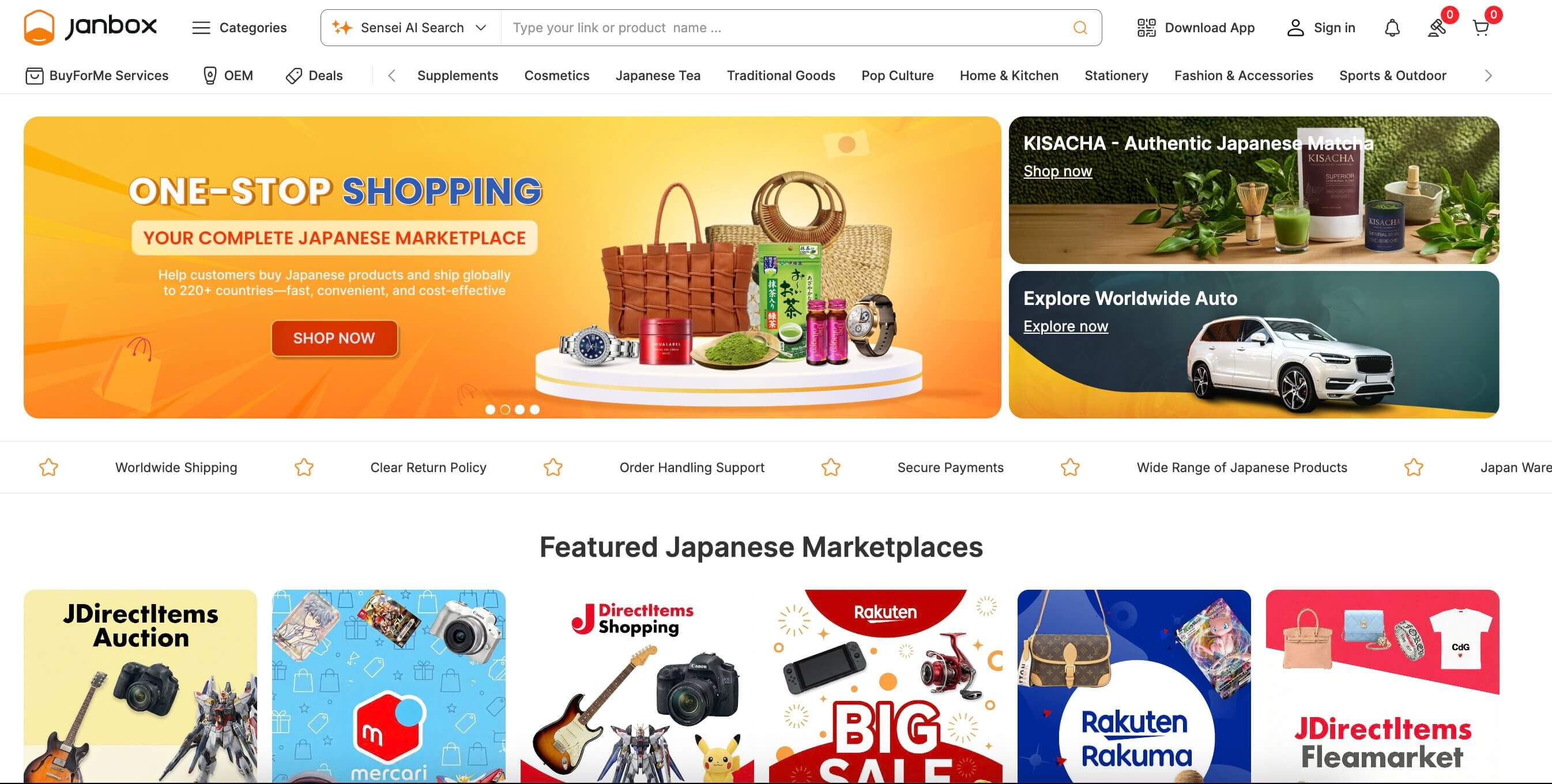
Janbox follows this model for shoppers buying from Japan. It gives overseas customers access to domestic marketplaces and retailers that would otherwise be difficult to purchase from directly. After you submit the product link, Janbox handles the purchase, receives the item at its warehouse in Japan, and arranges international forwarding to your destination.
This model is especially useful for Japan-only products, limited-edition releases, regional specialties, and marketplace listings that aren't available through traditional cross-border retailers. By connecting domestic sellers with international buyers, proxy buying services fill a gap that standard international shipping alone cannot solve.
Read more: The Ultimate Guide to Japan Proxy Shopping: Smart Way to Buy from Japan
How Businesses Improve Cross Border Logistics Performance
Cross-border logistics rarely stays the same as a business grows. Shipping a handful of international orders is very different from managing hundreds or thousands every day.
To keep deliveries reliable while controlling costs, businesses continuously refine different parts of their logistics operations. Here are some of the most common strategies.
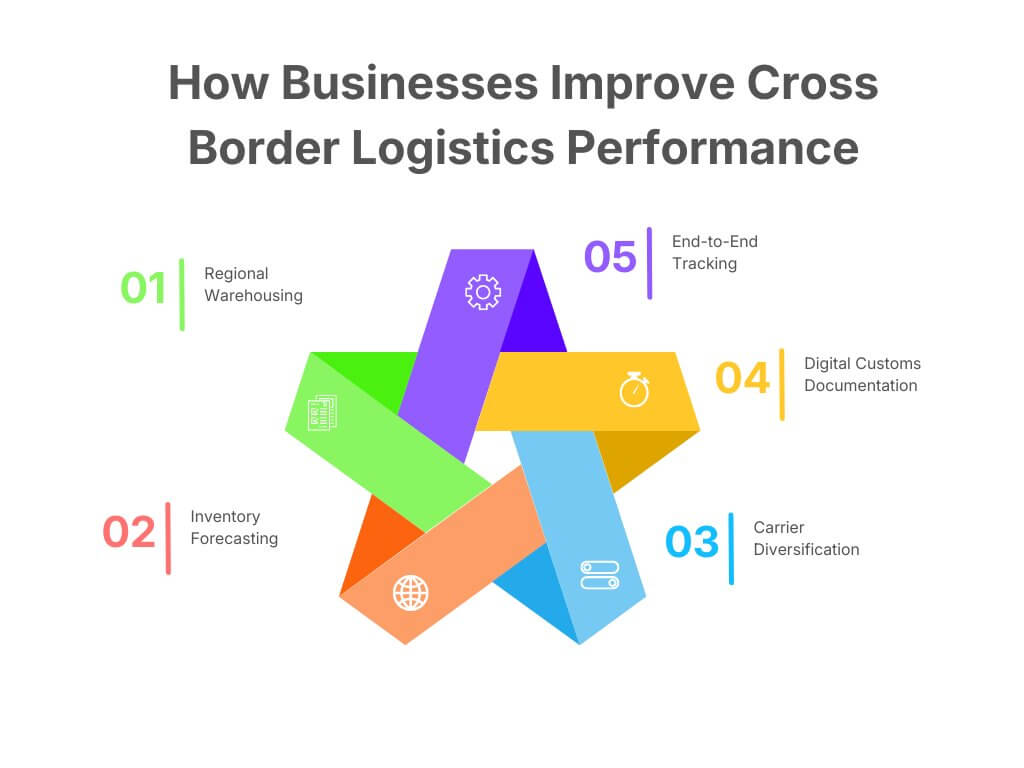
Regional Warehousing
Storing inventory closer to customers can significantly reduce delivery times.
Instead of shipping every order from a single country, many businesses distribute inventory across regional warehouses. For example, a company selling to customers in North America, Europe, and Asia may operate fulfillment centers in each region to shorten transit times and reduce shipping costs.
Regional warehousing also provides greater flexibility during peak seasons when international shipping networks experience higher demand.
Inventory Forecasting
Running out of stock is expensive, but overstocking creates its own problems.
Inventory forecasting uses historical sales data, seasonal demand, and purchasing trends to estimate how much inventory should be stored in each warehouse. Better forecasting helps businesses avoid stock shortages while reducing unnecessary storage costs.
For companies operating across multiple countries, accurate forecasting also minimizes emergency shipments, which are often far more expensive than planned inventory replenishment.
Carrier Diversification
Relying on a single shipping carrier can create unnecessary risk.
Weather disruptions, customs delays, labor shortages, or capacity constraints can affect any logistics provider. By working with multiple carriers, businesses can compare shipping rates, choose the most suitable service for each destination, and switch providers more easily when unexpected issues arise.
This flexibility often leads to more consistent delivery performance across different markets.
Digital Customs Documentation
Customs paperwork remains one of the most common causes of international shipping delays.
Many businesses now generate commercial invoices, customs declarations, and shipping documents digitally instead of relying on manual processes. Digital documentation reduces data entry errors, improves compliance, and speeds up customs clearance by providing more accurate shipment information.
As more customs authorities adopt electronic processing systems, digital documentation continues to play a larger role in cross-border trade.
End-to-End Tracking
Customers expect visibility long before a package arrives at their door.
End-to-end tracking allows businesses to monitor shipments throughout the entire logistics journey, from warehouse dispatch and international transportation to customs clearance and final delivery. Instead of relying on updates from a single carrier, businesses can identify delays earlier and respond before they become larger customer service issues.
For customers, better tracking creates transparency. For businesses, it provides valuable operational data that can be used to improve future shipping performance.
The Future of Cross Border Logistics: Trends to Watch
Cross-border logistics has changed dramatically over the past decade. Faster delivery is only one part of the story. Businesses are also adapting to shifting consumer behavior, more complex supply chains, and growing pressure to improve efficiency without driving up costs. Several industry trends are shaping how international logistics is evolving.
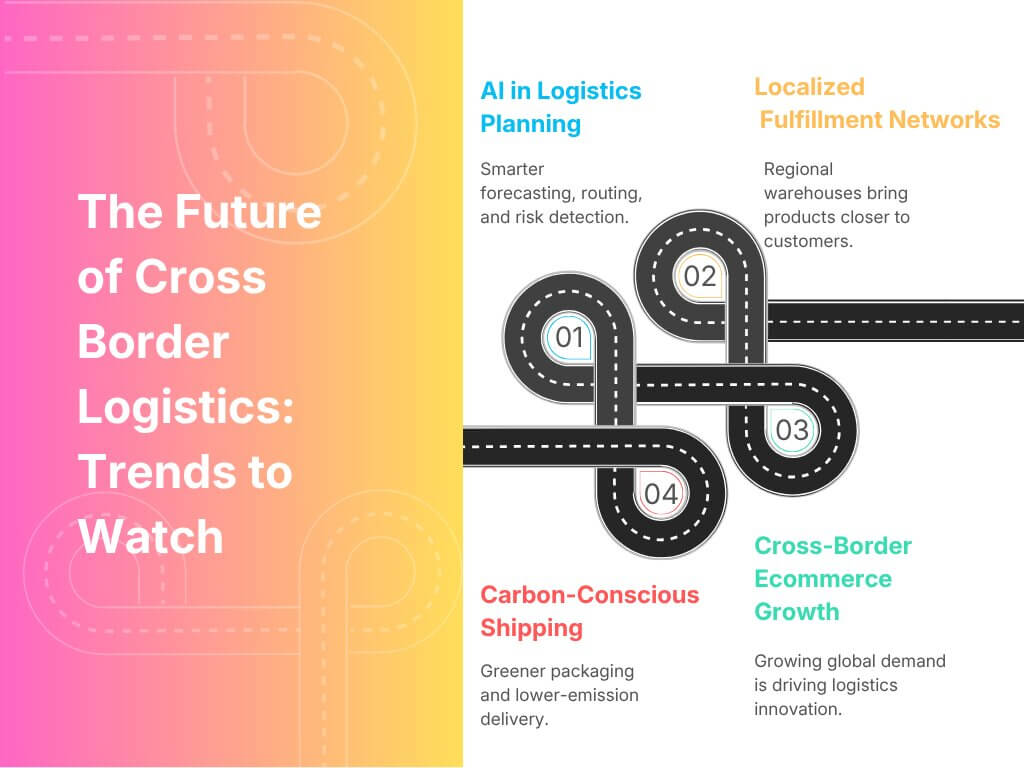
AI in Logistics Planning
One of the biggest shifts is the move from reactive logistics to predictive logistics.
In the past, logistics teams often responded after problems appeared. A shipment was delayed, inventory ran low, or a port became congested, forcing businesses to make quick decisions under pressure. AI makes it possible to spot many of those issues earlier by analyzing large volumes of operational data.
For example, AI can flag unusual demand patterns before a warehouse runs out of stock, suggest alternative shipping routes when disruption is likely, or estimate delivery delays based on weather and carrier performance. With earlier visibility, logistics teams have more time to adjust their plans instead of reacting at the last minute. That often leads to fewer delivery disruptions, better inventory planning, and more predictable shipping performance.
Localized Fulfillment Networks
Not every product needs to cross an ocean every time someone places an order. Many international retailers now import inventory in bulk and position it inside regional fulfillment centers before orders are placed. When a customer makes a purchase, the package is shipped from a warehouse much closer to its destination instead of travelling halfway around the world.
This approach shortens delivery times, reduces repeated customs procedures, and lowers transportation costs. It also gives businesses more flexibility because inventory can be distributed across multiple regions instead of relying on a single warehouse.
Carbon-Conscious Shipping
Ask a logistics provider what customers expected ten years ago, and the answer would probably be simple: lower prices and faster delivery. Those expectations haven't disappeared, but another factor has joined the conversation.
Businesses are paying much closer attention to the environmental impact of shipping. As a result, logistics providers are reviewing almost every part of the delivery process, including:
Choosing shorter and more fuel-efficient routes.
Reducing packaging weight and material waste.
Expanding electric and low-emission delivery fleets.
Measuring and reporting shipment emissions.
These changes support sustainability goals while improving operational efficiency. In many cases, using less fuel and less packaging also helps reduce long-term operating costs.
Cross-Border Ecommerce Growth
You know, shopping across borders has become part of everyday online buying. Instead of limiting their search to local retailers, consumers now compare products globally and are willing to order from another country if they find better prices, exclusive products, or a brand they trust. That change has increased the volume of international shipments and raised expectations for the entire delivery experience.
For logistics providers, that means international shipping must feel just as predictable as domestic delivery. Faster customs clearance, better shipment tracking, stronger fulfillment networks, and closer coordination between logistics partners are all becoming essential for supporting the next stage of cross-border ecommerce growth.
Conclusion
International shopping may look simple from the customer's perspective, but every successful delivery depends on a carefully coordinated logistics network operating behind the scenes.
From warehousing and export processing to customs clearance and last-mile delivery, each stage plays a role in moving products safely and efficiently across borders. Understanding how cross border logistics works helps businesses improve their operations and gives consumers a clearer picture of what happens after they click "Place Order."
As global ecommerce continues to grow, efficient cross-border logistics will remain one of the key factors shaping customer experience, delivery performance, and international business success.
FAQs
Why is customs clearance important in cross-border logistics?
Customs clearance ensures shipments comply with the destination country's import regulations. Incomplete documentation or unpaid duties can delay or prevent a shipment from being delivered.
What are the most common cross border logistics models?
Businesses typically use direct international shipping, cross-border marketplace fulfillment, third-party logistics (3PL) providers, or proxy buying and forwarding services, depending on their products and target markets.
How can businesses improve cross border logistics performance?
Common strategies include using regional warehouses, improving inventory forecasting, working with multiple carriers, digitizing customs documentation, and implementing end-to-end shipment tracking.
How does a proxy buying service fit into cross-border logistics?
A proxy buying service helps international customers purchase products from domestic sellers that don't ship overseas. The service buys the item locally, receives it at a warehouse, and arranges international forwarding to the customer's destination.
Table of Contents
Related Posts