Top 14 Japanese House Products for Smarter Everyday Living
A good household product does not need to be complicated. Sometimes it is a better rice-washing bowl, a storage rack that fits into an unused gap, or a laundry hanger that takes up less room.
That practical thinking shows up across many Japanese house products, especially in kitchenware, storage and organization, cleaning tools, laundry accessories, and bathroom goods. Many are made to handle small everyday tasks with less mess, less wasted space, or fewer steps.
In this guide, we look at 14 Japanese house products across these categories, including what each one is useful for and what to check before buying. We also cover which products are worth shipping overseas and how to order them from Japan.
Why Are Japanese Household Products So Practical?
Japanese household products often stand out because they are designed around small, specific problems that come up in everyday life. Instead of making one tool do everything, many products focus on making a single task simpler, cleaner, or less awkward.
A few characteristics show up again and again:
Designed for a specific task: You will find dedicated tools for washing rice, simmering food, cleaning window tracks, drying small laundry items, and organizing narrow spaces.
Made with limited space in mind: Slim storage, stackable containers, hanging organizers, and foldable products help use areas that might otherwise sit empty.
Small details have a purpose: A rice-washing bowl adds drainage holes, laundry hangers fold away after use, and cleaning brushes come in shapes designed to reach particular gaps.
Everyday routines influence the design: Items such as otoshibuta, saibashi, bath stools, and fukin developed around household habits that are common in Japan.
Simple products can have several variations: The same basic item may come in different sizes, materials, shapes, or configurations depending on where and how it will be used.
This practical approach is also connected to the way many Japanese homes use space. Rather than relying only on larger furniture or storage units, household products often make use of walls, shelves, narrow gaps, cabinet interiors, and other small areas already available in the home.
That is why some of the most interesting Japanese house products can look surprisingly ordinary at first. Their appeal often becomes clearer once you see the small everyday problem each one was designed to solve.
14 Japanese House Products Worth Buying
The most interesting Japanese household finds are often simple products made for a very specific job. Rather than filling this list with general furniture or decor, these 15 picks focus on items that can genuinely make cooking, storage, cleaning, laundry, and bathing a little easier.
Japanese Kitchen Products
Japanese kitchens are a great place to start because many tools are closely tied to the way food is prepared and cooked in Japan.
1. Japanese Teapot (Kyusu)
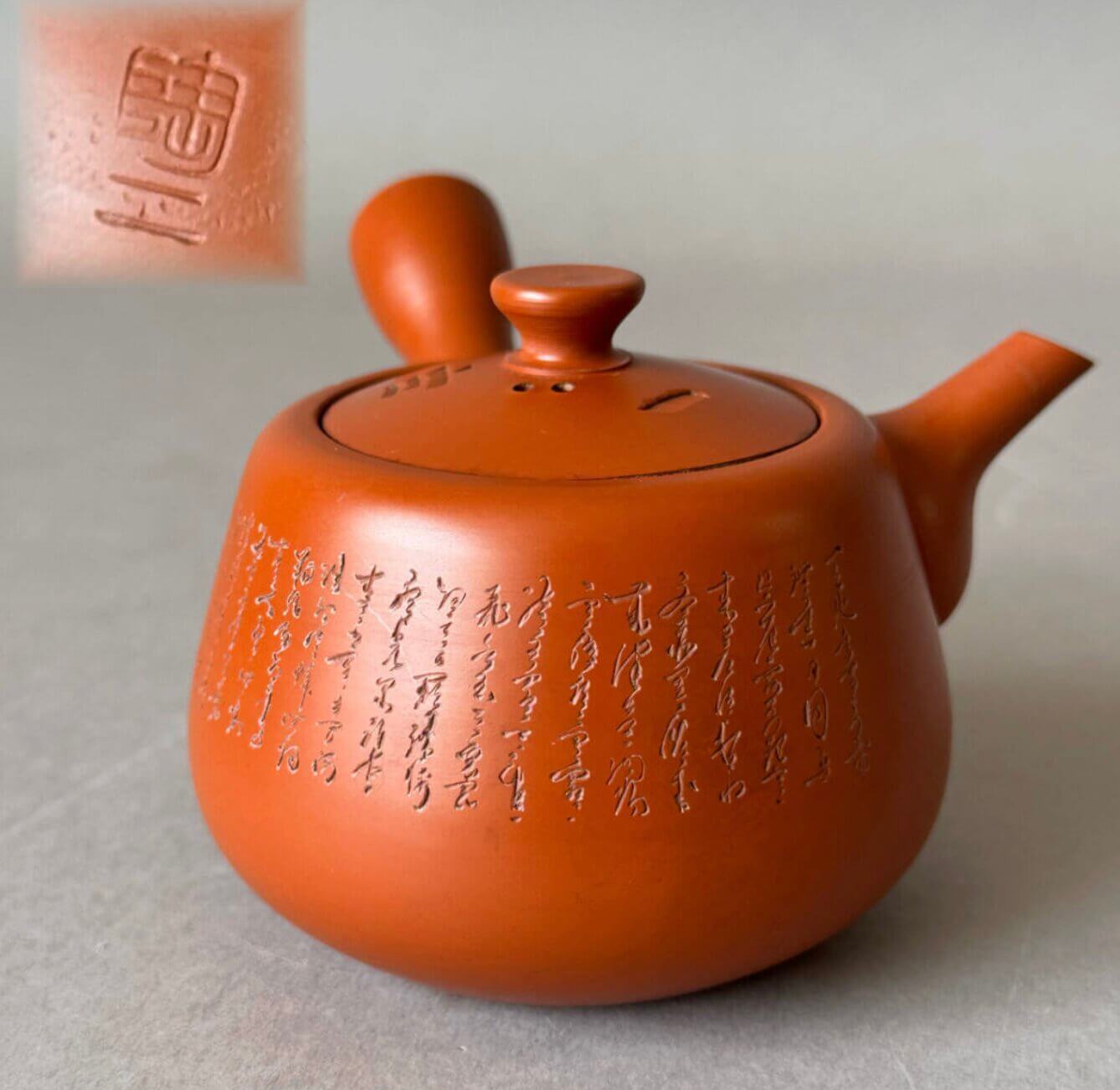
A kyusu is a traditional Japanese teapot commonly used for brewing loose-leaf green teas such as sencha. Many designs include a built-in strainer, making it easy to separate the leaves while pouring.
When choosing one, check the capacity, material, handle style, and strainer type. Smaller pots work well for individual servings, while clay, porcelain, and ceramic versions can offer different brewing and care requirements.
2. Tamagoyaki Pan
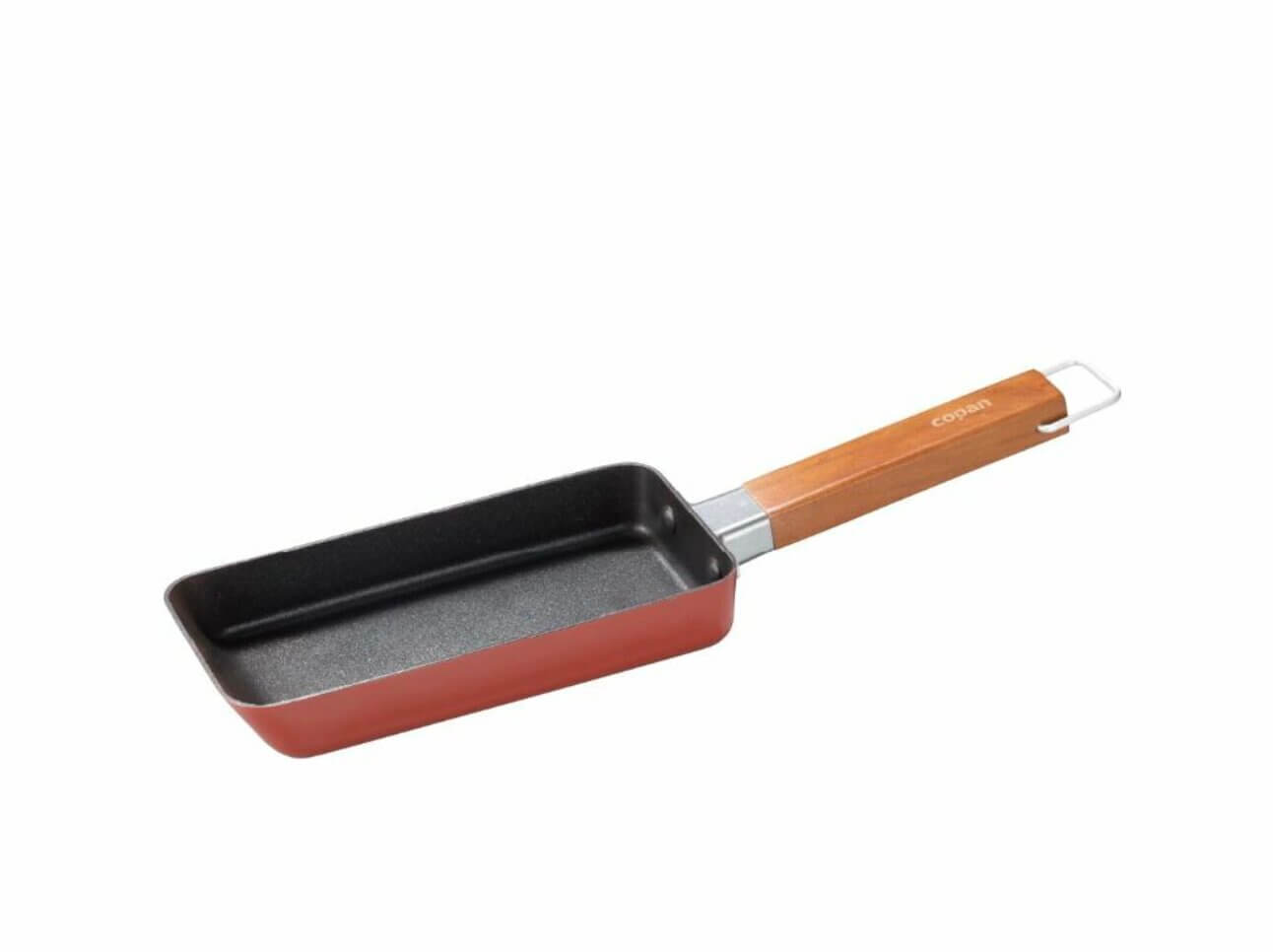
A tamagoyaki pan is the rectangular or square pan traditionally used to make Japanese rolled omelets. Its straight sides make it easier to fold each layer into the familiar rectangular shape.
You do not have to make tamagoyaki every morning to use one, though. Smaller versions can also be handy for single portions, eggs, small pieces of fish, or quick side dishes.
Look at the pan's size and material before buying. Aluminum, iron, and copper versions behave differently when heating and require different levels of care.
3. Saibashi Cooking Chopsticks
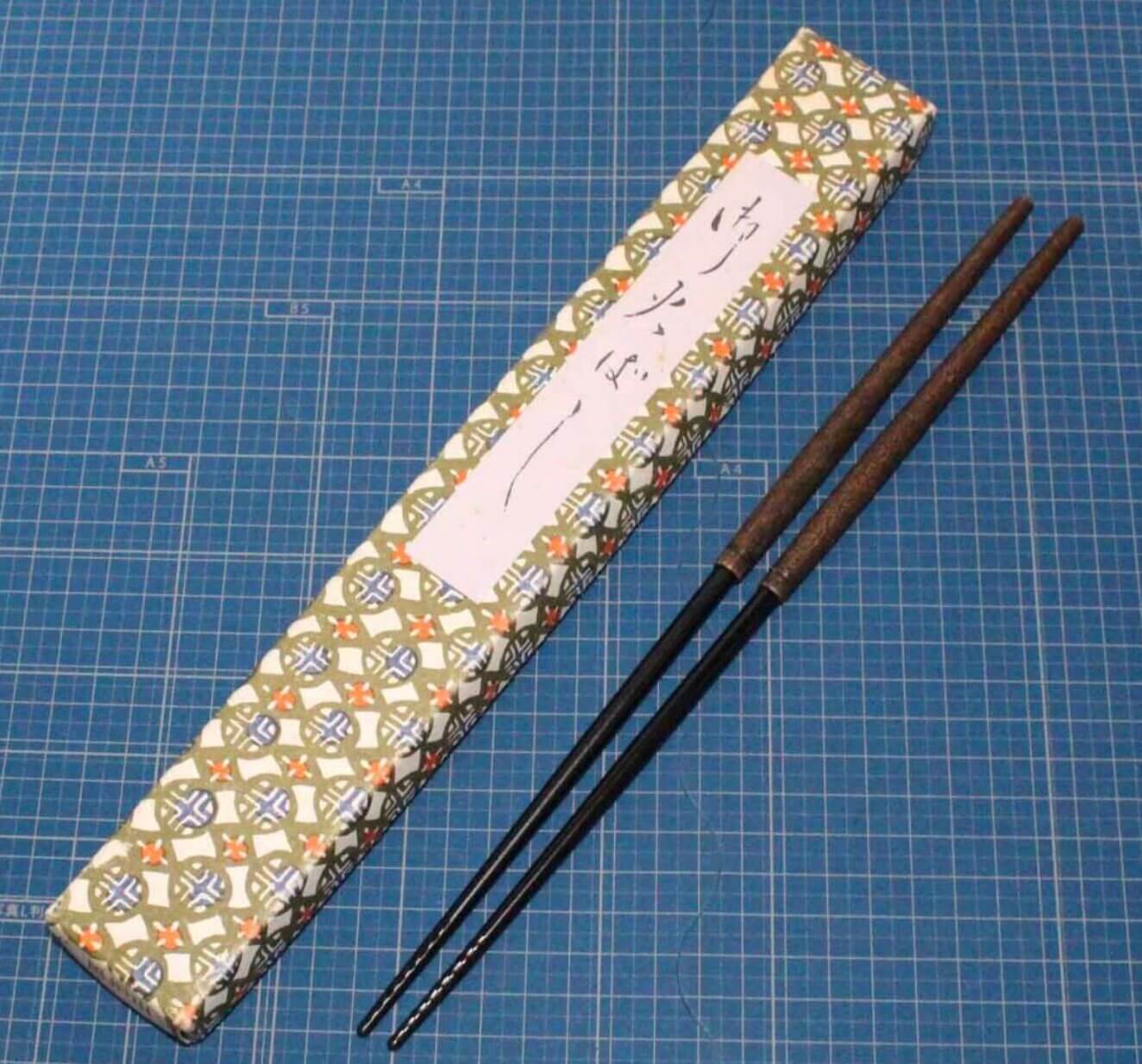
Saibashi are longer than regular eating chopsticks and are intended for cooking rather than serving at the table.
Their extra length makes them useful for:
Turning food in a pan
Handling ingredients while frying
Mixing and stirring
Picking up small pieces without reaching for larger utensils
They are particularly handy when tongs feel too bulky for the job.
4. Otoshibuta Drop Lid
An otoshibuta is a drop lid placed directly on top of food while it simmers, rather than sitting on the rim of the pot like a conventional lid.
It helps simmering liquid circulate around the ingredients while keeping food from moving around too much. This can promote more even cooking and help flavors spread through dishes such as simmered vegetables, fish, and meat.
Traditional versions are made from wood, while modern options also come in stainless steel, silicone, and adjustable designs.
5. Japanese Grater
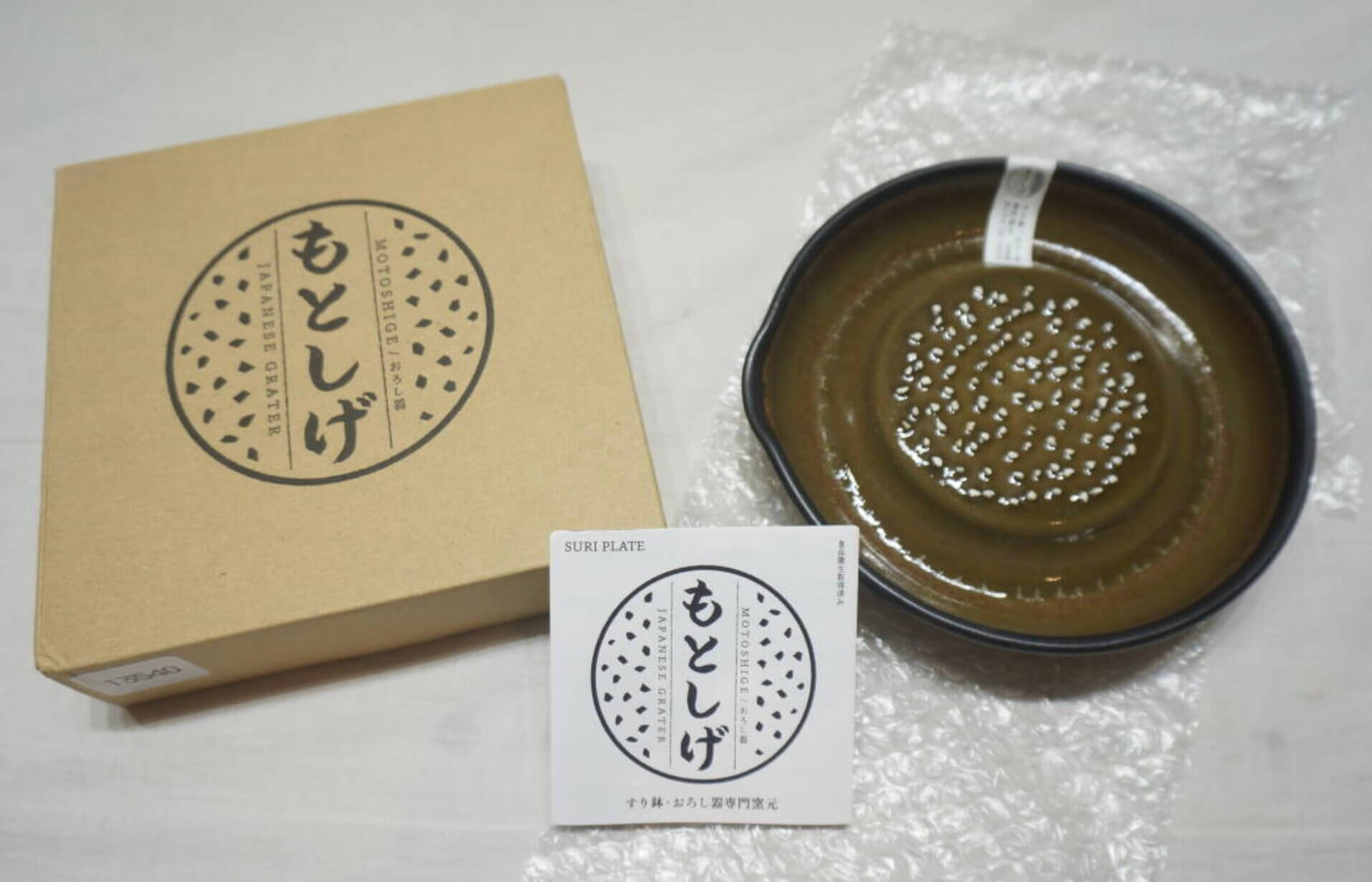
Japanese graters are commonly used for ingredients such as daikon, ginger, garlic, and wasabi, depending on the type of grater.
Traditional metal oroshigane can have sharp teeth that produce a very fine texture, while inexpensive plastic and stainless-steel versions are designed for straightforward everyday cooking.
Before choosing one, think about what you actually plan to grate. The tooth pattern, size, and material can make a noticeable difference to the finished texture.
Japanese Storage and Organization Products
Japanese storage products become particularly interesting when you stop looking only at boxes and start looking at unused spaces around the home.
6. Slim Gap Storage
That narrow gap beside the refrigerator or washing machine does not necessarily have to stay empty. Slim storage units are designed specifically for spaces that are too narrow for conventional shelving.
Common locations include:
Beside refrigerators
Between washing machines and walls
Alongside cabinets
In narrow bathroom spaces
Measure the gap carefully before ordering. A difference of just a few centimeters can determine whether the product fits at all.
7. Magnetic Storage Racks
Magnetic racks, shelves, hooks, and holders turn suitable vertical surfaces into storage without requiring permanent installation.
In the kitchen, they can hold spices, paper towels, utensils, or small accessories. In bathrooms and laundry areas, similar systems can keep frequently used items off countertops.
Check both the product dimensions and your intended surface first. A magnetic organizer is only useful when the wall or appliance can actually hold it securely.
8. Under-Shelf Storage Baskets
Under-shelf baskets slide or hook beneath an existing shelf, creating another storage layer without adding another cabinet or taking up floor space.
They work well for lightweight items such as kitchen cloths, wraps, small containers, or household accessories. They are especially useful when a cupboard has plenty of vertical space between shelves that would otherwise go unused.
Japanese Cleaning Products
Japanese cleaning aisles are full of tools designed for specific surfaces, corners, and household jobs rather than one brush for everything.
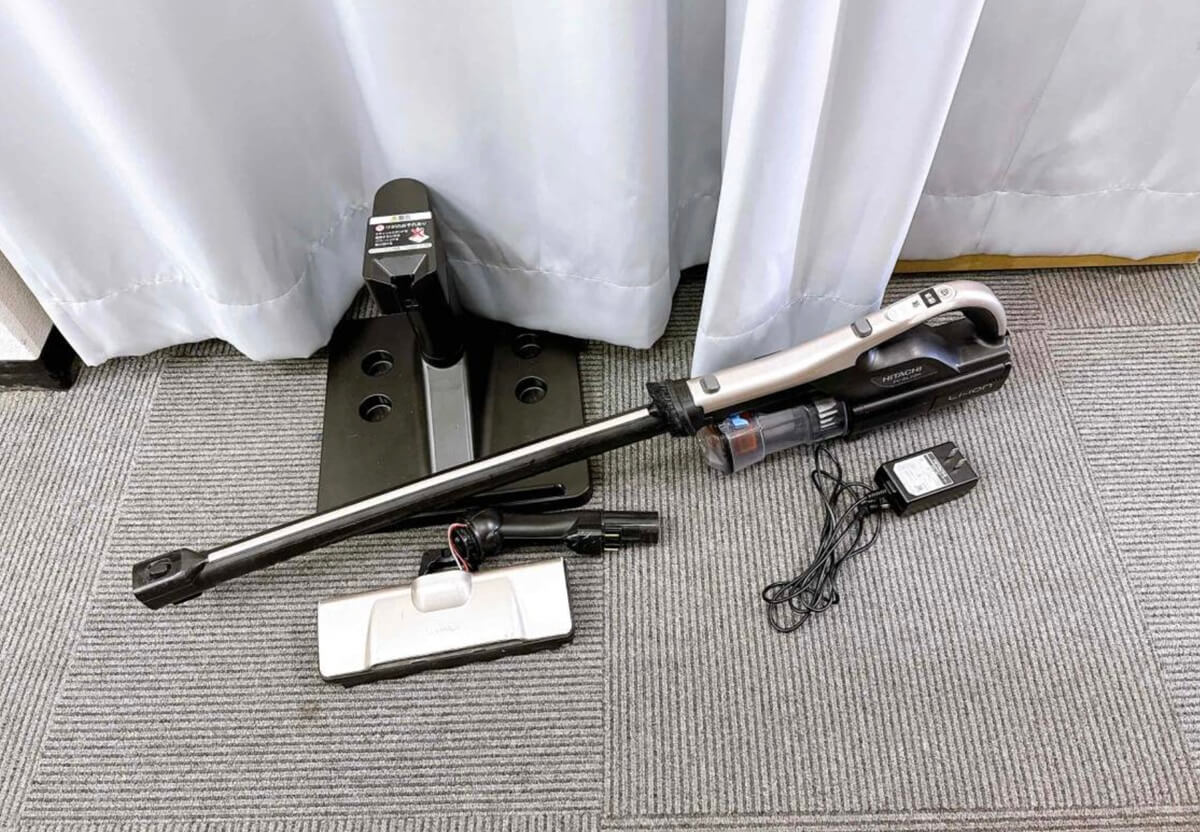
9. Japanese Vacuum Cleaner
Kamenoko tawashi is a traditional Japanese scrubbing brush, recognizable by its compact oval shape. Depending on the material and type, these brushes can be used for kitchen cleaning, suitable cookware, sinks, and even scrubbing soil from certain vegetables.
The important part is choosing the right brush for the job. Some fibers can be too abrasive for delicate or coated surfaces, so check the brush material and recommended uses before scrubbing.
10. Fukin Kitchen Cloth
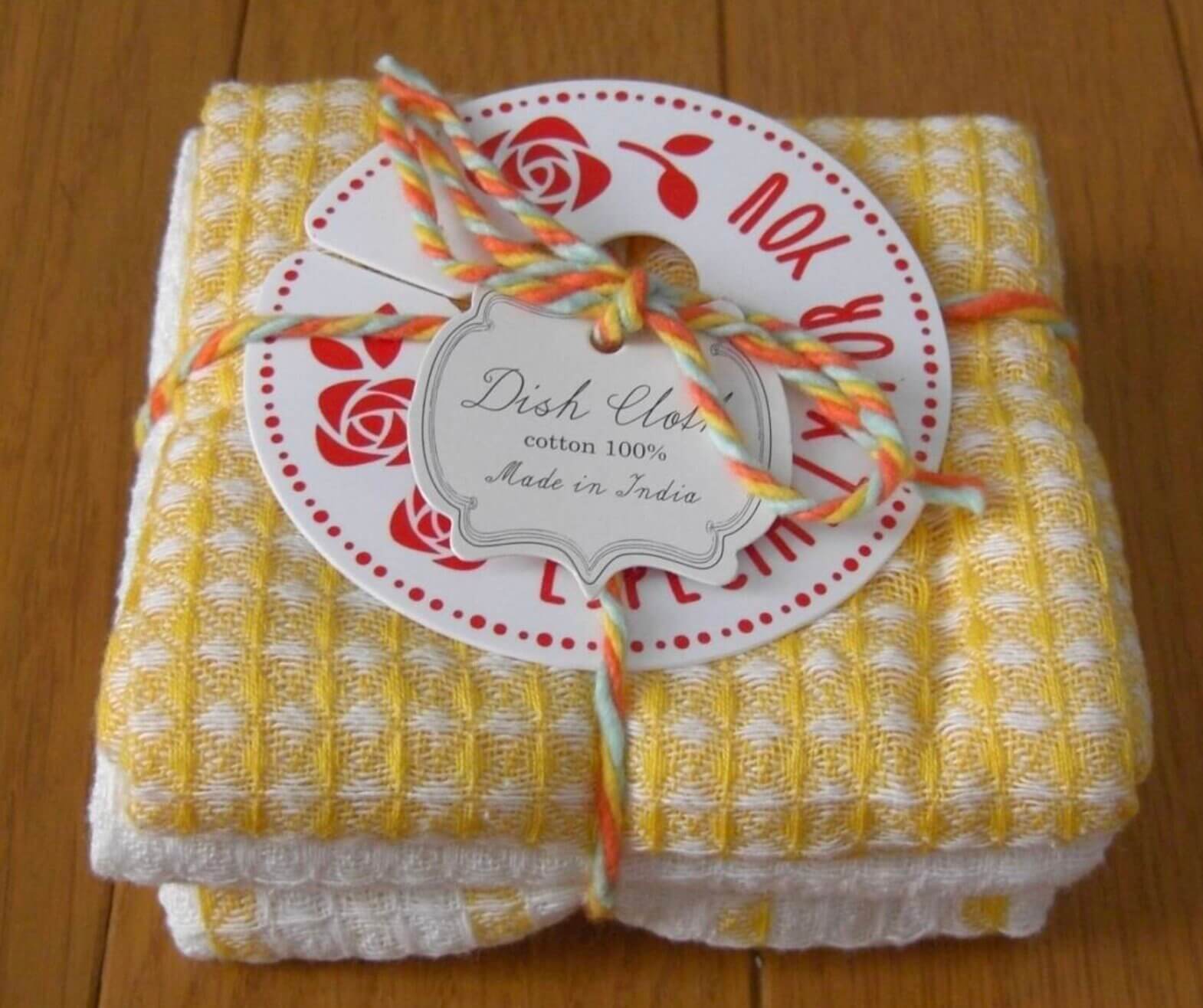
Fukin is a Japanese kitchen cloth used for everyday wiping and cleaning. Depending on the type, it may be used for countertops, dishes, tables, or general kitchen work.
One variety worth knowing is kaya fukin, traditionally made using layers of loosely woven fabric. The cloth becomes softer with use and is valued for its absorbency and quick drying.
Fukin are also relatively small and lightweight, making them one of the easier Japanese household products to add to an overseas order.
11. Detail Cleaning Brushes
Some cleaning jobs are annoying simply because an ordinary sponge or brush cannot reach them. Japanese stores carry an extensive range of narrow and specially shaped brushes for areas such as:
Window tracks
Drains
Grooves
Around faucets
Tight bathroom corners
Small gaps between fixtures
This is perhaps the clearest example of the Japanese household approach mentioned earlier: identify one irritating little job and make a tool specifically for it.
Japanese Laundry Products
When laundry has to dry in a limited area, products that hold more clothes while taking up less space become particularly useful.
12. Laundry Nets
Laundry nets are not exclusive to Japan, but Japanese stores offer an impressive range designed around different garments and washing needs.
Instead of grabbing the first net you see, consider:
Garment: Shirts, bras, sweaters, or small items may need different shapes.
Mesh: Finer mesh provides more protection.
Size: Clothes should have enough room inside rather than being tightly packed.
Shape: Flat, cylindrical, structured, and other designs suit different loads.
For delicate clothing, choosing the right net can be more useful than simply buying a multipack of identical sizes.
Japanese Bathroom Products
Japanese bathing habits have also produced household items that may look unfamiliar to shoppers overseas but make sense once you understand how they are used.
13. Japanese Shower Head
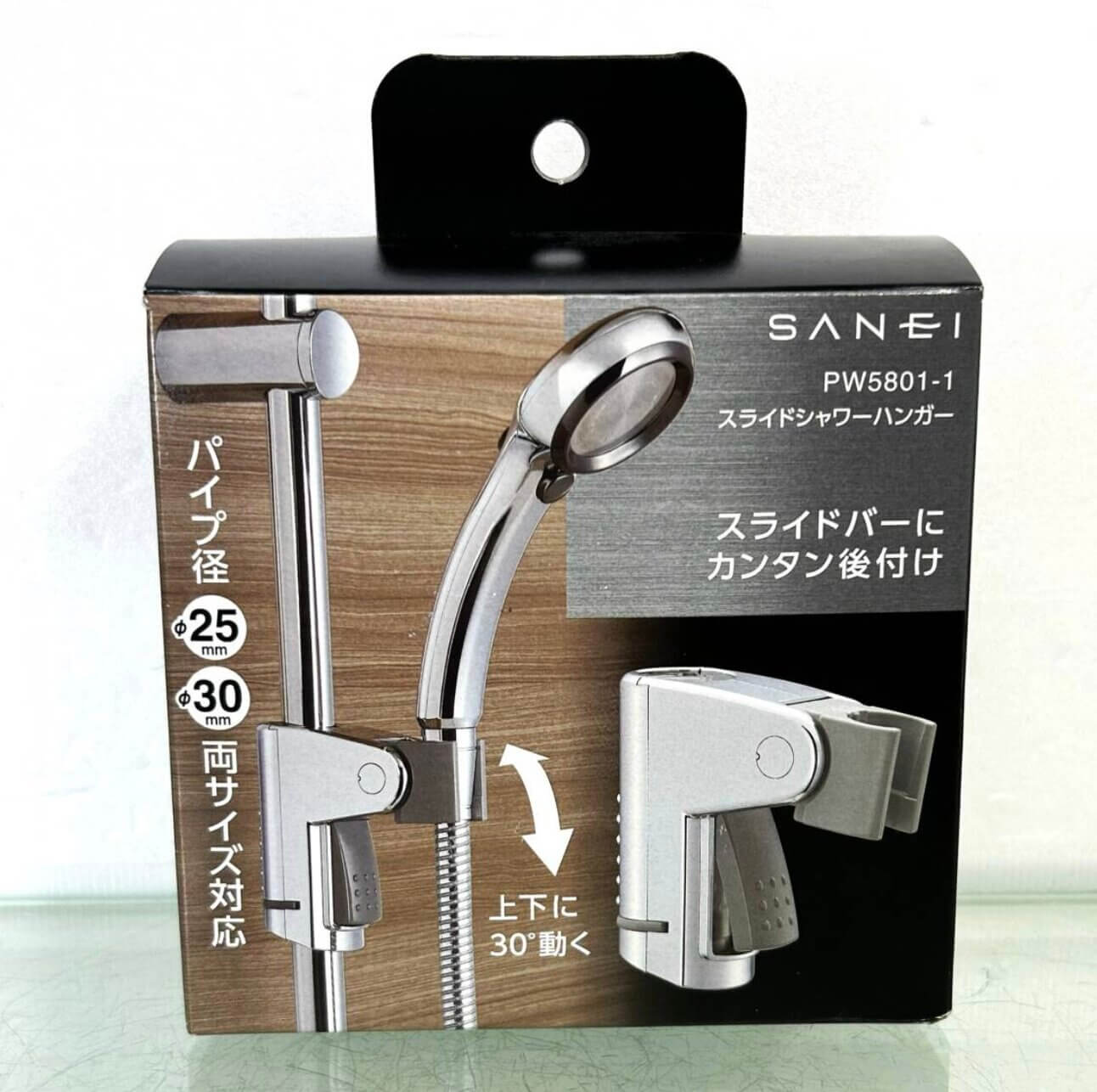
Japanese shower heads are a popular bathroom upgrade, with many models designed around water pressure, fine spray patterns, water-saving functions, and easy switching between spray modes. Some also include stop buttons that let you pause the water directly from the handle.
They are relatively compact, so they can also make more sense to order internationally than larger bathroom accessories. Before buying, check the connector size, included adapters, water pressure requirements, and compatibility with your existing shower hose.
14. Magnetic Bathroom Storage
Magnetic bathroom shelves, hooks, soap holders, and bottle racks help move toiletries away from the floor or edges of the bath.
Besides freeing up surface space, this can make it easier to clean around bottles and other bathroom products.
The catch is simple: not every bathroom wall is magnetic. Test your intended surface before ordering, then check the rack's dimensions and stated load capacity.
These 15 products vary considerably in size and price, and that matters when you are buying from another country. A small kitchen tool may be an easy addition to an international parcel, while a large organizer that looks inexpensive in Japan can become surprisingly costly once shipping is included.
Which Japanese House Products Are Worth Shipping Overseas?
Finding something cheaper in Japan does not automatically make it a good international purchase. For household products in particular, size, weight, fragility, and shipping restrictions can matter just as much as the retail price.
Product Type | Worth Considering? | Why |
Small kitchen tools | Yes | Compact and distinctive |
Laundry accessories | Yes | Usually lightweight |
Fukin and textiles | Yes | Small and easy to pack |
Compact organizers | Often | Depends on dimensions |
Ceramics | Depends | Fragile and needs careful packing |
Heavy cookware | Depends | Weight can raise shipping costs |
Cleaning liquids | Usually less practical | Heavy and may face shipping restrictions |
Large storage products | Usually no | Dimensional weight can make shipping expensive |
Small items tend to make the most sense. Saibashi, graters, fukin, laundry nets, and compact cleaning tools take up relatively little parcel space while giving you access to products or designs that may be harder to find locally.
Organizers need more thought. A ¥500 storage product may look like a better deal than a ¥3,000 kitchen tool, but not if it occupies five times as much space in the parcel. International carriers may charge based on dimensional weight, so a large lightweight product can still be expensive to ship.
Ceramics and cookware sit somewhere in the middle. They can be worth importing when you want a particular Japanese piece, but weight and protective packaging should be part of your buying decision from the beginning.
In short, do not judge an overseas purchase by the Japanese retail price alone. Compare what the product gives you against its likely shipping footprint and whether a similar item is already available in your country.
Why Can Japanese House Products Be Difficult to Buy from Overseas?
The product itself is often easy to find. The difficult part begins when you try to actually order it from outside Japan. Many interesting household products are sold through domestic retailers, marketplaces, home centers, and specialist shops whose purchasing systems are primarily built for Japanese customers.
Common problems include:
Domestic shipping only: Some Japanese sellers require a Japanese delivery address and do not offer international shipping.
Overseas checkout limitations: A store may accept orders online but not support certain foreign payment methods or overseas customer details.
Japanese-only product information: Specific household tools can be difficult to identify when listings use Japanese product names, measurements, and specifications.
Different products from different stores: You might find a kitchen tool from one retailer, laundry accessories from another, and storage products from a marketplace seller, creating several separate purchases.
Unclear international shipping eligibility: Liquids, aerosols, batteries, and certain other household products may be restricted depending on the carrier and destination.
Shipping costs are difficult to judge from the product price: Bulky organizers and other lightweight but large products can become much more expensive once dimensional weight is considered.
These barriers do not necessarily mean you have to limit your search to Japanese retailers with international storefronts. When a product is available domestically but the seller is not set up for overseas buyers, a cross-border shopping service can provide another way to access the Japanese market.
How to Buy Japanese House Products with Janbox
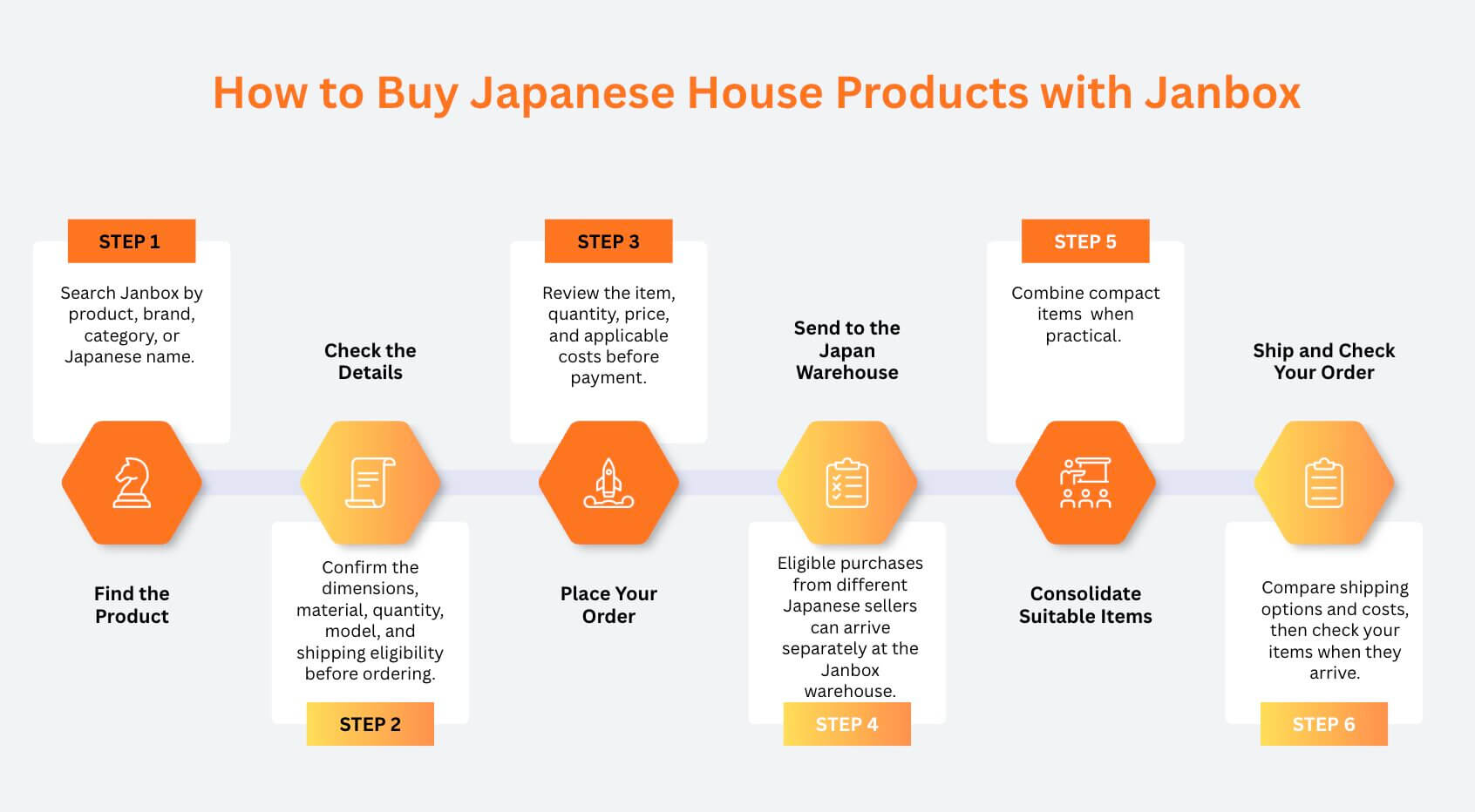
The barriers above become especially noticeable when your shopping list includes products from several domestic sellers. One store may not ship overseas, another may only accept Japanese customer details, while a marketplace listing may be difficult to purchase directly from your country.
Janbox is a cross-border marketplace that helps international shoppers access products sold across Japanese stores and marketplaces. For household shopping, it can be particularly useful when the products you want are available in Japan but difficult to purchase directly from overseas.
Step 1. Find the Product
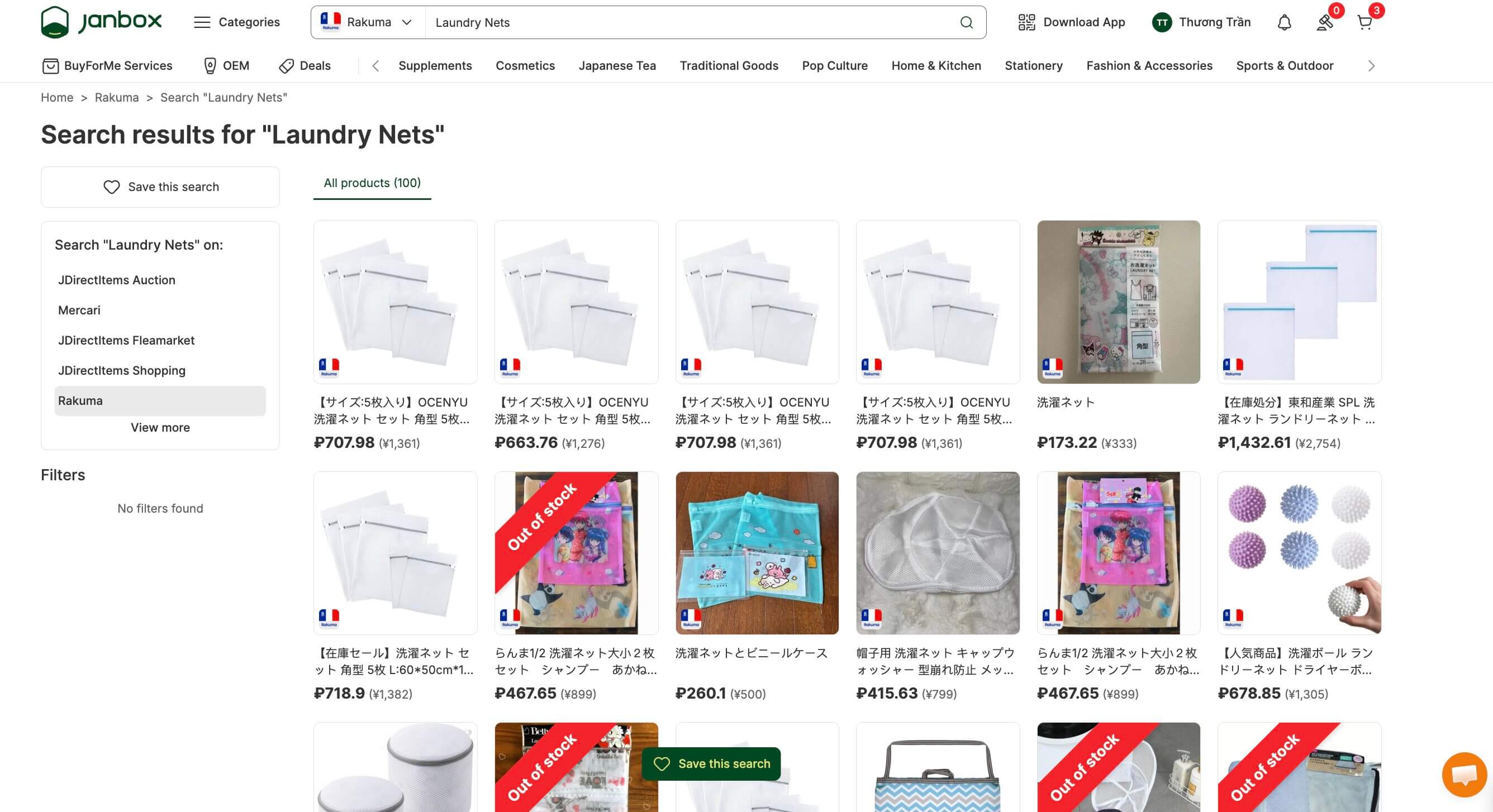
There are two ways to start your search.
You can search directly on Janbox using:
Product name
Brand
Japanese product name
Product category
Searching in Japanese can sometimes uncover domestic listings that are difficult to find with English keywords.
Already found exactly what you want on a Japanese website? Copy the product URL and paste it into the Janbox search bar instead of searching for the item again.
Step 2. Check the Product Details
Household products can look very similar in photos while differing considerably in size or specifications. Before ordering, check:
Dimensions: Especially important for storage products and organizers.
Material: Plastic, stainless steel, wood, silicone, ceramic, or other materials.
Quantity: Confirm whether the listing contains one item or a set.
Model or variation: Check size, color, shape, and other options.
Shipping eligibility: Confirm that the product can be shipped to your destination.
For electrical items, also check voltage, frequency, plug type, and other compatibility information.
Step 3. Place Your Order
Once you have confirmed the listing, place your order through Janbox.
Review the product, quantity, price, and applicable costs before payment. Do not let a low Japanese retail price be the only factor in your decision, particularly for bulky household goods.
Step 4. Receive Eligible Purchases at the Japan Warehouse
Eligible physical purchases are delivered to the Janbox warehouse in Japan.
This is useful when you are buying from several sources. Your kitchen tools, laundry accessories, and organizers may come from different Japanese sellers and arrive at the warehouse separately.
Step 5. Consolidate Suitable Household Products
Once eligible purchases arrive, consider which ones make sense to consolidate into the same international parcel.
Good candidates can include:
Small kitchen tools
Laundry accessories
Fukin and other textiles
Compact cleaning tools
Small household accessories
Do not consolidate simply because the option is available. Large, heavy, fragile, or awkwardly shaped products can change the parcel size and shipping cost considerably.
Step 6. Choose International Shipping and Check Your Order
Compare the available shipping methods based on package size, actual and dimensional weight, cost, delivery speed, and destination restrictions. For bulky household products, pay particular attention to dimensional weight, as a lightweight but oversized item can still be expensive to ship.
Once your parcel arrives, compare each item with the original listing. Check the model, dimensions, quantity, material, included parts, and overall condition, especially for fragile products or items with moving, magnetic, or folding components
Conclusion
The best Japanese house products are often simple items built around real household routines, from washing rice and organizing narrow spaces to drying laundry and keeping the bathroom tidy.
When buying directly from Japan, focus on products that offer something you cannot easily find locally and consider shipping practicality alongside the retail price. For products spread across domestic Japanese sellers, Janbox provides another route for purchasing eligible items and arranging their journey overseas.
FAQs
What Japanese house products are worth buying?
Small kitchen tools, fukin, laundry accessories, cleaning brushes, compact organizers, and other task-specific household products are good places to start. What is worth buying ultimately depends on local availability and international shipping costs.
What Japanese kitchen products are worth buying?
Popular options include rice-washing bowls, tamagoyaki pans, saibashi cooking chopsticks, otoshibuta drop lids, and Japanese graters. These products are closely connected to Japanese cooking methods and are generally compact enough to consider for overseas orders.
What are useful Japanese products for small homes?
Slim gap storage, under-shelf baskets, magnetic racks, foldable laundry hangers, and compact organizers can help use narrow or otherwise empty spaces without adding large furniture.
What is a Japanese fukin?
A fukin is a Japanese kitchen cloth used for wiping surfaces, dishes, tables, and other everyday kitchen tasks depending on the type. Kaya fukin is one well-known variety made from layers of loosely woven fabric.
Can I buy Japanese house goods as a foreigner?
Yes. Foreign shoppers can buy Japanese house goods, but some domestic stores may not accept overseas payments or ship internationally. With Janbox, you can access eligible products from Japanese stores and marketplaces, have them delivered to a warehouse in Japan, and arrange international shipping to supported destinations.
Are Japanese household products made in Japan?
Not necessarily. Products sold by Japanese brands or retailers may be manufactured in Japan or another country. Check the country of origin, often listed as 原産国, or look for 日本製, meaning Made in Japan.