Japan Wholesale Clothing Manufacturers Explained: What Buyers Should Know
If you're looking for Japan wholesale clothing manufacturers for your fashion brand, you've probably noticed that Japan isn't the cheapest place to produce apparel.
So why do so many brands still source clothing there?
The answer usually comes down to quality. Japan has earned a global reputation for premium textiles, meticulous craftsmanship, and some of the most respected denim, streetwear, and specialty apparel production in the industry. For brands that want to differentiate themselves through product quality rather than price alone, Japanese manufacturers continue to be an attractive option.
That said, sourcing from Japan comes with its own learning curve. Production models, minimum order quantities, supplier relationships, and communication styles can be very different from what buyers encounter in other manufacturing hubs.
In this guide, we'll break down how Japan wholesale clothing manufacturers operate, the types of suppliers available, what the sourcing process typically looks like, and what international buyers should know before reaching out to potential manufacturing partners.
Why Fashion Brands Still Source Clothing from Japan
With manufacturing options available across Asia, Europe, and the Americas, brands have more sourcing choices than ever before. Yet Japan continues to hold a unique position in the apparel industry.
While it may not be the first choice for brands focused on low-cost mass production, it remains highly attractive for companies that prioritize quality, craftsmanship, and product differentiation. From premium denim to technical fabrics and contemporary streetwear, Japanese manufacturers have built a reputation that extends far beyond their domestic market.
Several factors continue to drive demand for Japanese production. Below is your answer!
Japanese Manufacturing Has a Strong Premium Reputation
Japan's reputation in apparel manufacturing has been built over decades through consistent quality, technical expertise, and attention to detail.
While many manufacturing markets compete primarily on production costs, Japanese manufacturers are often chosen for a different reason: product quality. This reputation extends across multiple apparel categories, including denim, knitwear, technical fabrics, and premium fashion.
The strength of the industry is reflected in its scale. Japan's textile market was valued at USD 64.6 billion in 2025 and is projected to reach USD 83.7 billion by 2034, supported by continued demand for high-quality and innovative textile products. At the same time, growing exports and strong global interest in Japanese-made materials continue to reinforce the country's position in the international apparel supply chain.
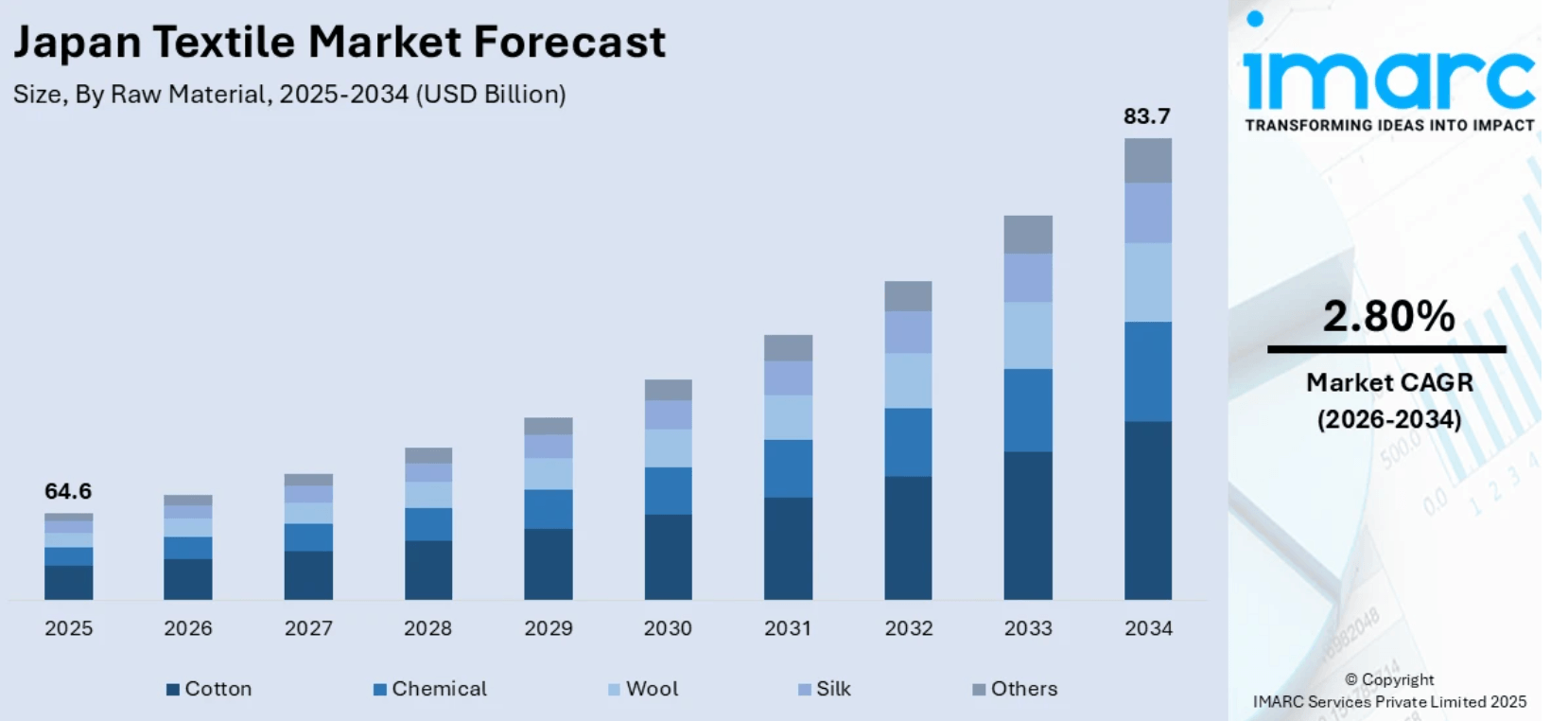
Source: Image by IMARC Group
For fashion brands, this reputation can become part of the product itself. Labels that manufacture in Japan are often able to position themselves around craftsmanship, material quality, and production standards that many consumers already associate with Japanese manufacturing.
Fabric Quality Is One of Japan’s Biggest Strengths
Many fashion brands initially look at manufacturers, but experienced buyers often pay equal attention to fabric sourcing.
Japan is home to some of the world's most respected textile mills, producing fabrics that are widely used by premium fashion labels. Japanese suppliers are known for their expertise in denim, cotton, knitwear, technical textiles, and specialty fabrics that can be difficult to source elsewhere.
Rather than competing on volume, many Japanese textile producers focus on innovation, durability, and unique fabric development. This allows brands to create products that stand apart from competitors using more widely available materials.
For buyers seeking long-term product differentiation, access to high-quality textiles is often one of the biggest reasons to source from Japan.
Japan Continues to Influence Global Streetwear and Denim
Japan's influence on fashion extends well beyond manufacturing.
The country has played a major role in shaping modern streetwear, heritage workwear, and premium denim culture. Brands around the world continue to draw inspiration from Japanese design philosophies, fabric development techniques, and garment construction methods.
This influence is especially visible in the denim industry. Japanese selvedge denim remains one of the most sought-after materials among denim enthusiasts and premium apparel brands. Many of the techniques used today can be traced back to decades of innovation by Japanese mills and manufacturers.
For fashion brands operating in streetwear, denim, or contemporary apparel categories, sourcing from Japan often provides access not only to manufacturing expertise but also to an ecosystem deeply connected to these influential segments of the industry.
The Different Types of Clothing Manufacturers in Japan
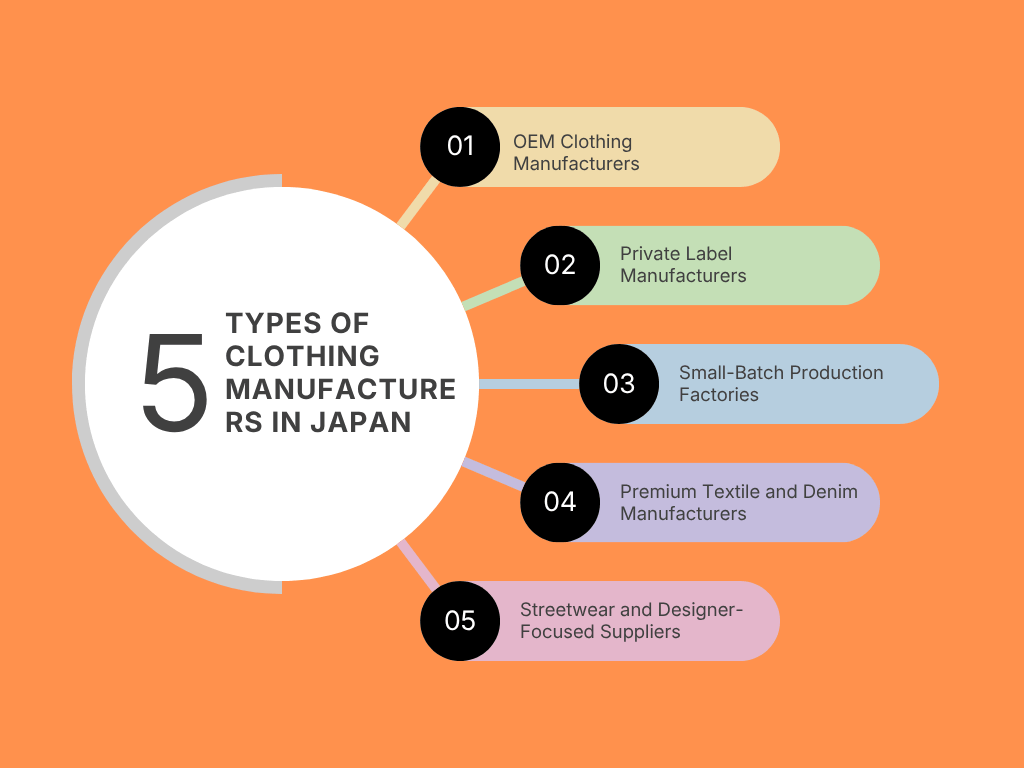
Not all Japanese manufacturers operate in the same way. Some focus on large-scale production, while others specialize in premium materials, small production runs, or niche fashion categories. Understanding these differences can help brands identify the type of manufacturing partner that best matches their goals, budget, and product strategy.
OEM Clothing Manufacturers
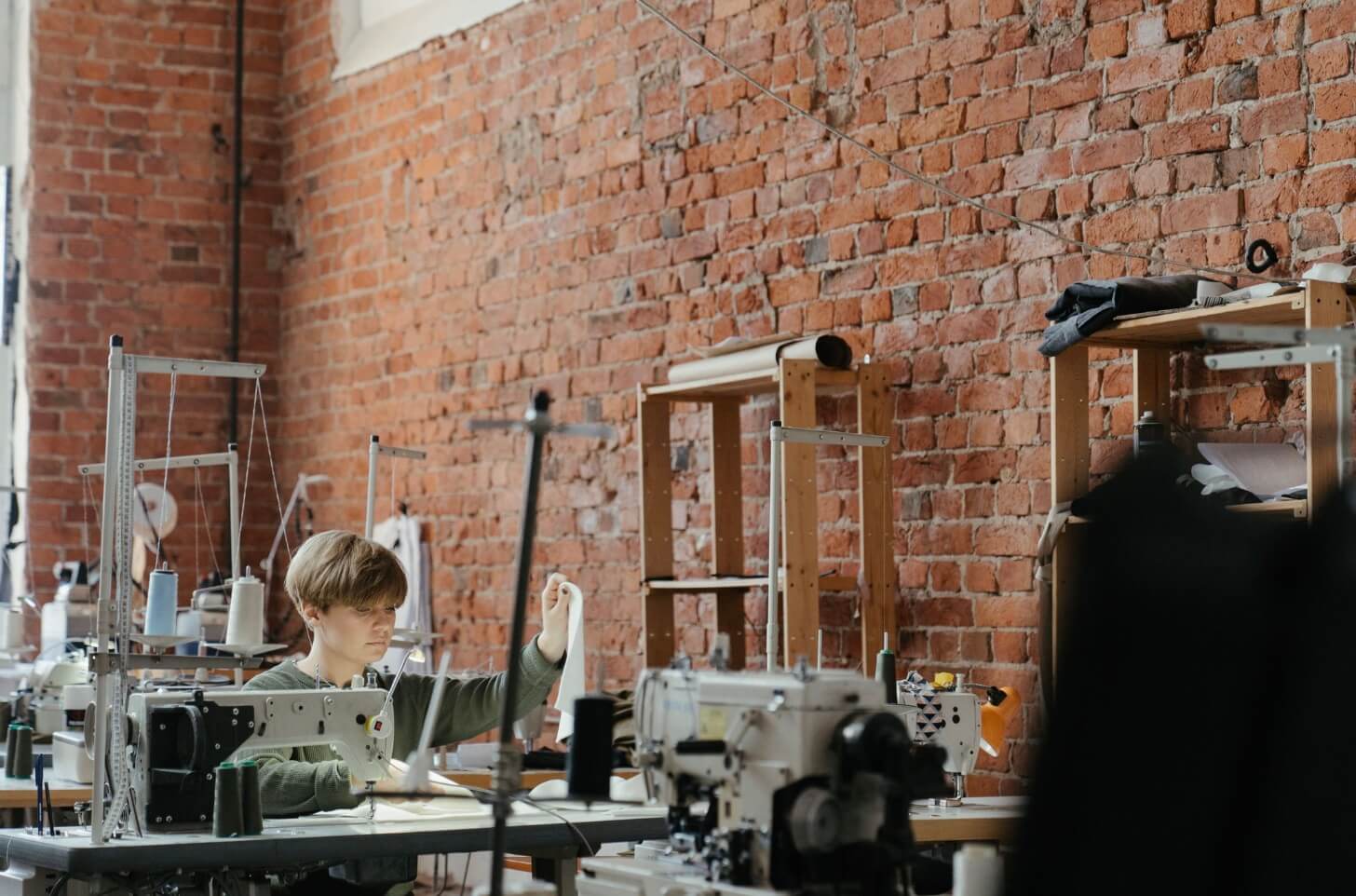
Source: Image by Pexels
OEM (Original Equipment Manufacturer) suppliers are among the most common partners for fashion brands that want to develop products with their own specifications.
In this model, the buyer provides the product concept, design requirements, measurements, and branding elements, while the manufacturer handles production. Depending on the factory, support may also extend to pattern development, material sourcing, sampling, and quality control.
OEM production gives brands greater flexibility because products can be tailored to specific requirements rather than selected from pre-existing catalogs. This approach is particularly common among established apparel companies that want full control over design and product positioning.
Private Label Manufacturers
Private label production offers a different approach.
Instead of creating garments entirely from scratch, brands typically choose from existing product templates and customize selected elements such as labels, colors, fabrics, trims, packaging, or branding details.
Because much of the product development work has already been completed, private label manufacturing often reduces lead times and development costs. This makes it a practical option for startups, ecommerce sellers, and emerging fashion brands looking to launch products more quickly.
While customization may be more limited than with OEM production, private label manufacturing can provide a faster path to market.
Small-Batch Production Factories
Many brands are not interested in placing large orders immediately.
For startups, independent designers, and niche labels, committing to thousands of units can create significant financial risk. This is where small-batch production factories become valuable.
These manufacturers specialize in lower-volume production runs and often work with brands testing new products, launching capsule collections, or serving highly targeted audiences. Although per-unit costs may be higher, smaller production volumes provide greater flexibility and reduce inventory exposure.
This production model has become increasingly attractive as more brands prioritize agility over large-scale inventory commitments.
Premium Textile and Denim Manufacturers
Some Japanese manufacturers are recognized less for production volume and more for material expertise.
These companies often work closely with textile mills and focus heavily on fabric development, garment construction, and specialized finishing techniques. Their expertise is especially valuable for brands that view fabric quality as a key part of their product identity.
Japan's reputation for premium textiles has made these manufacturers particularly attractive for brands seeking long-term differentiation rather than competing primarily on price.
Many premium fashion labels choose Japanese partners specifically because of their expertise in creating distinctive materials that are difficult to source elsewhere.
Streetwear and Designer-Focused Suppliers
Japan has played a major role in shaping modern streetwear and contemporary fashion culture.
As a result, some manufacturers have developed specialized expertise in producing garments for fashion-forward brands that require unique construction techniques, custom details, specialized washes, or limited-edition collections.
These suppliers often work closely with designers during product development and may offer greater flexibility for creative projects than factories focused primarily on volume production.
For brands operating in premium streetwear, contemporary fashion, or designer apparel segments, these manufacturers can provide capabilities that align more closely with creative objectives.
Read more: 15+ Must-Know Japanese Clothing Brands For Fashion Lovers
Clothing Categories Japan Is Best Known For
While manufacturers vary in their production models, certain apparel categories have become closely associated with Japanese craftsmanship and expertise.
These categories continue to attract both established brands and emerging labels looking for products that stand out through quality, materials, and attention to detail.
Japanese Denim
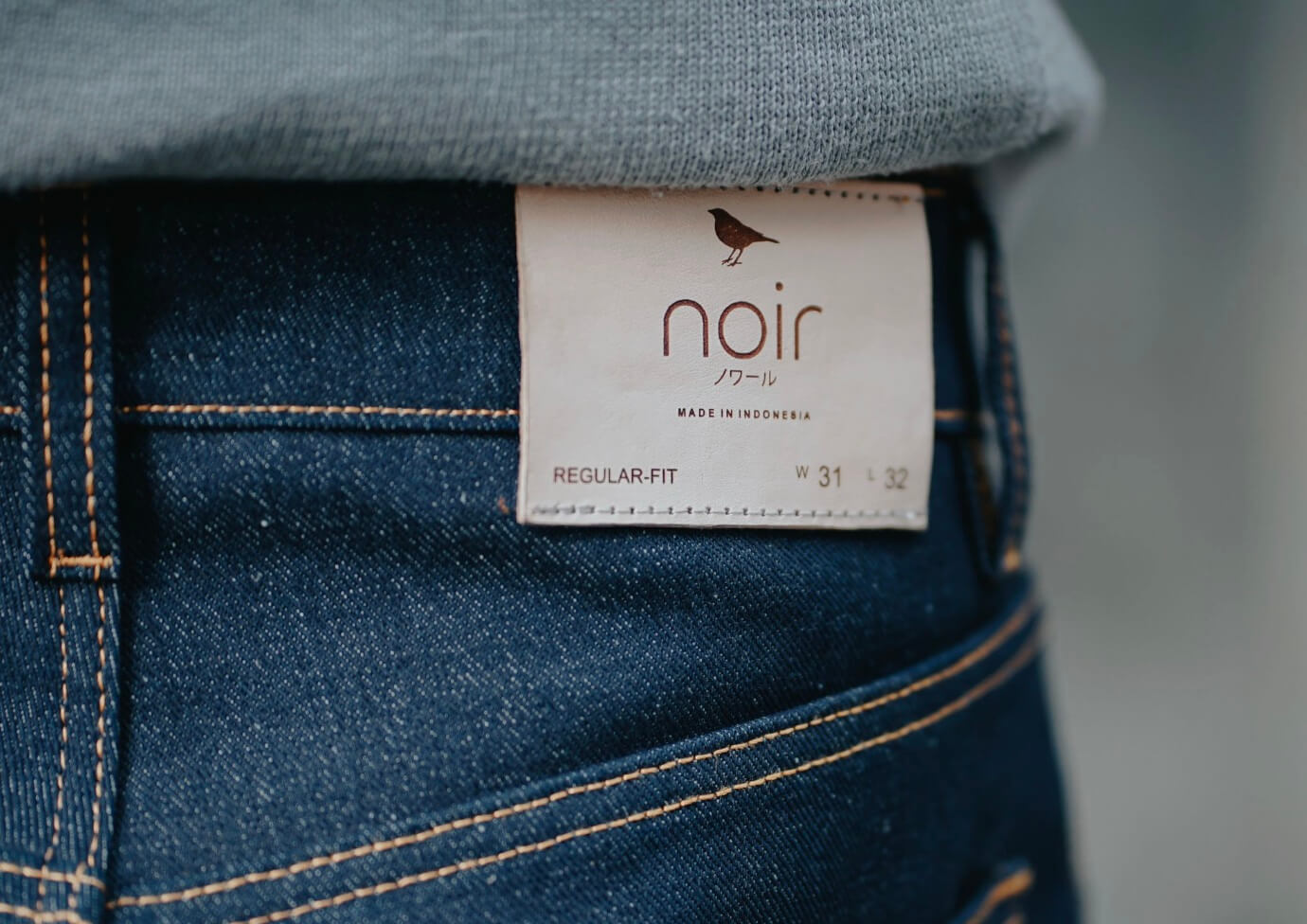
Source: Image by Pexels
Few apparel categories are more closely linked to Japan than denim.
Japanese denim has earned a global reputation for quality, craftsmanship, and authenticity. Many mills continue to use traditional weaving methods, vintage shuttle looms, and specialized dyeing techniques that produce fabrics with distinctive character and durability.
Over the years, Japanese denim has become a benchmark for premium jeans and heritage-inspired apparel. Many international brands source denim from Japan specifically because consumers recognize and value its reputation.
For fashion companies seeking premium positioning, Japanese denim remains one of the strongest reasons to explore manufacturing partnerships in the country.
Streetwear and Contemporary Fashion
Source: Image by Pexels
Japan's influence on global streetwear extends far beyond design trends.
The country has developed a manufacturing ecosystem capable of producing fashion-forward garments that emphasize fit, fabric selection, construction quality, and unique design details. This expertise has helped Japanese-made streetwear gain recognition among consumers seeking products that feel more distinctive than mass-market alternatives.
As global demand for premium streetwear continues to grow, many brands still look to Japan for both inspiration and production capabilities.
Premium Knitwear
Japan is also highly respected for knitwear production.
Manufacturers in this segment often focus on refined construction techniques, premium yarns, and careful attention to comfort and durability. The result is knitwear that combines practicality with a high-quality finish.
For brands targeting customers who value materials and craftsmanship, Japanese knitwear remains a strong category for sourcing and product development.
Technical and Outdoor Apparel
Technical apparel represents another area where Japan has built a strong reputation.
Many manufacturers work with advanced materials designed to improve durability, breathability, weather resistance, and overall performance. These capabilities have helped establish Japan as a respected source for outdoor apparel, sportswear, and functional fashion.
As consumers increasingly seek products that balance performance with everyday wearability, demand for technical garments continues to grow across international markets.
Limited and Small-Run Collections
Not every fashion brand aims to produce at large scale.
Many Japanese manufacturers are well-suited to limited collections that prioritize craftsmanship, exclusivity, and attention to detail. This production style aligns particularly well with independent labels, premium capsule collections, and brands serving niche customer segments.
Rather than maximizing volume, these collections often focus on creating products with a stronger sense of uniqueness and brand identity. For companies seeking differentiation in competitive markets, this remains one of the most appealing aspects of Japanese apparel manufacturing.
What the Apparel Sourcing Process Looks Like in Japan
Finding a manufacturer is only the beginning of the sourcing journey. Once a brand identifies potential suppliers, the focus shifts to evaluating capabilities, developing products, and preparing for production.
While every manufacturer operates differently, most sourcing projects in Japan follow a similar process from initial research to final shipment.
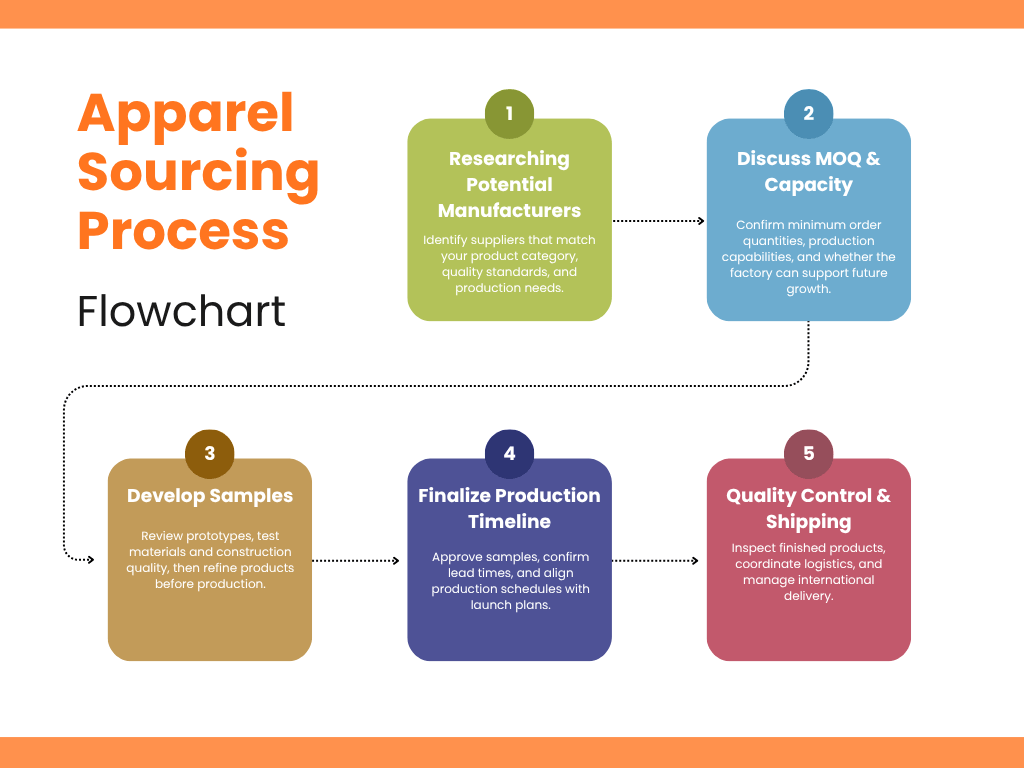
Researching Potential Manufacturers
The first step is identifying manufacturers that align with your product category, production requirements, and brand positioning.
Not every factory is a good fit for every business. Some specialize in premium denim, while others focus on knitwear, technical apparel, or small-batch production. Before making contact, buyers typically review a manufacturer's product portfolio, production capabilities, minimum order requirements, and previous work experience.
Many brands build an initial shortlist of suppliers before moving into discussions. This allows them to compare capabilities, pricing expectations, and production models before committing to product development.
Spending more time on research early in the process often reduces costly mistakes later.
Discussing MOQ and Production Capacity
Once potential manufacturing partners have been identified, one of the first conversations usually revolves around minimum order quantities (MOQ) and production capacity.
Japanese manufacturers often prioritize quality and specialization over high-volume production. As a result, MOQ requirements can vary significantly depending on the factory, product category, and materials involved.
Buyers should also evaluate whether a manufacturer can support future growth. A factory may be able to produce an initial collection successfully but struggle to handle larger orders as demand increases.
Clarifying these expectations early helps both parties determine whether a long-term partnership is realistic.
Sampling and Product Development
After initial discussions, the focus typically shifts to sampling.
During this stage, manufacturers create prototypes based on the buyer's specifications, design concepts, and material requirements. Sampling allows brands to evaluate fit, construction quality, fabric selection, and overall product performance before moving into full production.
It is common for multiple revisions to occur before a final sample is approved. While this process can take time, it helps identify issues that would be far more expensive to correct after production begins.
For many brands, product development is one of the most collaborative phases of the sourcing process.
Confirming Production Timelines
Once samples have been approved, manufacturers and buyers typically finalize production schedules.
Lead times vary depending on factory workload, material availability, order size, and production complexity. Specialized products often require longer timelines than basic apparel because additional development, sourcing, or finishing processes may be involved.
Rather than focusing only on manufacturing time, buyers should account for the entire timeline, including sampling, production, quality inspections, packaging, and international shipping.
Clear scheduling expectations help reduce delays and improve planning accuracy.
Managing Quality Control and Shipping
The final stage involves monitoring production quality and preparing products for delivery.
Many brands conduct quality checks before goods leave the factory to verify that production meets approved specifications. Depending on the size of the order, inspections may occur during production, after completion, or at multiple stages throughout the process.
Once production is finished, attention shifts to logistics. Buyers need to coordinate packaging, export documentation, international shipping, customs procedures, and final delivery arrangements.
At this stage, effective communication becomes especially important. Even when product quality is excellent, delays in logistics or documentation can affect delivery schedules and overall sourcing efficiency.
Read more: How to Buy from Japan: A Beginner-Friendly Guide
Common Challenges When Working with Japanese Manufacturers
Japan is widely respected for product quality, craftsmanship, and manufacturing expertise. However, many international buyers discover that the biggest challenges are not related to the garments themselves.
In most cases, the products meet or exceed expectations. The real difficulties tend to appear throughout the sourcing process, particularly when brands are unfamiliar with how Japanese manufacturers operate. Production planning, communication, timelines, and logistics often require a different approach than buyers may be accustomed to in other manufacturing markets.
Understanding these challenges in advance can help brands set realistic expectations and build stronger relationships with potential suppliers.
Higher Manufacturing Costs
One of the first things buyers notice when sourcing from Japan is that production costs are often higher than in many competing manufacturing hubs.
This does not necessarily mean Japanese manufacturers are overpriced. Rather, many factories operate within a different value proposition. Their focus is often on material quality, craftsmanship, consistency, and specialized production rather than maximizing output at the lowest possible cost.
For brands competing primarily on price, this can be difficult to justify. However, companies targeting premium market segments often view the additional cost as an investment in product quality and brand positioning.
The key is understanding whether the manufacturer's strengths align with the goals of the business. A premium Japanese factory may not make sense for a budget-focused apparel brand, but it may be a strong fit for a company seeking differentiation through quality and craftsmanship.
Language and Communication Barriers
Communication can sometimes become an unexpected obstacle, especially during the early stages of supplier outreach.
While many Japanese manufacturers work with international clients, English proficiency varies considerably between companies. Larger exporters may have dedicated international teams, while smaller factories often rely on limited English communication or translation support.
The challenge extends beyond language itself. Business culture, communication styles, and decision-making processes can also differ from what international buyers expect.
For example, some manufacturers may take longer to respond because they prefer providing complete information rather than immediate answers. Others may communicate more cautiously when discussing production capabilities or pricing.
Patience and clarity are often essential. Detailed specifications, visual references, and written documentation can help reduce misunderstandings and improve collaboration throughout the sourcing process.
Smaller Production Capacity
Many buyers associate Asia with large-scale manufacturing, but that assumption does not always apply to Japan.
A significant number of Japanese factories specialize in quality-focused production rather than mass manufacturing. Some operate with relatively small teams and intentionally limit production volumes to maintain quality standards.
For smaller brands, this can actually be an advantage. Factories that support limited production runs may offer greater flexibility and more attention to individual projects.
However, businesses planning rapid growth should evaluate production capacity carefully. A manufacturer that works well for an initial collection may not be able to support significantly larger volumes in the future.
Discussing long-term production expectations early in the relationship can help prevent capacity-related challenges later.
Longer Lead Times
Buyers are often surprised by how much time premium apparel production can require.
Sampling, material sourcing, revisions, production scheduling, quality inspections, and shipping all contribute to the overall timeline. When working with manufacturers that prioritize craftsmanship and specialized production processes, lead times can become even longer.
This is particularly common for products involving custom fabrics, specialty washes, complex construction methods, or limited production runs.
Rather than viewing longer lead times as a negative, many brands treat them as part of the trade-off for higher quality production. The important factor is planning ahead and building realistic timelines into product launches and inventory management strategies.
International Logistics Coordination
The sourcing process does not end when production is complete.
Once garments are ready to leave the factory, buyers must coordinate shipping arrangements, export documentation, customs requirements, and final delivery. For brands managing international production for the first time, this stage can feel just as complex as finding a manufacturer.
Different shipping methods affect both costs and delivery times. Customs procedures vary by destination country, and unexpected delays can occur if documentation is incomplete or requirements are misunderstood.
Because of this, many brands work with freight forwarders, sourcing partners, or logistics specialists who can help manage international transportation more efficiently.
A well-organized logistics strategy often has just as much impact on the success of a sourcing project as the manufacturing process itself.
How International Buyers Usually Find Japanese Clothing Manufacturers
Once brands decide they want to manufacture in Japan, the next challenge is figuring out where to find the right suppliers.
Unlike larger manufacturing hubs where thousands of factories actively market themselves online, many Japanese manufacturers still rely heavily on industry relationships and long-term business partnerships. This means finding a suitable supplier often takes more research than simply searching through a directory and sending a few emails.
For international buyers, the process usually involves a combination of online research, networking, industry events, and local connections. Some brands prefer to contact manufacturers directly, while others work through sourcing partners who already understand the Japanese apparel industry.
The good news is that there is no single "correct" approach. The best method often depends on the size of your business, your production requirements, and how familiar you are with the Japanese market.
Below are some of the most common ways brands connect with Japanese clothing manufacturers today.
Fashion Trade Shows and Textile Events
For buyers serious about building manufacturing relationships, trade shows remain one of the most effective starting points.
Meeting suppliers in person makes it easier to evaluate product quality, discuss production capabilities, and understand whether a factory is the right fit for your brand. Conversations that might take weeks through email can often happen in a single afternoon.
Trade shows are also valuable because they expose buyers to much more than manufacturers. Textile mills, sourcing companies, trimming suppliers, and logistics providers are often present as well, giving brands a broader view of the Japanese apparel industry.
For businesses planning long-term production, those connections can be just as valuable as finding a factory.
B2B Supplier Directories
Many buyers begin their search online, and supplier directories are usually one of the first resources they encounter.
Directories can be useful for identifying manufacturers by category, location, production size, or specialization. They help buyers build an initial shortlist and gain a general understanding of the market.
At the same time, a supplier profile only tells part of the story.
It may explain what a factory produces, but it rarely reveals how responsive the team is, how flexible production can be, or how well the manufacturer works with international brands. Most experienced buyers treat directories as a starting point rather than a final source of decision-making.
Sourcing Agents and Local Partners
For brands entering the Japanese market for the first time, local expertise can save a significant amount of time.
Sourcing agents often already understand the manufacturing landscape and maintain relationships with suppliers across different apparel categories. Instead of contacting dozens of factories independently, buyers can work with someone who already knows which manufacturers are likely to be a good fit.
This support can extend well beyond introductions. Many sourcing partners assist with communication, sample management, production coordination, quality control, and shipping logistics.
While there is an additional cost involved, many brands find the investment worthwhile when navigating an unfamiliar market.
Cross-Border Commerce Platforms
Not every buyer begins the sourcing process by contacting manufacturers directly.
In many cases, the first step is understanding the market itself. Before discussing MOQs, production timelines, or factory capabilities, brands often want to answer more fundamental questions:
What types of apparel are currently popular in Japan?
Which product categories continue to grow?
How are Japanese brands positioning themselves?
What price points are consumers willing to pay?
What materials and design trends are appearing most frequently?
Answering these questions can help businesses make better sourcing decisions later.
One way buyers gather this information is by exploring Japanese marketplaces and ecommerce platforms. Looking at real products, customer demand, pricing strategies, and brand positioning often provides valuable market insights before manufacturer conversations even begin.
This is where Janbox can be particularly useful.
Rather than researching multiple Japanese marketplaces separately, Janbox allows users to explore products from major platforms such as Rakuten, Mercari, Yahoo Shopping, Rakuma, and Yahoo Auctions through a single interface. For apparel businesses, this creates an opportunity to study the Japanese market at scale without navigating multiple websites individually.
For example, a brand interested in launching premium denim can use Janbox to compare product positioning, pricing, materials, and customer demand across different marketplaces. A streetwear startup can analyze how Japanese brands present collections, structure pricing, and describe product features. These insights often help shape sourcing decisions long before a manufacturer is selected.
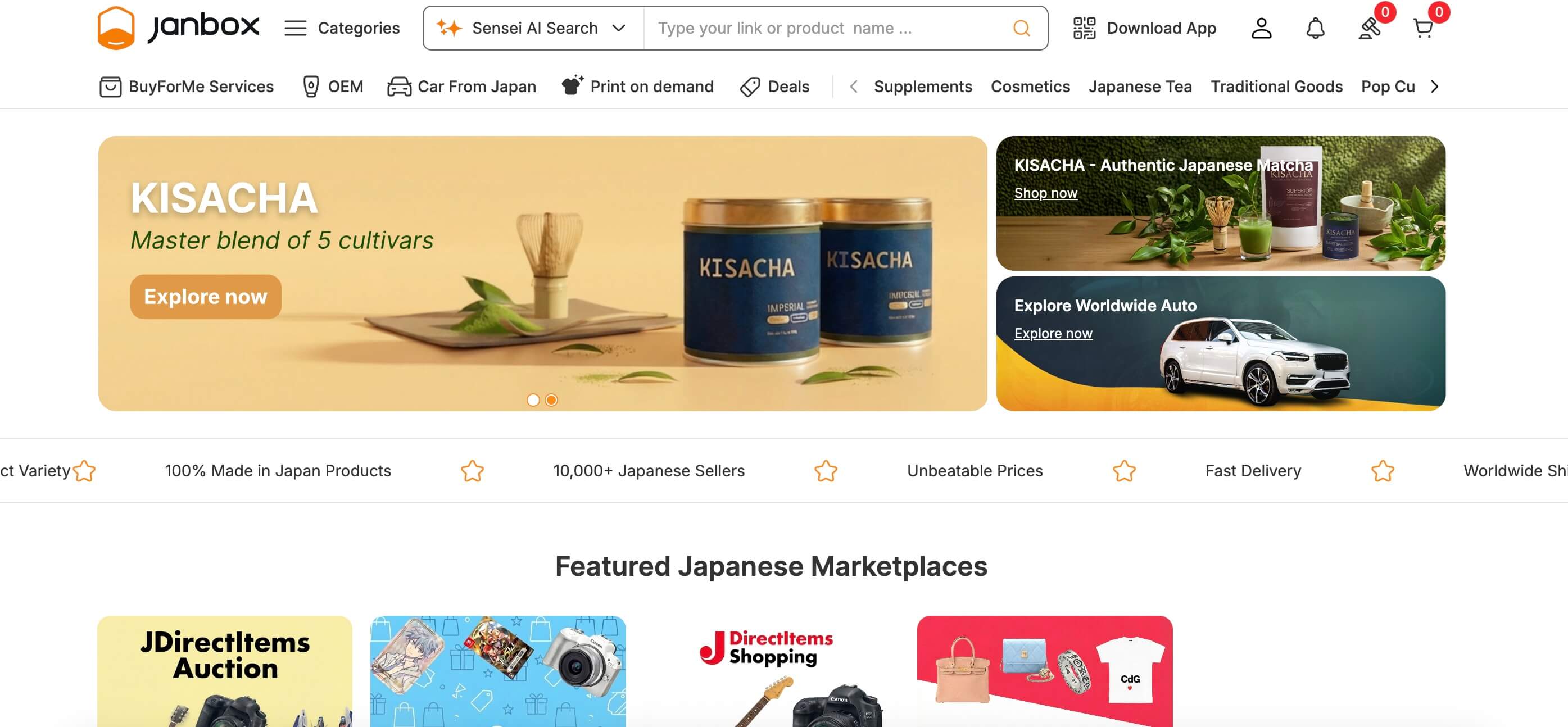
Janbox can also be valuable when researching potential suppliers and production opportunities. By exploring established Japanese brands and products already succeeding in the market, buyers gain a clearer understanding of the quality standards and product expectations they may want to pursue with future manufacturing partners.
For businesses looking to source apparel from Japan, market research and supplier research often go hand in hand. Understanding what sells well is frequently the first step toward finding the right manufacturer to produce it.
Industry Referrals and Existing Networks
Many sourcing relationships begin with a recommendation rather than a search.
A designer recommends a factory. A sourcing consultant introduces a supplier. A brand owner shares a manufacturing contact that worked well on a previous project.
These referrals are valuable because they come with context. Instead of evaluating a manufacturer based solely on a website or directory listing, buyers gain insight from someone who has already experienced the working relationship firsthand.
In an industry built heavily on trust and consistency, that kind of information can be difficult to replace.
For many brands, the best manufacturing partner ultimately comes from a conversation within their existing network rather than a search engine result.
Conclusion
Japan may not be the first destination brands consider when searching for apparel manufacturers, but it continues to attract buyers who prioritize quality, craftsmanship, and product differentiation over low-cost mass production.
From premium denim and technical fabrics to contemporary fashion and small-batch production, Japanese manufacturers offer capabilities that can be difficult to find elsewhere. At the same time, sourcing successfully requires an understanding of how the local industry operates, including production models, lead times, communication expectations, and supplier relationships.
For brands willing to invest the time in research and relationship-building, Japan wholesale clothing manufacturers can provide access to expertise, materials, and production standards that support long-term brand growth. The key is finding partners whose strengths align with your product vision, target market, and business goals.
FAQS
What is the average MOQ for Japan wholesale clothing manufacturers?
There is no universal minimum order quantity because requirements vary by manufacturer, product category, and production model. Some factories may accept small-batch orders, while others require larger commitments to make production economically viable. MOQ discussions typically happen during the early stages of supplier communication.
Are Japan wholesale clothing manufacturers suitable for small fashion brands?
Yes, but it depends on the manufacturer. Some Japanese factories specialize in smaller production runs and work with independent designers, startup brands, and niche apparel businesses. These suppliers can be a good fit for brands that prioritize quality and flexibility over large-scale production.
Why is clothing manufacturing in Japan often more expensive?
Higher labor costs, premium materials, specialized production techniques, and strict quality standards all contribute to higher manufacturing costs. Many brands choose Japanese production because they view the additional expense as part of creating a higher-value product.
How do international buyers find Japanese clothing manufacturers?
Common approaches include attending trade shows, using supplier directories, working with sourcing agents, leveraging professional referrals, and researching the market through cross-border commerce platforms. Most buyers combine several methods rather than relying on a single source.
Does Japan specialize in certain types of apparel manufacturing?
Yes. Japan is particularly well known for premium denim, high-quality textiles, streetwear, technical apparel, knitwear, and limited-production fashion collections. These categories have helped establish the country's reputation within the global apparel industry.
How long does apparel production typically take in Japan?
Production timelines vary depending on product complexity, material availability, sampling requirements, and factory workload. Buyers should account for the full process, including product development, sample approvals, manufacturing, quality inspections, and international shipping.
Is it possible to source Japanese clothing products without working directly with manufacturers?
Yes. Many businesses begin by researching Japanese brands, products, and marketplaces before approaching suppliers. Platforms such as Janbox can help buyers explore the Japanese apparel market, understand pricing and product trends, and identify opportunities before moving into manufacturing discussions.
Table of Contents
- Why Fashion Brands Still Source Clothing from Japan
- The Different Types of Clothing Manufacturers in Japan
- Clothing Categories Japan Is Best Known For
- What the Apparel Sourcing Process Looks Like in Japan
- Common Challenges When Working with Japanese Manufacturers
- How International Buyers Usually Find Japanese Clothing Manufacturers
- Conclusion
- FAQS
- What is the average MOQ for Japan wholesale clothing manufacturers?
- Are Japan wholesale clothing manufacturers suitable for small fashion brands?
- Why is clothing manufacturing in Japan often more expensive?
- How do international buyers find Japanese clothing manufacturers?
- Does Japan specialize in certain types of apparel manufacturing?
- How long does apparel production typically take in Japan?
- Is it possible to source Japanese clothing products without working directly with manufacturers?