How to Buy from Japan: A Beginner-Friendly Guide
Trying to figure out how to buy from Japan online but not sure where to start?
Japanese websites offer a wide range of products, from everyday items to second-hand deals and niche goods hard to find elsewhere. It’s easy to browse and discover what you want, but the process becomes less clear when you actually try to place an order.
Most platforms are built for local users, so language, payment methods, and shipping options don’t always work as you expect. This is where many buyers get stuck, even after finding the right product.
If you’re wondering how to buy things from Japan without running into these issues, the key is understanding how the process works from start to finish. There isn’t just one way to do it. Some purchases can be made directly, while others require a different setup depending on the website and your location.
In this guide, you’ll learn how to buy from Japan step by step, the different methods available, and what to expect in terms of cost, shipping, and timing before placing your order.
Can You Buy from Japan Online?
Yes, you can buy from Japan online, but the process depends on where you shop and how the website is set up. Some stores allow international checkout, while others are designed only for local buyers.
If you’re trying to understand how to buy things from Japan, the first step is knowing how different types of Japanese online stores work. Not all platforms operate the same way, and this directly affects whether you can complete a purchase or not.
Japanese e-commerce is not built around a single system. Instead, it’s spread across different types of platforms, each with its own rules for payment, shipping, and user access.
Types of Japanese Online Stores
Japanese e-commerce is not built around a single system. Instead, it’s spread across different types of platforms, each with its own rules for payment, shipping, and user access.
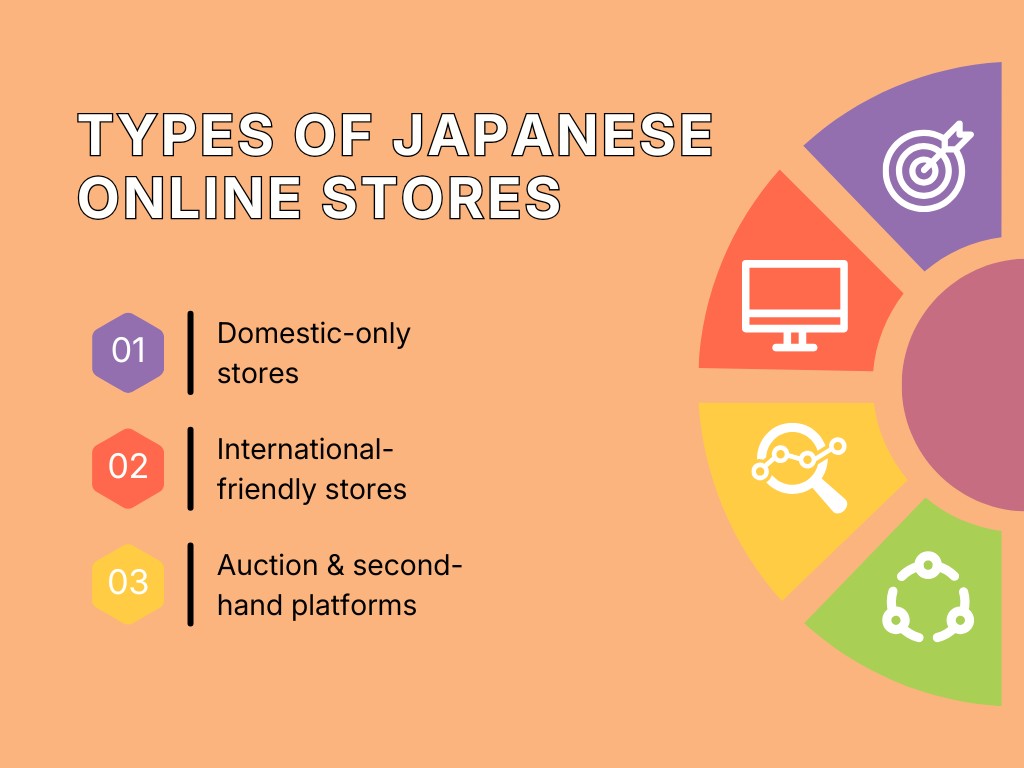
Domestic-only stores (Rakuten, Yahoo Shopping)
These are some of the largest marketplaces in Japan, offering a wide range of products from multiple sellers. Pricing can be competitive, and product variety is strong.
However, most of these platforms are designed for local users. Payment methods, account setup, and shipping options are often limited to Japan, which makes it difficult for international buyers to complete an order directly.
International-friendly stores
Some websites are built to support global customers. These platforms usually offer English interfaces, accept international payment methods, and provide direct shipping options.
While they are easier to use, product selection can be more limited compared to domestic platforms. Prices may also be higher due to international handling and shipping costs.
Auction & second-hand platforms
These platforms are popular for finding deals, rare items, and discontinued products. Listings are often updated frequently, and pricing is more flexible compared to fixed-price marketplaces.
The trade-off is complexity. Auctions require timing and bidding, while resale platforms can move quickly depending on demand. Most of these platforms also do not support international checkout, which creates an additional barrier.
Key Barriers for Global Buyers
Once you understand how these platforms work, the next challenge becomes clear. The difficulty is not finding products, but completing the purchase.
Language (Japanese-only UI): Many websites are built entirely in Japanese. While translation tools can help, they don’t always capture important details such as product condition, sizing, or seller notes.
Payment restrictions (local cards, bank transfers): A large number of platforms rely on domestic payment systems. This includes locally issued credit cards, bank transfers, or convenience store payments. International cards are not always accepted.
Shipping limitations: Most sellers only ship within Japan. Even if you manage to place an order, there may be no direct option to deliver the item overseas.
Solutions That Enable Global Access
Because of these limitations, different methods have been developed to help international buyers complete purchases from Japan.
Proxy buying services: A proxy service purchases the item on your behalf using local payment methods. It then receives the item in Japan and ships it internationally. This is the most common way to access domestic platforms, including resale and auction sites.
Forwarding services: With forwarding, you place the order yourself and ship it to a Japanese address provided by the service. The item is then forwarded to your country. This gives you more control, but it requires a payment method that works on Japanese websites.
International marketplaces: Some platforms are designed for global buyers and handle payment and shipping directly. These are easier to use but may not offer the same range of products as domestic platforms.
Step-by-Step Guide: How to Buy from Japan Online
If you’re trying to understand how to buy things from Japan online, the process can feel unclear at first. You may find the product you want, but the next steps depend on where you’re buying and how the platform works.
Some websites allow direct checkout, while others require a different approach for payment or shipping. Because of that, each step plays a role in whether your order goes through smoothly or gets blocked along the way.
Here’s how the process works from start to finish.
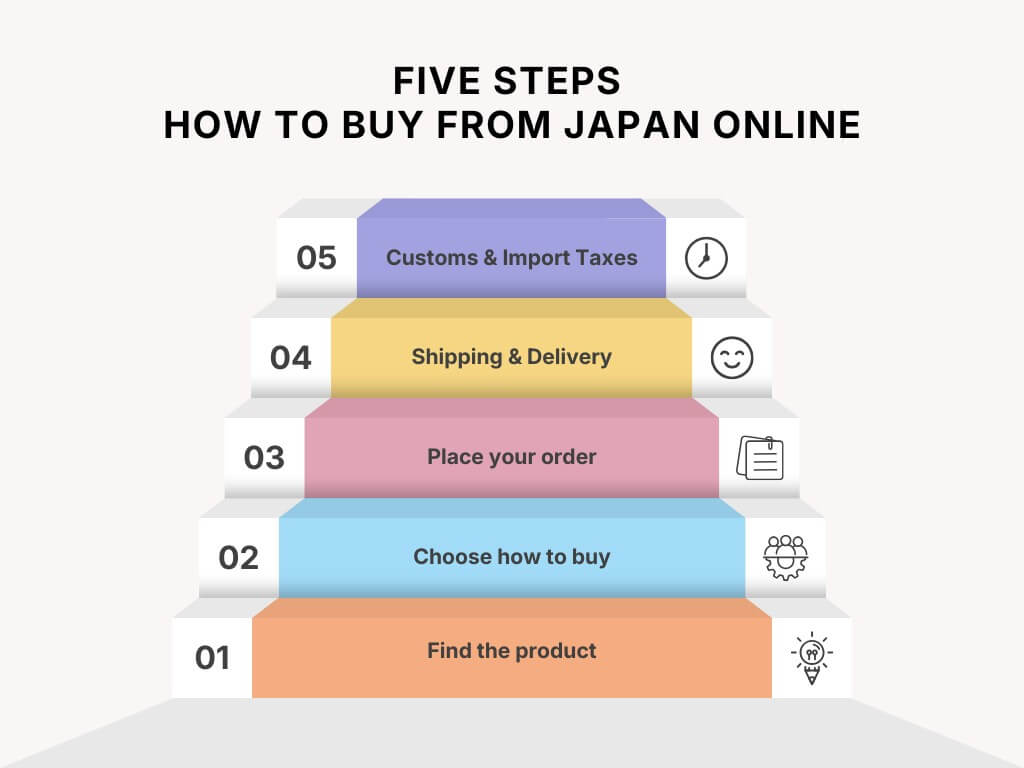
Step 1: Find the Product
Start by choosing the right platform based on what you’re looking for. Not all marketplaces offer the same type of inventory, so where you search matters just as much as what you search for.
General marketplaces like Rakuten or Amazon Japan work best for new items
Resale platforms such as Mercari or Rakuma often offer better pricing
Auction sites like Yahoo Auctions are more suitable for rare or limited products
If you’re not seeing enough results, switching to Japanese keywords can make a noticeable difference. Many listings are not indexed in English, especially for local brands or niche categories.
Before moving on, take time to validate the listing. Check seller reputation, product condition, and whether the price is consistent across platforms. This step reduces the risk of overpaying or buying from unreliable sellers.
Step 2: Choose How to Buy
After finding the product, the process becomes more strategic. You now need to decide how the purchase will be completed, and this decision affects everything that follows.
There are three main paths:
Direct purchase works when the website supports international payment and shipping
Proxy services handle the transaction for you and are commonly used for domestic platforms
Forwarding services give you a Japanese address but require you to place the order yourself
A simple way to decide:
If your card is accepted and shipping is available → buy direct
If payment fails or shipping is restricted → use a proxy
If you want more control and can handle checkout → use forwarding
Choosing the wrong method at this stage is the most common reason orders fail.
Step 3: Place Your Order
Once the method is clear, you can move to checkout. This is where the process becomes more detail-oriented.
For direct purchases, the main concern is compatibility. Even if the platform appears international-friendly, some sellers may still restrict shipping or reject certain payment methods.
For proxy purchases, the flow is more controlled. You confirm the full cost before placing the order, including:
Item price
Domestic shipping within Japan
Service fees (if applicable)
Many buyers focus only on the listed price and underestimate the final cost. This is where small oversights can add up quickly.
Step 4: Shipping & Delivery
After the order is completed, the product first moves within Japan. If you’re using a proxy or forwarding service, the item is delivered to a warehouse before being shipped internationally.
At this point, you choose how the package will be delivered. The choice depends on your priorities:
Faster carriers reduce delivery time but increase cost
Standard options offer a balance between price and speed
Slower methods are more affordable but take significantly longer
If you’re ordering multiple items, consolidation becomes important. Combining packages into a single shipment can reduce overall shipping costs and simplify delivery.
Step 5: Customs & Import Taxes
Before the package reaches you, it may go through customs. This is often the least understood part of the process, but it directly affects the final cost.
Charges may include:
Import duties
VAT or local taxes
Carrier handling fees
These depend on the declared value of the package and your country’s regulations. Misunderstanding this step can lead to unexpected charges or delays at delivery.
A practical approach is to estimate these costs in advance and factor them into your total budget, rather than treating them as an afterthought.
Best Ways to Buy from Japan
Once you understand how the buying process works, the next step is choosing the right method. There isn’t a single “best” way to buy from Japan. The right option depends on what you’re buying, which platform you’re using, and how much control you want over the process.
In practice, most buyers rely on one of three approaches. Each one solves a different part of the problem, but also comes with its own limitations.
Buy Directly from Japanese Website
Buying directly is the most straightforward option, but only works when the platform supports international users. This usually means the website accepts global payment methods and offers shipping outside Japan.
When it works, the process feels similar to shopping on any international website. You select the item, check out, and have it delivered without needing an intermediary.
Pros:
Lower overall cost since there are no service fees
Faster processing with fewer steps involved
Cons:
Limited availability across Japanese platforms
Language barriers can make navigation and checkout difficult
In most cases, this option is only practical for larger platforms like Amazon Japan or selected international-friendly stores.
Option 2: Use Proxy Buying Services
Proxy buying services are the most common method when direct purchase is not possible. Instead of placing the order yourself, the service handles the transaction on your behalf.
The process works in a simple sequence. You provide the product link or search within the platform, confirm the price, and the service completes the purchase using local payment methods. The item is then received in Japan and shipped internationally.
Pros:
Access to almost all Japanese marketplaces, including resale and auction platforms
Ability to combine orders from different sellers into one shipment
Cons:
Service fees typically range from around 400 yen per order, , depending on the platform and service provider.
Final cost includes additional layers such as domestic shipping and handling
This method is often the most practical choice when you want full access without dealing with platform restrictions.
Option 3: Use Package Forwarding Services
Forwarding services take a different approach. Instead of handling the purchase, they provide you with a Japanese shipping address. You place the order yourself, and the package is forwarded to your country once it arrives in Japan.
This gives you more control over the process, but also requires more effort at each step.
Pros:
Lower fees compared to proxy services
Full control over ordering and payment
Cons:
Requires a payment method that works on Japanese websites
More manual steps, including handling checkout and communication
Comparison Table
Method | Best For | Fees | Complexity | Access Level |
Direct | Simple purchases | Low | High | Limited |
Proxy | Full marketplace | Medium | Easy | Full |
Forwarding | Advanced users | Low | Medium | Full |
Top Japanese Websites to Shop From
Once you know how to buy from Japan, the next step is choosing where to shop. Each platform offers a different type of experience, from traditional marketplaces to aggregated listings across multiple sources.
However, the experience can vary significantly depending on how each marketplace is designed and who it is built for.
Online Marketplaces
These are the most common starting points. They offer a wide range of products and are generally easier to navigate compared to resale or auction platforms.
Amazon Japan
Amazon Japan is often the easiest entry point for international buyers. The interface is familiar, product pages are structured clearly, and checkout follows a predictable flow. For users who have experience with Amazon in other regions, the learning curve is minimal.
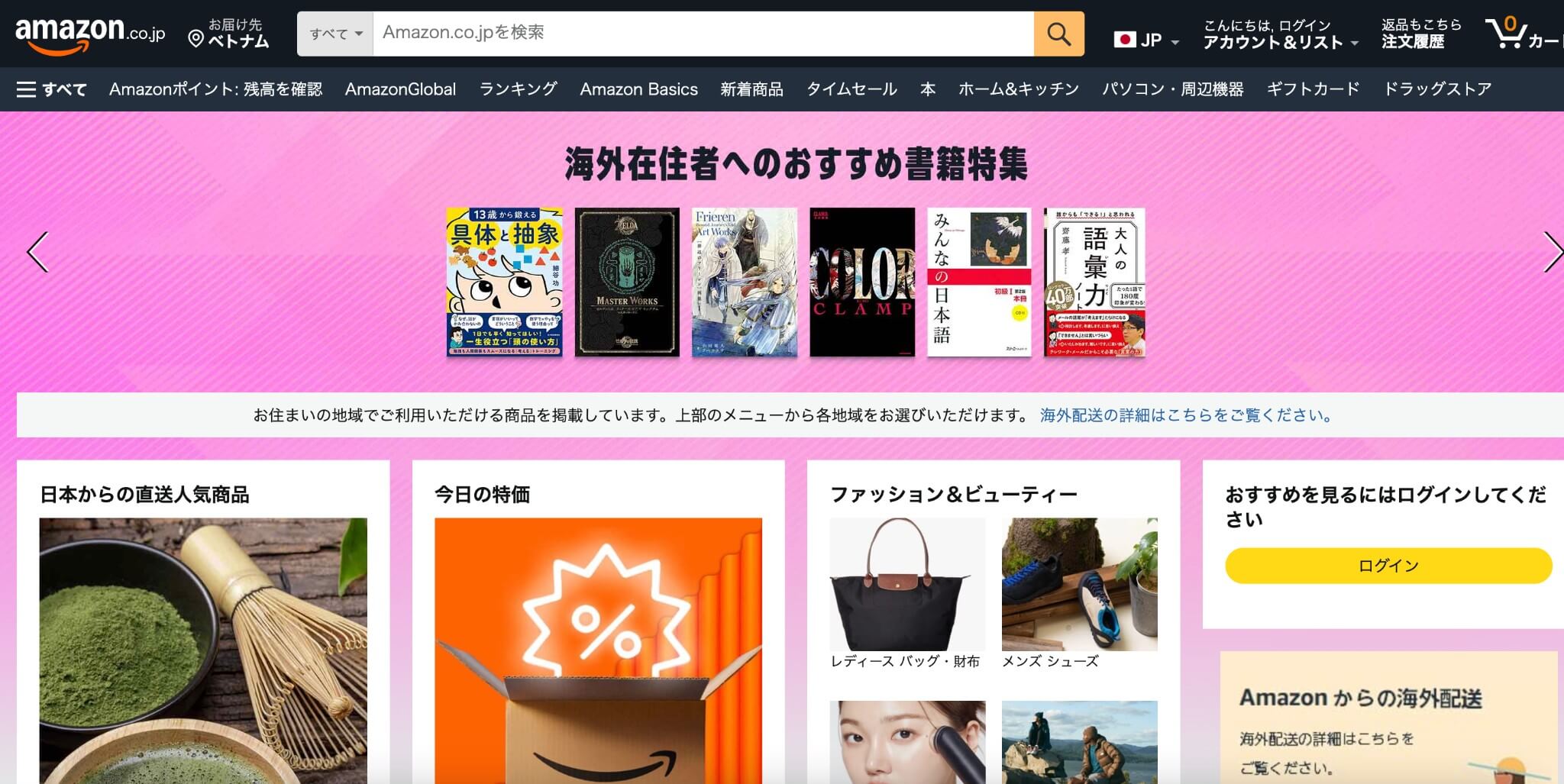
One of its main advantages is speed. Orders are processed quickly, and for selected products, international shipping is available without needing additional services. This makes it a practical option for straightforward purchases where convenience matters more than price optimization.
However, the platform is more controlled compared to open marketplaces. Product variety can be narrower in categories dominated by resale or independent sellers. Pricing is also less flexible, especially for items where second-hand or auction-based options would normally offer better deals.
Rakuten
Rakuten operates more like a large network of individual stores rather than a centralized retailer. Multiple sellers can list the same product, which creates a competitive pricing environment within the platform.
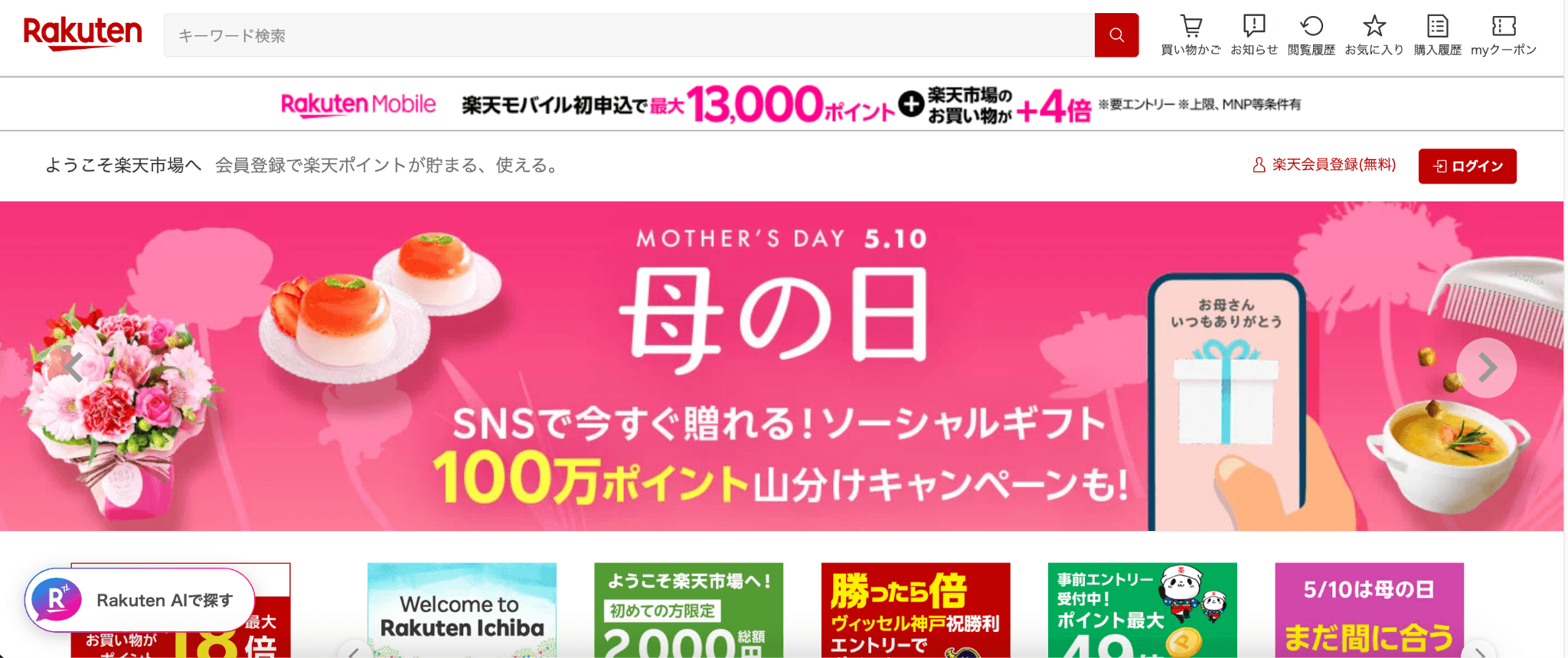
This structure gives buyers more choice. You can compare offers, find store-specific promotions, and sometimes access better deals than fixed-price platforms. It’s particularly strong for everyday products, branded goods, and items sold through official distributors.
At the same time, this flexibility comes with complexity. Product pages can vary depending on the seller, and the checkout process may not always feel consistent. For international users, this becomes more noticeable when dealing with payment methods or shipping options that are still designed around domestic buyers.
JDirectItems Shopping
JDirectItems Shopping is designed around discovery rather than a single marketplace experience. Instead of hosting its own inventory, it pulls listings from multiple Japanese sources, allowing users to explore a wider range of products in one place.
This is especially useful when you’re searching for something specific but don’t know which platform it might be listed on. Rather than checking multiple websites manually, you can browse aggregated results and compare options more efficiently.
However, the role of the platform is more focused on helping you find products than completing the full transaction. It works well as a starting point, but additional steps may still be required depending on where the item is sourced from and how the purchase is handled.
Janbox
Janbox takes a different approach compared to traditional marketplaces. Instead of operating as a single store, it connects multiple Japanese platforms into one system, allowing you to search, compare, and purchase items across different sources without switching between them.
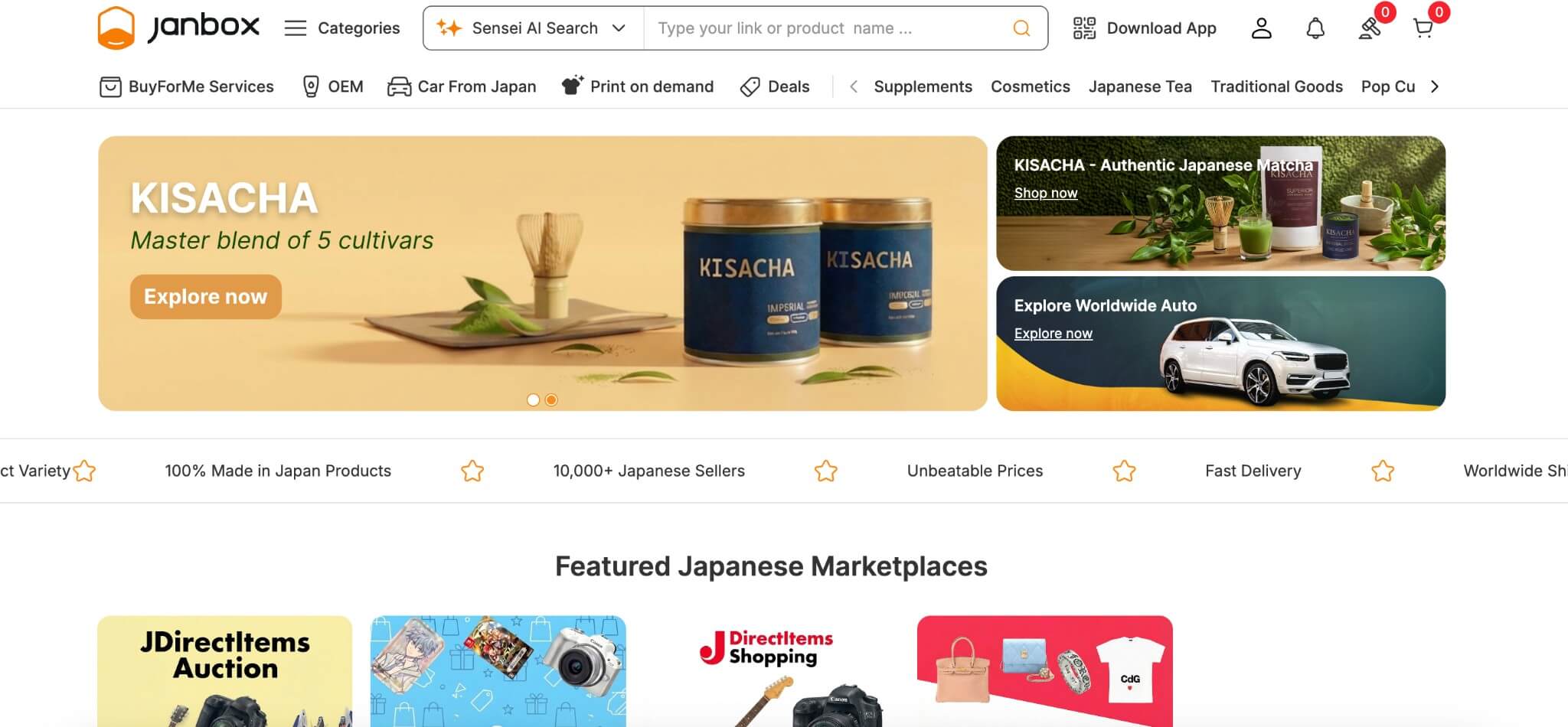
This changes how you shop. You’re not limited to what one platform offers. You can explore listings from general marketplaces, resale platforms, and auction sites in the same place, then choose based on price, availability, or condition.
More importantly, the process does not stop at browsing. Janbox is structured so that the entire flow, from product selection to payment and international delivery, happens within one system. This removes the need to manage separate accounts, deal with local payment restrictions, or figure out shipping for each platform individually.
Another advantage is how the experience is designed. Instead of submitting manual requests or waiting for confirmation, you can move through the process in a way that feels closer to a standard e-commerce flow. Items can be added, compared, and purchased without breaking the sequence.
In practice, this means Janbox works less like a single marketplace and more like a layer that brings multiple Japanese shopping platforms together, making them usable in one continuous experience.
Auction & Second-Hand
While general marketplaces focus on new products, a large part of Japan’s online shopping ecosystem revolves around second-hand and auction platforms. This is where pricing becomes more flexible and product variety expands beyond what is available through standard retail.
For many buyers, this is also where the best deals and rare finds are located. However, the experience is less structured and requires a different approach compared to fixed-price marketplaces.
Mercari
Mercari is one of the most active peer-to-peer marketplaces in Japan, known for its fast turnover and wide range of listings. Items are posted directly by individual sellers, which means new products appear constantly across categories such as fashion, electronics, collectibles, and daily goods.
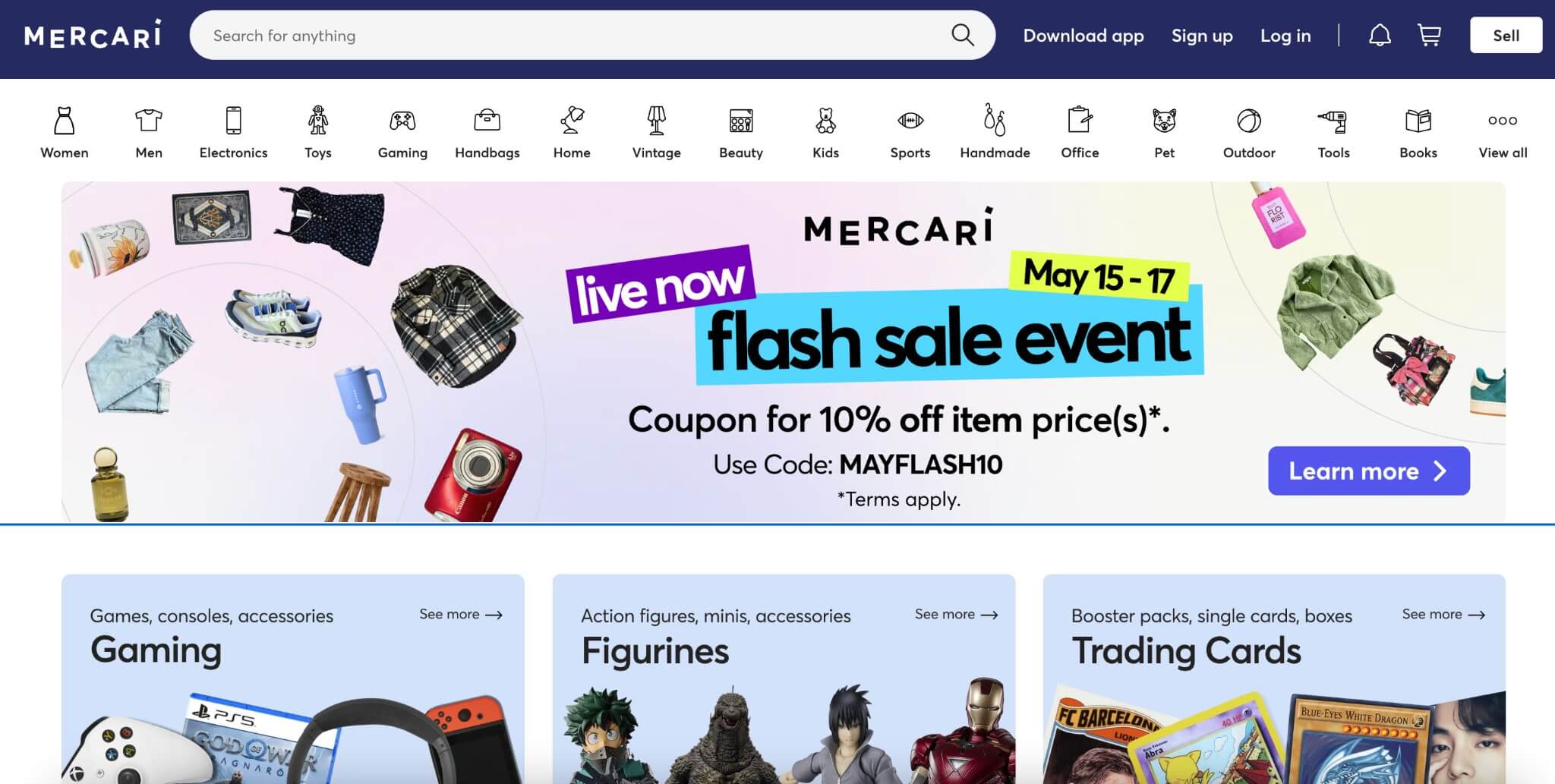
One of its main advantages is pricing. Because sellers set their own prices, listings are often more competitive than retail platforms. In some cases, buyers can also negotiate, which creates additional opportunities to reduce costs.
At the same time, speed becomes a key factor. Popular items can sell quickly, sometimes within minutes, especially if priced below market value. This makes timing just as important as price when browsing the platform.
Another point to consider is consistency. Product quality, descriptions, and seller responsiveness can vary, which means buyers need to review listings more carefully compared to traditional marketplaces.
Yahoo Auctions
Yahoo Auctions operates on a completely different model. Instead of fixed pricing, items are sold through bidding, which introduces a level of competition between buyers.
This platform is especially strong for rare, discontinued, or collectible items. Many products that are no longer available in stores, including limited releases, vintage goods, or niche electronics, can still be found through auctions.
Pricing here is unpredictable. Some items may close at lower prices if demand is low, while others can rise significantly depending on interest. This creates both opportunity and risk, particularly for buyers who are not familiar with bidding strategies.
Timing is another important factor. Auctions have fixed end times, and missing the final moments often means losing the item entirely. Successful buyers usually monitor listings closely and place bids strategically rather than early.
Niche Stores
Not everything fits into a general marketplace. In Japan, many product categories are handled by specialized stores that focus on a specific type of inventory rather than offering a wide range of items.
These platforms are built around depth instead of variety. Instead of browsing across multiple categories, you’re entering a space where the selection is more curated, and product quality or authenticity is often a stronger focus.
Anime & Collectibles
This is one of the strongest niche categories in Japan. Dedicated stores focus on figures, limited-edition merchandise, and franchise-specific products that are not widely available outside the country.
Many of these items are produced in small batches or released for a limited time, which makes availability highly dependent on timing. Compared to general marketplaces, niche stores often provide more reliable sourcing for authentic collectibles.
Fashion Brands
Japanese fashion platforms and brand-specific stores offer a different experience compared to marketplaces. Instead of comparing multiple sellers, you’re browsing curated collections directly from brands or official distributors.
This is especially useful for following seasonal releases, exploring local trends, or accessing styles that don’t appear on global platforms. However, product variety is limited to fashion categories, and pricing is usually fixed rather than competitive.
Electronics
Specialized electronics stores in Japan often carry models or configurations that are not available internationally. This includes region-specific devices, accessories, or limited product lines.
At the same time, compatibility becomes an important factor. Voltage differences, language settings, and warranty limitations can affect usability outside Japan, so buyers need to review product details more carefully before purchasing.
Tea
Japan has a strong market for traditional tea products, with many stores focusing on sourcing, origin, and quality. These platforms often provide detailed information about production methods and regional characteristics.
Compared to general marketplaces, niche tea stores tend to offer more authenticity and specialization, but the selection is naturally limited to this category.
Supplements
Japanese supplement stores are known for their focus on formulation and product quality. Some products are developed specifically for the domestic market, which makes them less common on international platforms.
However, regulations vary by country. Certain ingredients may be restricted or require additional checks when importing, so buyers need to be aware of local rules before ordering.
Cost Breakdown: What Does It Really Cost to Buy from Japan?
When buying from Japan, the biggest gap between expectation and reality usually comes from cost. Many buyers assume the listed price is close to what they’ll pay, but the final total often looks very different by the time the package arrives.
The reason is simple. The cost is not a single number, but a chain of expenses that build on top of each other at different stages of the process.
When buying from Japan, the biggest gap between expectation and reality comes from how costs are layered. The product price is only the entry point. Every step after that adds another component, and these components are not always visible at the same time.
What makes it tricky is that costs don’t appear all at once. They show up gradually, across payment, shipping, and delivery stages. If you don’t account for them early, a “cheap” item can quickly turn into an expensive purchase.
Product Price vs Final Cost
At first glance, the product price looks like the main factor. In reality, it’s only one part of a multi-step cost structure.
A more accurate way to think about pricing is:
Product → Local handling → International movement → Import
Each layer adds cost, and more importantly, each layer is calculated differently. Product price depends on the seller. Shipping depends on weight and distance. Taxes depend on your country.
Typical cost stack:
Item price
Domestic shipping (within Japan)
Service/handling fees
International shipping
Import duties & taxes
What most buyers miss is the relationship between these layers. For example, a $30 item might look cheaper than a $50 item, but if it comes from a remote seller with higher domestic shipping and ends up in a bulky package, the total cost can exceed the more expensive option.
Currency Conversion Impact
Currency conversion is often treated as a small detail, but it quietly affects every purchase.
Prices are listed in yen, but payment happens in your local currency. That conversion is handled either by your bank, your card provider, or the platform itself. Each of them uses slightly different rates.
Market rate ≠ actual rate you pay
Platforms often add hidden margins
Banks may include foreign transaction fees
A difference of just 2–3% may seem small, but across multiple purchases or higher-value items, it becomes noticeable.
Example: ¥20,000 (~$130 market rate) → After conversion + fees: ~$134–$138
This gap becomes more significant when combined with other fees, especially for proxy-based purchases.
Fees to Expect
Fees are where most of the “invisible cost” comes from. They are usually not shown upfront in a single total, which makes them easy to underestimate.
Instead of appearing as one large fee, they are split into smaller parts across the process.
Proxy service fee (percentage or flat)
Payment processing fee
Domestic shipping inside Japan
The key detail is how these fees interact. For example, a proxy fee might be calculated based on item price only, but domestic shipping is added separately. This means the percentage you pay in fees can feel higher than expected when everything is combined.
International Shipping Costs
Shipping is the most variable part of the total cost, and also the hardest to estimate without experience.
Unlike product pricing, shipping is based on physical logistics:
Weight
Package size (dimensional weight)
Distance and carrier
What often surprises buyers is that size can matter more than weight. A large but lightweight item may be charged as if it were heavier due to how carriers calculate space.
Typical shipping behavior:
Compact items stay relatively affordable
Bulky items increase cost disproportionately
Multiple small items can become expensive if shipped separately
This is where consolidation changes everything. By combining multiple purchases into one shipment, you reduce repeated base fees and optimize the total weight-to-cost ratio.
Import Duties & Taxes
The final cost layer appears at customs, and it is often the least predictable part of the process.
Each country applies its own rules based on:
Declared value
Product category
Import thresholds
EU → VAT applies broadly, often regardless of value
US → higher thresholds before duties apply
Southeast Asia → varies widely, stricter for certain goods
What matters most is how the package is declared. Customs does not look at what you paid, but at the declared value and category.
Key trade-off:
Lower declared value: risk of delays or inspection
Higher declared value: higher taxes
This step is also affects delivery time. Packages flagged for review can be delayed even if the declared value is accurate.
The total cost of buying from Japan is not hidden, but it is distributed across different stages. Each stage uses a different pricing logic, which is why the final amount often feels unpredictable.
Buyers who get consistent results are not necessarily finding cheaper products. They are better at estimating the full cost early and choosing options that balance price, shipping, and fees together.
Pro Tips to Save Money When Buying from Japan
Saving money when buying from Japan is less about finding cheaper products and more about controlling the total cost. Most extra expenses come from shipping, fees, and timing rather than the item itself.
The following strategies focus on the parts of the process where cost differences actually happen.
Combine Orders (Consolidation)
Shipping is usually calculated per package, not per item. This is why placing multiple small orders separately often leads to higher total costs.
When items are combined into a single shipment, you reduce repeated base fees and improve the overall weight-to-cost ratio. Even though the total weight increases, the cost per item usually decreases.
This approach works best when buying from multiple sellers or platforms within a short period of time. Instead of shipping each item immediately, you allow them to arrive at a warehouse and then send everything together.
Why it works:
One international shipping fee instead of multiple
Better use of weight tiers
Lower cost per item
Choose the Right Shipping Method
Shipping speed and cost are directly linked, but the difference between carriers is not always linear. Choosing the fastest option does not always give the best value, especially for low-priority items.
Each method serves a different purpose:
EMS offers a balance between speed and cost
DHL or FedEx reduces delivery time but increases cost significantly
Surface mail is cheaper but only practical for non-urgent orders
The key is matching the shipping method to the item. Fast shipping makes sense for high-value or time-sensitive products, while slower methods work better for bulk or low-cost purchases.
Avoid Hidden Fees
Many additional costs are not obvious during checkout. They appear through payment processing, currency conversion, or platform-specific charges.
These fees often seem small individually, but together they can noticeably increase the total cost.
The most common sources include:
Currency conversion markups from banks or platforms
Payment gateway fees for international transactions
Platform or service handling fees
Understanding where these fees come from allows you to choose better payment methods or platforms that minimize extra charges.
Buy During Japanese Sales Seasons
Timing plays a bigger role in pricing than many buyers expect. Japan has several seasonal sales periods where discounts and special offers become more common.
Two of the most important ones are:
New Year sales (Fukubukuro): Mystery bundles sold at discounted prices, often including items worth more than the purchase price
Golden Week deals: Promotional periods where retailers offer discounts across various categories
Outside of these periods, pricing tends to be more stable, especially on standard marketplaces.
Common Mistakes to Avoid
Buying from Japan becomes much easier once you understand the process, but a few common mistakes can still lead to higher costs or failed orders. Most of these issues don’t come from the platforms themselves, but from small assumptions made early in the process.
Ignoring Total Cost
One of the most common mistakes is focusing only on the product price. A listing may look like a good deal, but the final amount often tells a different story.
What many buyers overlook:
Product price ≠ final price
Shipping, fees, and taxes are added later
This becomes a problem when comparing items across platforms. A cheaper product can end up costing more if it comes with higher domestic shipping or requires a more expensive international delivery method.
The better approach is to estimate the full cost early, not after placing the order.
Buying Restricted Items
Not all products can be shipped internationally, even if they are easy to buy within Japan. Certain categories are restricted due to safety regulations or customs rules.
Common restricted items:
Batteries (especially standalone or lithium-based)
Liquids and cosmetics
Food and supplements
These restrictions vary by country and shipping carrier. In some cases, the order may be canceled. In others, the package may be delayed or rejected at customs.
Checking these limitations before buying saves both time and money.
Not Checking Seller Reputation
This is especially important on resale and auction platforms, where listings are created by individual sellers rather than official stores.
On platforms like Mercari or Yahoo Auctions, product condition and seller reliability can vary significantly. Two listings may look similar but come from very different sources.
What to review:
Seller ratings and feedback
Number of completed transactions
Product photos and descriptions
Skipping this step increases the risk of receiving items that don’t match expectations or dealing with unresponsive sellers.
Skipping Return Policies
Returns are rarely simple when buying internationally. Even if the platform allows returns, the process often involves additional shipping costs, longer processing times, and stricter conditions.
Key reality:
Returns are difficult and expensive internationally
Some sellers do not accept returns at all
Because of this, it’s important to treat most purchases as final, especially when buying from resale or auction platforms.
Taking a few extra minutes to verify product details before ordering is often more effective than relying on return options later.
Conclusion
Learning how to buy from Japan is less about finding the right website and more about understanding how the entire process works together. From choosing where to shop to deciding how to handle payment and shipping, each step plays a role in the final outcome.
Different methods exist for a reason. Some purchases can be completed directly, while others require a more flexible approach depending on the platform and product type. The key is knowing when to switch methods instead of forcing one path for every situation.
Once you can estimate the full cost, plan your shipping strategy, and avoid common mistakes, how to buy from Japan becomes much more predictable. Instead of trial and error, you move through a process that is clear, controlled, and easier to manage from start to finish.
FAQs
Can I buy from Japan and ship internationally?
Yes, but it depends on the website. Some platforms support international shipping directly, while others only ship within Japan. If shipping is limited, you can still complete the purchase using a proxy or forwarding service that handles delivery to your country.
What is the cheapest way to buy from Japan?
The lowest cost usually comes from combining multiple strategies. Buying from resale platforms can reduce product price, while consolidating orders helps lower shipping costs. Choosing the right shipping method also makes a significant difference, especially for heavier items.
Is it safe to buy from Japanese websites?
In general, Japanese e-commerce platforms are considered reliable, especially when buying from established marketplaces or verified sellers. However, safety depends on the seller, particularly on resale and auction platforms. Checking ratings, reviews, and product details is essential before placing an order.
Do I need a Japanese address?
You don’t always need one. Some websites offer international shipping, which allows direct delivery. For platforms that only ship within Japan, a proxy or forwarding service provides a local address and helps complete the process.
How long does shipping take from Japan?
Delivery times vary depending on the shipping method and destination country.
Typical estimates:
Express services (DHL, FedEx): approximately 3–7 business days
EMS: approximately 5–10 business days
Economy shipping methods: approximately 2–4 weeks
If you combine multiple orders or choose package consolidation, processing may take a few additional days before international shipment begins.
Can I use PayPal on Japanese websites?
Some platforms accept PayPal, but it is not widely supported across all Japanese websites. Many stores rely on local payment methods, which is why alternative options such as proxy services are often used for international purchases.
Table of Contents
Related Posts