10 Best Japan Dropshipping Platforms to Source Authentic Japanese Products
Japan is full of products people actively search for but cannot always find in their local market. Think Japanese skincare, anime goods, matcha, stationery, collectibles, and small lifestyle items that feel different from typical mass-market products.
That is why many ecommerce sellers are now looking for a Japan dropshipping platform. The challenge is that sourcing from Japan is not always as simple as choosing a product and shipping it overseas. Many sellers only serve the domestic market, product pages are often in Japanese, and international shipping can quickly become complicated.
This guide breaks down how Japan dropshipping platforms work, the main platform types, the best product categories to consider, and the top platforms that can help global sellers source authentic Japanese products more easily.
What Is a Japan Dropshipping Platform?
A Japan dropshipping platform is a service that helps online sellers source products from Japan and deliver them to customers without keeping inventory themselves. Instead of buying stock in advance, sellers only purchase a product after receiving an order from a customer.
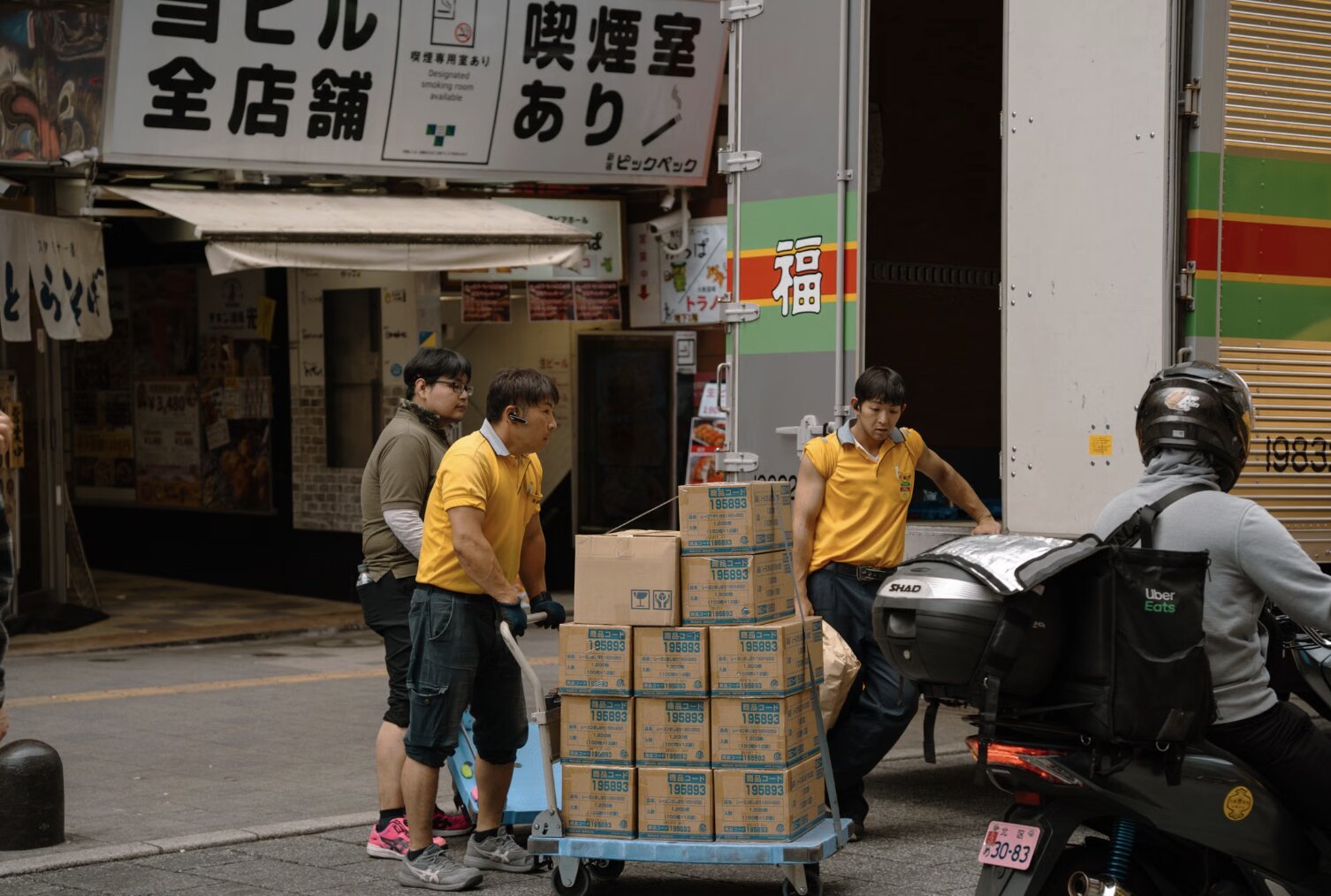
This model works well in many countries, but sourcing from Japan often involves extra steps. Many Japanese suppliers sell only within the domestic market, accept local payment methods, or ship exclusively to Japanese addresses. As a result, overseas sellers cannot always buy directly from them.
A Japan dropshipping platform bridges that gap by making Japanese products easier to source from overseas. Depending on the platform, sellers can search for products, connect with suppliers, purchase through domestic marketplaces, or use warehousing and international shipping services to complete the order.
Because different platforms serve different purposes, it's important to understand how they work before choosing one. Some specialize in wholesale sourcing, while others focus on proxy buying, marketplace access, or fulfillment services. The next section explains these platform types and when each one makes the most sense.
Main Types of Japan Dropshipping Platforms
Many sellers start by looking for "the best Japan dropshipping platform." In reality, there isn't one platform that fits every business.
The right choice depends on what you're trying to do. If you're testing a few products, the platform you need will be very different from the one used by a retailer importing hundreds of items every month. Some businesses need access to Japan-only marketplaces, while others care more about wholesale pricing or international fulfillment.
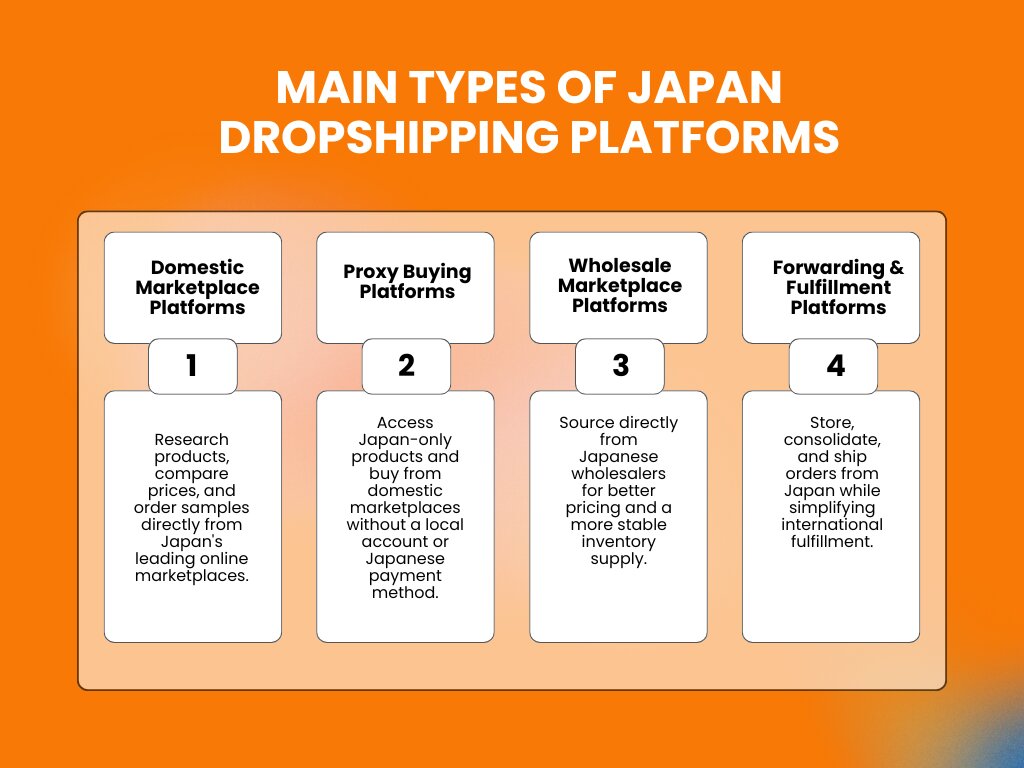
That's why Japan dropshipping platforms generally fall into four categories. Understanding what each type is built for will help you narrow down your options much faster.
Domestic Marketplace Platforms
Japanese domestic marketplaces are often the first place sellers look when researching new products. Instead of searching supplier catalogs, you can browse thousands of listings from local retailers, compare prices, read customer reviews, and see which products are already popular in Japan.
Rakuten Japan, Amazon Japan, and Yahoo Shopping each offer a different mix of brands and sellers, giving buyers a broader view of the market than a single wholesale supplier can provide. This makes domestic marketplaces particularly useful when you're exploring a new product category or deciding which items are worth testing.
Many dropshippers also use these marketplaces to order samples before moving to wholesale purchasing. It's a simple way to evaluate product quality, packaging, and customer demand without making a large upfront investment.
Proxy Buying Platforms
Many Japanese brands and retailers don't sell directly to overseas customers. They may only accept Japanese payment methods or deliver to addresses within Japan. That's why proxy buying platforms have become one of the most common ways to source Japanese products.
With this model, the platform purchases products on your behalf, receives them at a warehouse in Japan, and prepares them for international shipping. Some platforms, such as Janbox, also give buyers access to domestic marketplaces like Rakuten Japan, Mercari, Yahoo Shopping, and Amazon Japan through a single account.
Proxy buying is often the best starting point for sellers who want to:
Test Japan-only products before investing in inventory.
Source limited-edition or seasonal releases.
Buy from several Japanese marketplaces at once.
Sell collectibles, anime merchandise, stationery, beauty products, or other niche items.
The biggest benefit is flexibility. You don't need to negotiate with manufacturers or meet wholesale minimum orders to start selling Japanese products. Instead, you can test demand with smaller purchases and expand once you know which products perform well.
Learn more: The Ultimate Guide to Japan Proxy Shopping: Smart Way to Buy from Japan
Wholesale Marketplace Platforms
Once a product proves it can generate consistent sales, buying one item at a time often becomes less practical. At that point, many businesses begin working directly with wholesalers.
Wholesale marketplaces bring together Japanese manufacturers, distributors, and wholesale suppliers in one place. Instead of browsing individual product listings, buyers can compare suppliers, request catalogs, and place larger orders at wholesale prices.
This model is a better fit if you:
Run an established ecommerce store.
Need a stable supply of the same products.
Want lower unit costs.
Plan to reorder inventory regularly.
Wholesale sourcing usually requires a larger investment upfront, but it offers more predictable pricing and product availability over the long term.
Learn more: Wholesale From Japan: A Complete Guide for Your Business
Forwarding and Fulfillment Platforms
Finding products is only one part of running a dropshipping business. After an order is placed, someone still needs to receive the package, store it, combine shipments if necessary, and send everything to the final destination.
That's where forwarding and fulfillment platforms come in.
These services provide a warehouse in Japan where purchases from different suppliers can be collected before being shipped internationally. Many also offer package consolidation, repacking, shipment tracking, and other logistics services that help reduce shipping costs and simplify order management.
This type of platform is especially useful for businesses buying from multiple suppliers or handling a growing number of international orders. As order volume increases, having a reliable fulfillment process often becomes just as important as finding the right products.
Best Product Categories for Japan Dropshipping
A good Japan dropshipping product needs more than “made in Japan” appeal. It should be hard to find locally, light enough to ship, easy to explain on a product page, and valuable enough for customers to wait for international delivery. These categories usually meet those conditions better than broad, generic products.
Japanese Beauty and Skincare
Japanese beauty works well because customers already connect the category with quality and daily use. Products such as sunscreen, cleansers, moisturizers, sheet masks, and hair care items are also easy to bundle into routines.
This category can bring repeat purchases, but sellers need to check import rules for cosmetics before listing products.
Anime, Manga, and Character Goods

Anime and character goods depend heavily on authenticity. Fans often want official items, Japan-only releases, event merchandise, or products that are not sold in their country yet.
Figures, plush toys, keychains, trading cards, and collaboration goods can perform well because buyers are usually searching for specific characters or series.
Matcha, Tea, and Specialty Food
Japanese tea and specialty food attract buyers who want authentic products, not supermarket alternatives. Matcha, hojicha, genmaicha, regional snacks, and seasonal gift sets can all work for niche stores.
The best products in this category are lightweight, sealed, shelf-stable, and allowed under the buyer’s local food import rules.
Stationery and Lifestyle Goods
Japanese stationery has strong appeal because the products are practical, affordable, and visually easy to sell. Pens, notebooks, planners, stickers, washi tape, and desk accessories also fit well with journaling, study, and gift-focused audiences.
Lifestyle items can work too, especially small kitchen tools, storage products, and travel accessories with clear everyday use.
Hobby, Collectibles, and Secondhand Items
Japan has strong supply in collectibles and secondhand goods, especially when condition matters. Trading cards, model kits, vintage cameras, watches, games, golf items, and luxury fashion can attract buyers looking for rare or well-kept products.
This category needs closer monitoring because inventory changes fast, but it can offer strong margins when sellers know the niche well.
Best Japan Dropshipping Platforms to Consider
By now, you've seen that Japan dropshipping platforms aren't all built for the same purpose. Some are designed to help you access Japan's domestic marketplaces, while others focus on wholesale sourcing or fulfillment. Rather than choosing the first platform you come across, it's better to start with the one that matches the way you plan to run your business. The comparison below summarizes the strengths of each platform before we explore them individually.
Platform Name | Integration Method | Core Product Focus | MOQ Requirement | International Shipping Speed | Best Suited For |
Janbox | Automated API & Comprehensive Marketplace | Anime, J-Beauty, Secondhand Luxury, Local Domestic Brands,supplement | None (1 item allowed) | 3–7 Business Days (DHL, FedEx, EMS) | Hands-free dropshipping of millions of listings pulled directly from top Japanese consumer networks. |
Ichiba Oneplatform | All-in-One OMS Software & Sourcing Gateway | High-demand Retail Goods, Electronics, Private Label | None to Low (Flexible scaling) | 5–10 Business Days (Multi-warehouse fulfillment) | Multi-channel dropshippers requiring deep software integration, automated order syncing, and blind shipping. |
Super Delivery | Manual Dashboard (Locked Wholesale Portal) | Apparel, Traditional Housewares, Kitchenware | Very Low (Most vendors offer No MOQ) | 5–14 Business Days (Via Assigned Forwarder) | Established boutiques looking for authentic, direct-from-factory wholesale pricing. |
NETSEA | Manual CSV Export (Native Japanese Portal) | Trendy Fashion, Subculture Goods, Daily General Merchandise | Varies by individual domestic distributor | 7–14 Business Days (Requires third-party forwarder) | Experienced niche curators capable of handling native Japanese interfaces for raw trade prices. |
TopSeller | Automated CSV Sync & Order Management Log | Mass-market Consumer Goods, Electronics, General SKUs | None (Built for dropshipping drops) | 5–10 Business Days (Domestic focus; requires forwarder for export) | Structured e-commerce stores requiring deep catalog variations and automated inventory updates. |
Orosy | Modern Curated B2B Interface | Indie Creator Brands, Organic Cosmetics, Artisanal Lifestyle Items | None to Low (Flexible vendor terms) | 4–9 Business Days (Standard global express lines) | High-end Shopify stores focusing on unique premium aesthetics rather than mass commodities. |
CJdropshipping | Fully Automated Shopify/WooCommerce App | Sourced Consumer Goods, Trending Global Gadgets | None (Fully automated logistics) | 3–8 Business Days (Via Yamato, Sagawa, or private lines) | General dropshippers who want a hands-off, white-label automated fulfillment workflow. |
Janbox
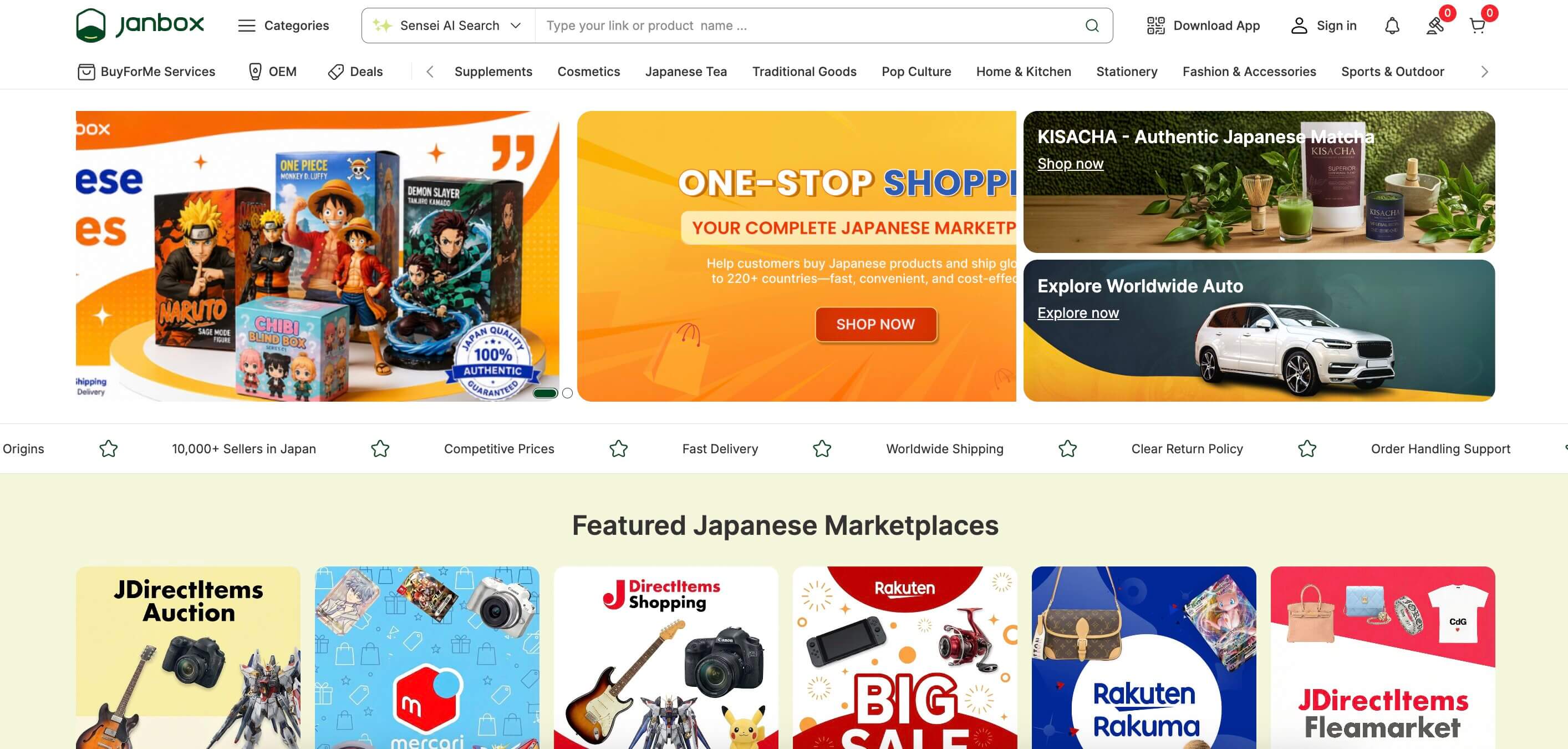
Janbox is a cross-border marketplace that helps international sellers source products from Japan and manage the buying process in one place. Instead of searching multiple Japanese websites separately, users can access products from marketplaces such as Rakuten, Mercari, and Yahoo Auctions through a single platform.
This setup makes Janbox particularly useful for dropshipping businesses that want to sell authentic Japanese products without opening local marketplace accounts or dealing with Japanese payment methods. It also gives sellers access to a much wider product selection, including Japan-only releases, niche brands, and items that are difficult to find through international suppliers.
Beyond product sourcing, Janbox also supports the logistics needed to move products from Japan to customers overseas. Orders placed from different Japanese sellers are delivered to a warehouse in Tokyo, where they can be stored for up to 45 days, inspected, and consolidated into a single shipment. Combining multiple purchases before international delivery can help reduce shipping costs while making order management much easier.
For sellers looking for a single platform to source products, manage purchases, and arrange international shipping, Janbox provides a practical solution that supports every stage of the cross-border sourcing process.
Ichiba Oneplatform
Ichiba Oneplatform is an all-in-one dropshipping platform built for businesses that manage larger order volumes across multiple sales channels. Rather than focusing on marketplace access, the platform combines supplier sourcing, order management, and fulfillment into a single system.
The platform connects sellers with a large network of Japanese suppliers while allowing them to manage products and orders from one dashboard. It also integrates with ecommerce platforms such as Shopify, Amazon, Etsy, and TikTok Shop, making it easier to synchronize orders across different sales channels.
Once an order is placed, Ichiba Oneplatform automatically sends the fulfillment request through its logistics network. Products are inspected, repacked when necessary, and shipped from one of its warehouse locations before being delivered internationally. This workflow reduces manual processing and gives businesses more control over inventory, fulfillment, and delivery as order volume grows.
Super Delivery
Super Delivery focuses on wholesale sourcing rather than individual product purchases. The marketplace brings together thousands of Japanese brands and suppliers, giving retailers access to products across beauty, homeware, fashion, stationery, food, and lifestyle categories.
The platform works best for businesses that already know what they want to sell and are ready to place repeat orders. Compared with buying products one by one, wholesale purchasing can reduce unit costs and provide a more stable supply over time.
Before joining, businesses need to complete a verification process to access supplier catalogs and wholesale pricing. Some suppliers also have minimum order requirements, so Super Delivery is generally a better fit for established ecommerce stores than first-time dropshippers.
NETSEA
NETSEA is one of Japan's largest online wholesale marketplaces. It gives retailers access to thousands of suppliers across categories including apparel, cosmetics, health products, home goods, food, and seasonal merchandise.
Many businesses use NETSEA to discover new suppliers, compare wholesale prices, and expand their product range without contacting manufacturers individually. The marketplace also offers products from both well-known brands and smaller Japanese businesses that may be difficult to find through international sourcing platforms.
Since the platform primarily serves the domestic Japanese market, overseas buyers may need additional support for purchasing or international shipping.
TopSeller
TopSeller takes a different approach from traditional sourcing marketplaces. Instead of focusing on product discovery, it helps businesses automate order management and day-to-day dropshipping operations.
The platform connects with ecommerce stores and marketplaces so product information, inventory, and customer orders can be managed from one place. This reduces manual work and helps sellers process larger order volumes more efficiently.
TopSeller is a practical option for businesses that already have suppliers and want to spend less time handling routine operations as their stores grow.
Orosy
Orosy specializes in connecting retailers with independent Japanese brands, particularly in the lifestyle, fashion, beauty, and homeware sectors. Many of the products available on the platform come from emerging brands that are not widely distributed outside Japan.
For businesses looking to build a differentiated product catalog, Orosy offers an opportunity to source items that customers are less likely to find on large international marketplaces.
Because the platform focuses on wholesale relationships, it is better suited to retailers planning ongoing inventory purchases rather than one-off product testing.
CJdropshipping
CJdropshipping is a global dropshipping platform that supports sourcing from multiple countries, including Japan. Alongside product sourcing, it also provides order fulfillment, warehousing, inventory management, and international shipping services.
For sellers already using Shopify, WooCommerce, TikTok Shop, or other ecommerce platforms, CJdropshipping can simplify order processing through built-in integrations. Products from Japanese suppliers are available, although the selection is generally smaller than what buyers can access through dedicated Japanese marketplaces.
Businesses looking for a single platform to manage products from several countries may find CJdropshipping a convenient option, especially when Japan is only one part of their overall sourcing strategy.
How to Choose the Best Japanese Dropshipping Platforms
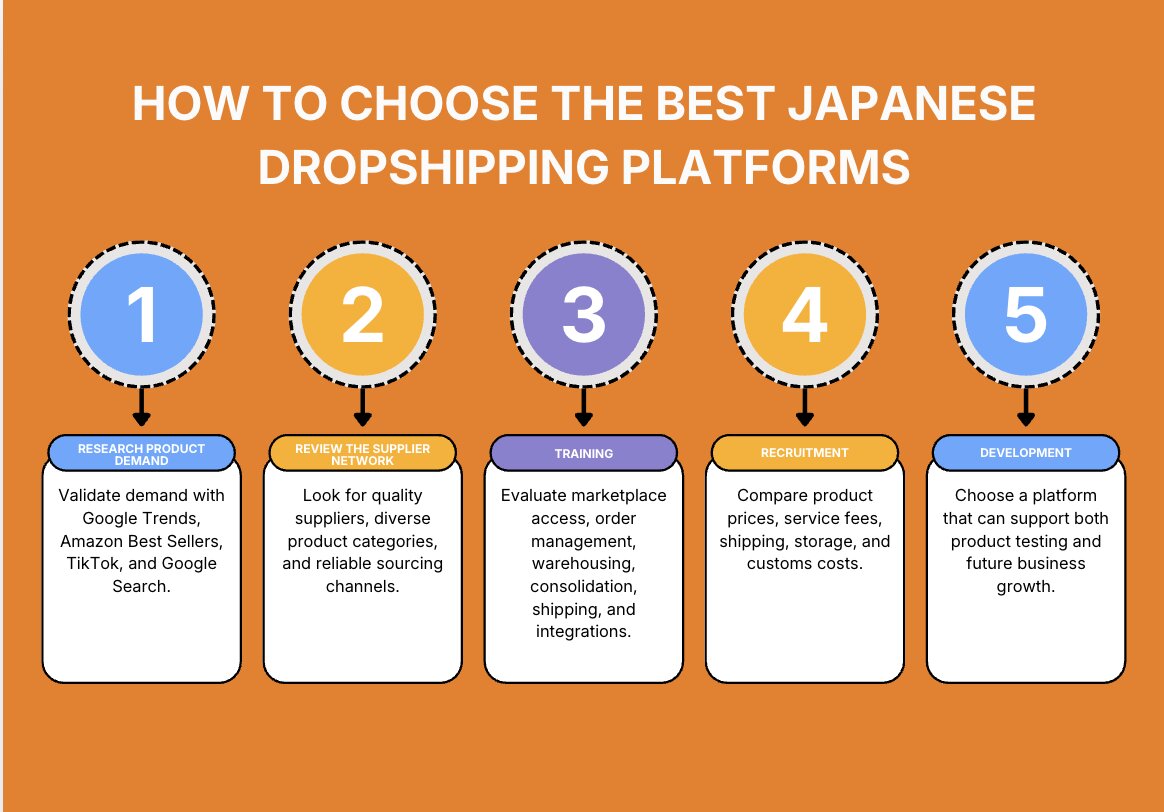
After trying different sourcing methods, one thing becomes clear: there isn't a single platform that's best for everyone. The right choice depends on where your business is today, not where you hope it will be a year from now.
Many new sellers spend weeks comparing features or searching for the "perfect" platform. In practice, the platform matters less than choosing one that fits your current stage. Here's the approach I'd recommend.
A long feature list doesn't automatically make a platform the right choice. Before committing to one, it's worth looking at how it fits your sourcing workflow, the products you want to sell, and how your business may grow over time.
Research Product Demand First
A platform is only valuable if it gives you access to products that customers actually want to buy.
Before comparing platforms, spend some time researching demand. Google Trends can help you identify whether interest in a product is growing or declining, while Amazon Best Sellers, TikTok, Instagram, and Google Search can reveal what's already selling well. Starting with market demand makes it much easier to judge whether a platform offers the products your business needs.
Review the Supplier Network
The size of a supplier network matters, but the quality of that network matters even more.
Look beyond the number of products listed. Check whether the platform works with manufacturers, wholesalers, domestic marketplaces, or a combination of all three. A broader sourcing network usually gives you more flexibility as your catalog expands, especially if you're selling products from different categories.
Compare the Features That Affect Daily Operations
The best platform should make your work easier, not add extra steps.
As you compare different options, look at features such as:
Marketplace or supplier access
Product search and ordering
Warehouse storage
Package consolidation
Order management
International shipping options
Ecommerce integrations
Shipment tracking
These features have a much bigger impact on day-to-day operations than marketing claims or the number of products available.
Calculate the Total Cost of Sourcing
The product price is only one part of your overall cost.
Before making a decision, compare service fees, domestic shipping within Japan, warehouse storage, package consolidation, international delivery, payment processing, and any additional charges. Looking at the total landed cost gives you a more realistic estimate of your profit margin.
Choose a Platform That Can Grow With Your Business
The platform that works for your first few orders may not support your business a year from now.
If you're just starting out, flexibility and access to Japanese products may be your biggest priorities. As order volume grows, features such as automation, fulfillment support, inventory management, and multi-channel integrations become increasingly valuable. Choosing a platform that can support both stages helps reduce the need to switch systems later.
Conclusion
Japan offers far more sourcing opportunities than many sellers realize, but success depends on choosing the right platform for the way you run your business. Some platforms are better for discovering Japan-only products, while others focus on wholesale sourcing, fulfillment, or business automation.
Rather than searching for a single "best" option, start by defining your sourcing goals, evaluate the platform's supplier network and features, and choose the solution that fits your current stage. As your business grows, the right platform can help you expand your product range, simplify operations, and reach customers worldwide with greater confidence.
FAQs
What is the best Japan dropshipping platform for beginners?
If you're new to Japan dropshipping, Ichiba Oneplatform is one of the easiest platforms to start with. It offers access to Japanese suppliers without membership fees or minimum order requirements, making it simple to test products before scaling your business.
Can I dropship products that are only sold in Japan?
Yes. Many Japan-only products can be sourced through platforms that provide access to domestic marketplaces and offer international purchasing and shipping support.
Do I need to register a business in Japan to start dropshipping?
In most cases, no. Many cross-border sourcing platforms are built for international sellers and allow you to purchase products without establishing a business entity in Japan.
Which Japanese products are the most popular for dropshipping?
Beauty products, anime merchandise, stationery, specialty tea, collectibles, and lifestyle goods remain some of the most popular categories because they combine strong international demand with products that are often difficult to source outside Japan.
Is Japan dropshipping suitable for small ecommerce businesses?
Yes. Many small businesses begin with a limited product range to validate demand before expanding into additional categories or larger order volumes. This approach helps reduce inventory risk while allowing sellers to refine their product selection over time.
Table of Contents
Related Posts