B2B Cross Border Ecommerce: Complete Guide for Global Businesses
Every international business transaction begins with the same question: Should we buy locally, or should we look beyond our own market?
For many companies, the answer increasingly points overseas. A manufacturer searches for specialized components from Japan, a retailer looks for exclusive products to stand out from competitors, while a distributor compares suppliers across multiple countries before placing an order. Buying and selling across borders has become a normal part of doing business, not an exception.
This shift is driving the rise of B2B cross border ecommerce. Instead of relying solely on traditional procurement channels, businesses now use digital platforms to source products, connect with suppliers, and reach customers around the world. The opportunity is significant, but so are the operational challenges. Understanding how the model works is the first step toward building a successful international strategy.
What Is B2B Cross-Border Ecommerce?
As businesses look beyond their domestic markets for growth, buying and selling across borders has become a normal part of doing business. Companies are no longer limited to local suppliers or customers. Instead, they can source products internationally, reach new markets, and build global supply chains through digital commerce.
B2B cross-border ecommerce refers to online transactions between businesses in different countries. Rather than relying solely on traditional procurement channels, companies use ecommerce platforms, B2B marketplaces, and digital procurement tools to source products, place orders, and manage international trade.
Unlike B2C cross-border ecommerce, which focuses on selling directly to consumers, B2B transactions often involve bulk orders, negotiated pricing, recurring purchases, and long-term business relationships.
B2B Cross-Border Ecommerce | B2C Cross Border Ecommerce |
Business-to-business transactions | Business-to-consumer transactions |
Larger or recurring orders | Individual purchases |
Negotiated pricing | Fixed retail pricing |
Long-term supplier relationships | Customer-focused sales |
For businesses looking to expand internationally, B2B cross border ecommerce is more than an online sales channel. It provides a scalable way to connect with global suppliers, streamline procurement, and grow beyond local markets.
Why More Businesses Are Expanding Across Borders
Global cross border ecommerce is no longer limited to multinational corporations. Advances in ecommerce technology, international logistics, and digital payment systems have made it easier than ever for businesses of all sizes to buy from and sell to overseas markets. Whether sourcing products from international suppliers or reaching customers in new regions, companies now have far fewer barriers to global expansion.
The numbers reflect this shift. According to DHL's 2025 B2B E-Commerce Trends Report, 72% of B2B retailers already sell to businesses in other countries, while 41% of their total orders are shipped internationally. At the same time, 58% of global B2B retailers sell across three or more ecommerce platforms, highlighting how digital channels have become central to international growth.
Several factors are driving this momentum:
Access to global suppliers and customers. Businesses are no longer limited by geographic boundaries. Cross-border ecommerce makes it easier to connect with specialized manufacturers, wholesale suppliers, and new customer markets that may not exist locally.
Stronger supply chain resilience. Working with suppliers across multiple countries reduces dependence on a single sourcing market and helps businesses respond more effectively to disruptions, shortages, or changing trade conditions.
Better pricing and broader product selection. International sourcing gives businesses access to more competitive pricing, a wider range of products, and exclusive offerings that can strengthen their competitive position.
Lower barriers to international expansion. Selling across borders once required significant investments in local offices, distributors, and procurement networks. Today, ecommerce platforms, digital payment solutions, and global logistics providers have made international trade far more accessible than it was just a decade ago.
Growing demand for international commerce. Buyers are increasingly willing to purchase from overseas suppliers when they can access better pricing, unique products, or higher-quality manufacturing, encouraging more businesses to expand beyond their domestic markets.
How B2B Cross Border Ecommerce Works
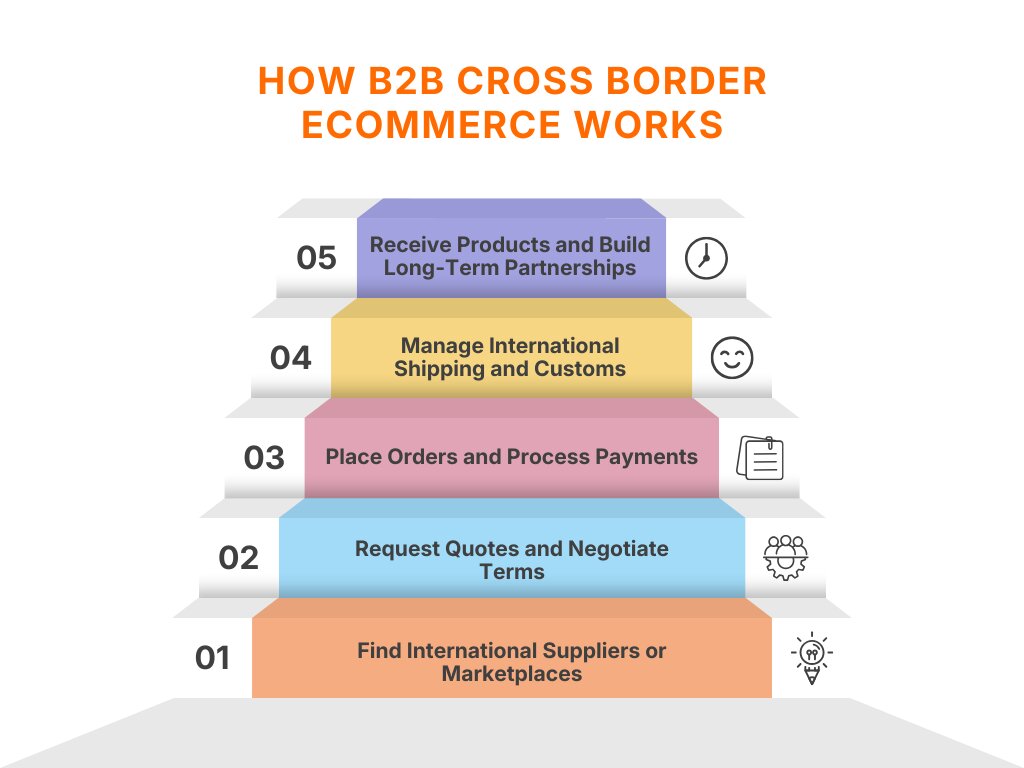
At its core, B2B cross border ecommerce follows the same goal as domestic B2B trade: connecting businesses that need products with businesses that can supply them. The difference is that every stage of the buying process, from product discovery to international delivery, takes place across different countries and often through digital platforms.
While each business has its own procurement process, most cross-border transactions follow a similar workflow.
Find International Suppliers or Marketplaces
The process begins with identifying reliable suppliers through B2B marketplaces, manufacturer websites, industry directories, or regional ecommerce platforms. Businesses compare product specifications, pricing, certifications, and supplier credibility before making contact.
Request Quotes and Negotiate Terms
Unlike B2C ecommerce, pricing is often negotiable. Buyers may discuss minimum order quantities (MOQs), payment terms, lead times, product customization, or long-term purchasing agreements before placing an order.
Place Orders and Process Payments
Once both parties agree on the terms, the buyer confirms the purchase through the supplier or marketplace. Depending on the transaction, payment may be made through bank transfers, trade finance solutions, escrow services, or international payment platforms.
Manage International Shipping and Customs
After production or order fulfillment, goods are prepared for export. Logistics providers coordinate international shipping, while customs documentation, duties, taxes, and import requirements must be handled before the shipment reaches its destination.
Receive Products and Build Long-Term Partnerships
Most B2B transactions don't end with a single purchase. Businesses evaluate product quality, delivery performance, and supplier reliability before deciding whether to establish an ongoing procurement relationship or negotiate future orders.
What Businesses Need Before Going Global
Entering international markets involves far more than translating a website or finding an overseas supplier. Every market has different regulations, customer expectations, payment preferences, and logistics requirements. Businesses that prepare these fundamentals early are far more likely to scale successfully while avoiding costly mistakes later.
Before expanding across borders, focus on these key areas:
Validate your target market. Research customer demand, local competitors, pricing expectations, and buying behavior before making significant investments. A product that performs well in one country may require different positioning or pricing in another.
Choose reliable suppliers and partners. Evaluate suppliers beyond cost alone. Product quality, production capacity, certifications, communication, and delivery consistency all affect long-term business performance. Whenever possible, request samples or conduct supplier verification before placing large orders.
Understand local regulations and compliance. Import restrictions, product standards, customs documentation, taxes, and labeling requirements vary by country. Addressing these requirements early helps prevent shipment delays, unexpected costs, and compliance issues.
Build a scalable logistics strategy. International shipping is more complex than domestic fulfillment. Consider warehousing, freight options, customs clearance, delivery times, and inventory planning to keep operations efficient as order volumes grow.
Prepare for international payments and currencies. Businesses should be ready to manage multiple currencies, transaction fees, exchange rate fluctuations, and secure payment methods that work for both buyers and suppliers.
Localize the buying experience. Successful expansion goes beyond language translation. Local currencies, preferred payment methods, product information, customer support, and even cultural expectations all influence trust and purchasing decisions.
Plan for long-term operations, not just the first order. Cross-border ecommerce is built on repeat business. Establish clear procurement processes, supplier performance reviews, inventory management, and contingency plans so your operations remain stable as your business expands.
Common Challenges in B2B Cross-Border Ecommerce
Expanding into international markets creates new growth opportunities, but it also introduces operational complexities that businesses rarely face in domestic trade. Every cross-border transaction involves more stakeholders, regulations, currencies, and logistics partners, increasing the number of variables that can affect cost, delivery, and customer satisfaction.
Understanding these challenges early allows businesses to build more resilient procurement and sales strategies instead of reacting to problems after they occur.
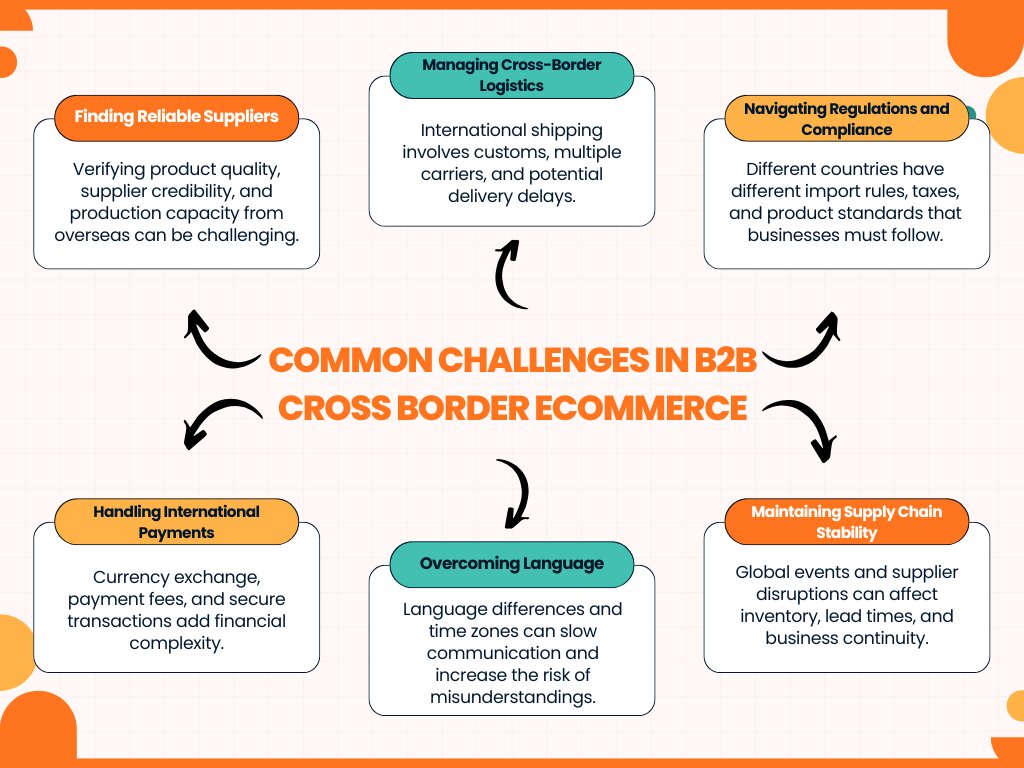
Finding Reliable Suppliers
Identifying a supplier is relatively easy. Determining whether that supplier can consistently meet your quality standards, production timelines, and order volumes is far more difficult.
Unlike domestic partnerships, overseas suppliers are harder to evaluate in person, making businesses more dependent on certifications, customer reviews, product samples, and third-party verification. Even small inconsistencies in quality or communication can become expensive when products are shipped internationally or purchased in bulk.
As businesses scale, supplier reliability becomes just as important as pricing. A lower-cost supplier that frequently misses deadlines or delivers inconsistent quality can create far greater losses than the initial savings.
Managing Cross-Border Logistics
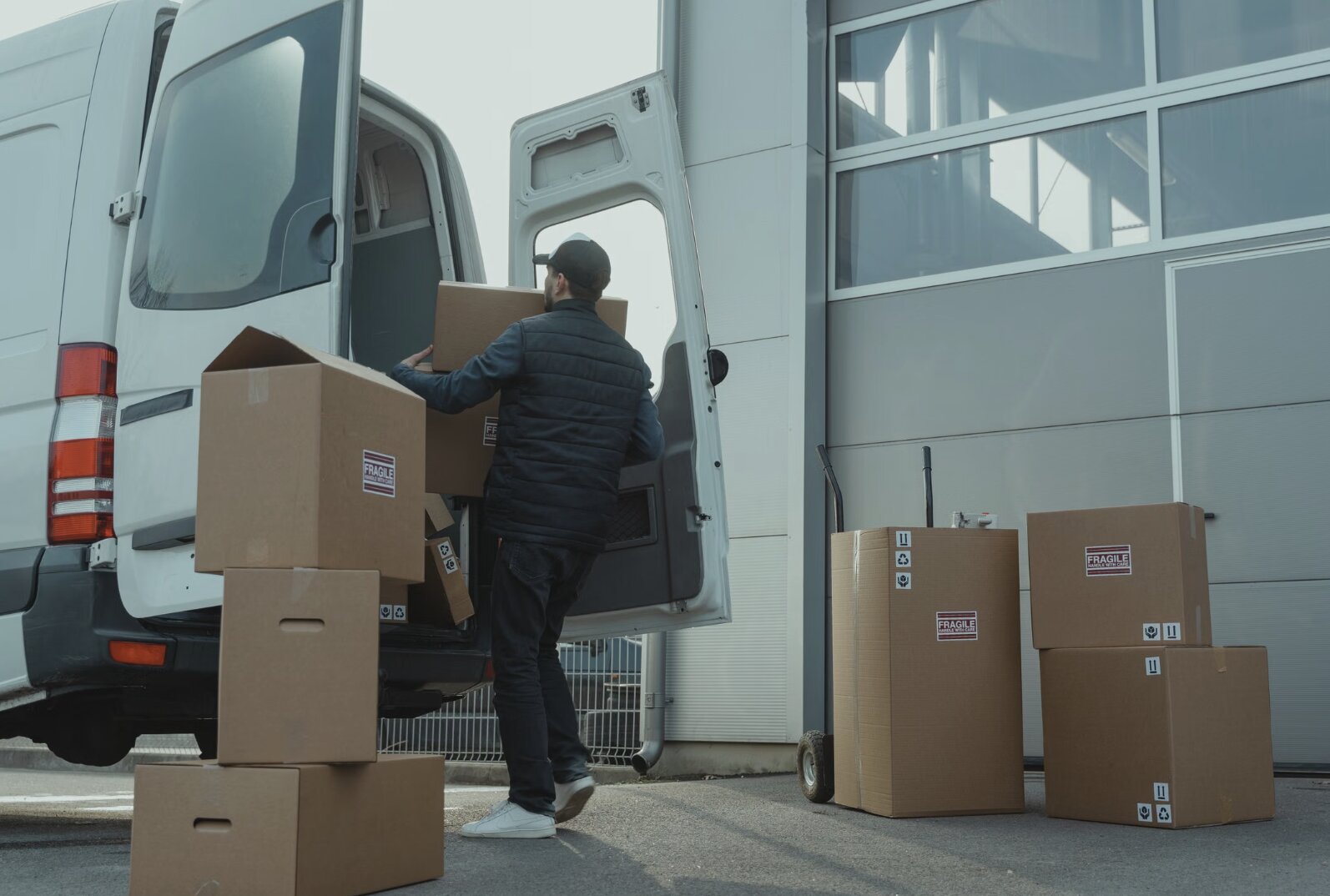
Moving products across borders involves far more than arranging international shipping. Every order passes through freight carriers, customs authorities, warehouses, and local delivery networks before reaching its destination.
Delays at any stage, whether caused by incomplete documentation, customs inspections, port congestion, or transportation disruptions, can affect production schedules, inventory planning, and customer commitments. Businesses also need to balance shipping speed against transportation costs while maintaining visibility throughout the entire supply chain.
As order volumes increase, logistics planning becomes a competitive advantage rather than simply an operational task.
Navigating Regulations and Compliance
Each country has its own import regulations, product standards, labeling requirements, tax rules, and customs procedures. A product that complies with regulations in one market may require additional certifications or documentation before it can legally enter another.
Regulatory requirements also evolve over time. Businesses expanding internationally need processes for monitoring compliance updates and ensuring that suppliers, shipping documents, and product specifications continue to meet local requirements.
Failing to meet these obligations can result in customs delays, additional fees, shipment rejections, or legal penalties.
Handling International Payments
Cross-border payments involve more than transferring money between countries. Businesses must manage exchange rate fluctuations, transaction fees, payment processing times, and varying payment preferences across different markets.
Large B2B transactions often require negotiated payment terms, deposits, or milestone-based payments, adding another layer of financial complexity. Companies also need secure payment methods that reduce fraud risk while protecting both buyers and suppliers throughout the transaction.
Without a well-defined payment strategy, hidden costs can gradually reduce overall profit margins.
Overcoming Language and Communication Barriers
Successful B2B partnerships depend on clear communication. Differences in language, business etiquette, technical terminology, and time zones can easily lead to misunderstandings during negotiations, production, or order fulfillment.
A minor misinterpretation of product specifications, packaging requirements, or delivery terms may result in incorrect shipments, costly returns, or production delays. These risks become even greater when businesses work with multiple suppliers across different countries.
Clear documentation, standardized processes, and consistent communication channels help minimize these issues.
Maintaining Supply Chain Stability
Global supply chains are increasingly influenced by factors beyond any company's control, including geopolitical tensions, trade policy changes, natural disasters, labor shortages, and transportation disruptions.
Businesses that rely on a single supplier or sourcing market face greater exposure when unexpected events interrupt production or shipping. Building a diversified supplier network, maintaining safety stock where appropriate, and developing contingency plans can significantly improve long-term supply chain resilience.
For many businesses, resilience has become just as important as efficiency when operating in international markets.
Common Challenges at a Glance
Challenge | Business Impact | How to Reduce the Risk |
Supplier reliability | Product quality issues, missed deadlines, inconsistent fulfillment | Vet suppliers thoroughly, request samples, monitor performance over time |
Cross-border logistics | Shipping delays, higher transportation costs, inventory disruptions | Plan logistics early and work with experienced international shipping partners |
Regulatory compliance | Customs holds, fines, import restrictions | Stay updated on local regulations and prepare complete documentation |
International payments | Currency losses, transaction costs, payment disputes | Use secure payment methods and establish clear payment terms |
Communication barriers | Order errors, production delays, misunderstandings | Standardize documentation and maintain clear communication with suppliers |
Supply chain disruptions | Stock shortages, longer lead times, operational instability | Diversify suppliers and develop contingency plans |
How Janbox Simplifies B2B Cross-Border Ecommerce from Japan
Expanding internationally often means managing far more than finding the right supplier. Businesses may need to compare products across multiple marketplaces, coordinate purchases from different sellers, consolidate shipments, and keep track of orders throughout the procurement process. As operations grow, managing these tasks manually becomes increasingly time-consuming.
For companies sourcing products from Japan, Janbox helps streamline many of these steps by bringing product discovery, purchasing, order management, warehousing, and international shipping into one platform.
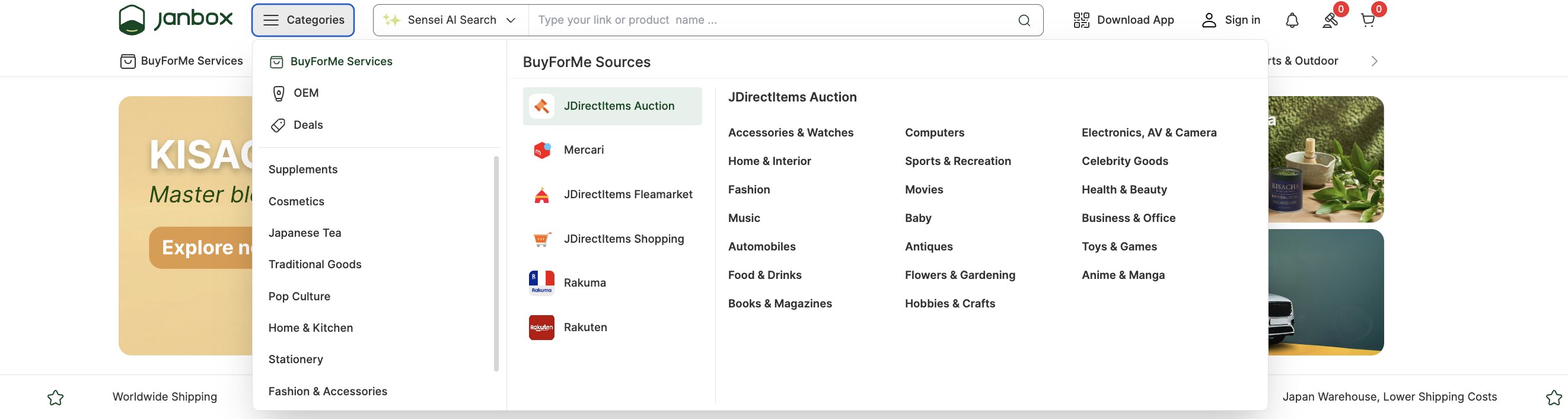
Access Multiple Japanese Marketplaces from One Platform
Instead of searching each marketplace separately, businesses can browse products from Mercari, Rakuten, Yahoo! Shopping, Yahoo! Auctions, Suruga-ya, and other Japanese marketplaces through a single Janbox account. This makes it easier to compare product availability, pricing, and sellers without switching between multiple websites.
Purchase from Multiple Sellers More Efficiently
B2B orders often involve sourcing products from different suppliers rather than relying on a single vendor. Managing these purchases through one workflow helps reduce administrative work and gives businesses better visibility over their procurement process.
Consolidate Shipments to Reduce Costs
Receiving orders from multiple sellers separately can increase international shipping costs. Consolidating purchases into a single shipment helps reduce freight expenses while simplifying customs clearance and delivery planning.
Manage Orders Throughout the Procurement Process
As purchasing volume increases, keeping track of multiple suppliers and shipments becomes more challenging. A centralized order management workflow allows businesses to monitor purchases, warehouse status, and international deliveries without switching between multiple platforms.
Businesses sourcing from Japan often face operational challenges that go beyond finding the right products. By simplifying marketplace access, order management, shipment consolidation, and international delivery, Janbox helps create a more efficient cross-border procurement workflow.
Conclusion
compete in global markets. With digital marketplaces, international logistics, and online procurement tools becoming more accessible, expanding beyond domestic borders is no longer limited to large enterprises.
Success, however, depends on more than simply finding overseas buyers or suppliers. Businesses need a clear sourcing strategy, reliable partners, efficient logistics, and the right technology to manage cross-border operations at scale.
If your business is looking to source products from Japan, Janbox provides a practical way to simplify the process. By bringing together multiple Japanese marketplaces, centralized order management, warehouse services, and international shipping, it helps businesses purchase more efficiently while reducing much of the complexity associated with cross-border procurement.
FAQs
What is the difference between B2B and B2C cross border ecommerce?
B2B cross border ecommerce focuses on transactions between businesses, often involving bulk orders, negotiated pricing, and long-term supplier relationships. B2C cross border ecommerce involves businesses selling directly to individual consumers, typically through standard retail transactions.
Why is B2B cross-border e-commerce growing?
Businesses are expanding internationally to access new suppliers, reduce sourcing costs, diversify supply chains, and reach customers in overseas markets. Advances in digital commerce, payment technology, and global logistics have also made cross-border trade more accessible.
What are the biggest challenges in B2B cross-border e-commerce?
Common challenges include supplier verification, international logistics, customs compliance, payment processing, language barriers, and managing supply chain disruptions. Addressing these issues requires careful planning and reliable technology partners.
How can businesses source products from Japan more efficiently?
Using a centralized sourcing platform like Janbox makes it easier to browse multiple Japanese marketplaces, purchase from different sellers, consolidate shipments, and manage international orders from one account.
Is Janbox suitable for B2B buyers?
Yes. Janbox is suitable for businesses that source products from Japan, especially those purchasing from multiple Japanese marketplaces or suppliers. Its integrated marketplace access, warehouse services, shipment consolidation, and international shipping support help simplify cross-border procurement for businesses of different sizes.
Table of Contents
Related Posts