How to Start Dropshipping from Japan: Products, Suppliers & Step-by-Step Guide
If you've spent time researching dropshipping, you've probably noticed the same pattern: many stores end up selling identical products from the same suppliers. As competition grows, standing out becomes increasingly difficult, and competing on price alone is rarely a winning strategy.
That's why more sellers are turning to markets that offer something different. Japan stands out for its reputation for quality, exclusive products, and globally recognized brands, making it an attractive sourcing destination for ecommerce businesses looking beyond traditional supplier catalogs.
However, sourcing from Japan comes with its own challenges, from finding reliable suppliers to navigating international shipping. In this guide, you'll learn why Japan has become a popular choice for dropshipping, which products are worth selling, where to source them, and how to build your business step by step.
Why Japan Is Becoming a Popular Dropshipping Source
Japan's domestic retail and export landscape has undergone a massive digital expansion, making it a premier sourcing hub for global e-commerce merchants. Sourcing from Japanese suppliers allows dropshippers to stand out in a crowded market by offering distinct products backed by strong brand value.
Strong global demand
Global consumer appetite for authentic Japanese goods continues to break record levels. Official trade surveys from Japan's Ministry of Economy, Trade and Industry (METI) show that international cross-border purchases of Japanese merchandise exceeded 5.77 trillion JPY (over $37 billion USD) annually across major markets. Overseas buyers actively seek out original Japanese products through online channels, creating a massive pool of ready-to-buy global customers.
High-quality manufacturing
Japanese products enjoy an unmatched global reputation for strict quality control, precision craftsmanship, and rigorous safety standards. Whether you are dropshipping high-grade stationery, ergonomic kitchen tools, or advanced J-Beauty skincare formulations, Japanese manufacturing consistently outperforms generic mass-market alternatives. Sourcing durable goods reduces customer return rates and protects your store against negative reviews.
Japan-exclusive products
A huge portion of Japan's most desirable product inventory is strictly locked within its domestic market. Regional cosmetics formulations, seasonal food and snack variants, specialized fountain pens, and limited-run anime collectibles are often only released to domestic storefronts. This domestic exclusivity creates natural product scarcity on the global stage, giving dropshippers a strong competitive moat that big-box retailers cannot easily replicate.
Higher perceived value
Because items manufactured in Japan carry an intrinsic association with prestige, authenticity, and premium performance, online stores can command significantly higher profit margins. E-commerce merchants regularly apply a 30% to 50% retail markup above landed sourcing costs. This strong pricing power gives you the margin buffer needed to comfortably run paid social media advertising while maintaining healthy net profits.
Is Dropshipping From Japan Legal and Safe?

Yes, dropshipping from Japan is legal as long as you comply with the laws of the country where your business operates and the markets where you sell. The business model itself is not prohibited, but some product categories may be subject to import rules, labeling requirements, safety standards, or intellectual property restrictions.
The main legal risks usually come from the products rather than the sourcing model. Counterfeit goods, unauthorized replicas, and items that infringe trademarks or copyrights can create serious problems for your store. Extra care is also needed when selling cosmetics, food, supplements, electronics, or other regulated products, as requirements can vary by destination.
In terms of safety, Japan is generally considered a reliable sourcing market. Established retailers and marketplaces often provide seller ratings, product details, and customer reviews, which can help you assess a source before placing an order. Even so, sellers should still verify product authenticity, check supplier histories, and review return policies carefully.
Trending Products for Japan Dropshipping 2026
Not every Japanese product is a good fit for dropshipping. The most successful categories usually share three characteristics: consistent international demand, strong perceived value, and products that are difficult to source outside Japan.
Below are some of the best-performing product categories to consider in 2026.
Anime & Collectibles
Anime remains one of Japan's biggest cultural exports, making collectibles one of the strongest product categories for dropshipping. Demand extends far beyond Japan, with fans actively searching for official merchandise, limited-edition releases, and exclusive collaboration items that are often unavailable through local retailers.
Popular products include:
Scale figures
Nendoroids
Trading cards
Acrylic stands
Character keychains
Gashapon capsule toys
Limited event merchandise
Since many collectors prioritize authenticity, sourcing directly from Japanese marketplaces can provide a competitive advantage over generic international listings.
Read more: Top 20+ Best Anime Online Stores To Buy Anime and Manga

Japanese Beauty
Japanese beauty products have built a loyal global following thanks to their reputation for quality ingredients, gentle formulations, and continuous product innovation. Many shoppers specifically look for Japanese domestic versions of skincare and cosmetics that may not be available through international distributors.
Popular products include:
Cleansing oils
Facial masks
Hair treatments
Lip balms
Makeup from popular Japanese brands
Beauty products also benefit from repeat purchases, making them attractive for stores focused on customer lifetime value.
Read more: Where to Buy Japanese Skincare Online: Best Stores for Authentic Products
Snacks & Beverages
Source: Japan Centre
Japanese snacks continue to attract international buyers looking for flavors and seasonal products they cannot easily find at home. Limited-edition releases and regional specialties create recurring demand throughout the year.
Popular products include:
KitKat regional flavors
Instant ramen
Matcha products
Japanese candies
Tea
Seasonal snack boxes
Before selling food products internationally, always check the import regulations and labeling requirements in your target market.
Stationery
Japan is widely recognized for producing some of the world's highest-quality stationery. Students, professionals, artists, and collectors are willing to pay premium prices for products that combine functionality with thoughtful design.
Popular products include:
Gel pens
Mechanical pencils
Washi tape
Notebooks
Stickers
Pencil cases
Desk accessories
Many stationery items are lightweight, making them relatively inexpensive to ship internationally.
Read more: Where to Buy Japanese Stationery: Best Stores You Shouldn't Miss & Online Sites
Fashion & Accessories
Japanese fashion attracts customers looking for distinctive styles and quality craftsmanship. Beyond apparel, accessories often perform well because they have lower shipping costs while maintaining healthy profit margins.
Popular products include:
Tote bags
Socks
Wallets
Caps
Watches
Hair accessories
Traditional accessories such as folding fans and furoshiki
Limited collaborations between Japanese brands and popular franchises can also create strong demand.
Hobby & Specialty Products
Japan is home to countless niche communities, making hobby products an overlooked opportunity for dropshippers. These categories typically attract enthusiastic buyers who value authenticity over price.
Examples include:
Scale model kits
Mechanical keyboards
Photography accessories
Fishing equipment
Tea ceremony accessories
Kitchen knives
Coffee brewing equipment
DIY craft supplies
Although these products serve smaller audiences, they often offer higher average order values and less competition than mainstream dropshipping categories.
Best Japan Dropshipping Suppliers
Finding a Japanese “dropshipping supplier” is not always as straightforward as choosing a supplier from a conventional dropshipping directory. Some platforms below are marketplaces, some help international buyers access domestic Japanese stores, and others connect merchants with wholesale or dropshipping partners.
Before choosing one, check whether the platform supports the workflow your business needs. Access to products does not automatically mean that the seller will ship each order directly to your customer, provide unbranded packaging, or synchronize inventory with your store.
Platform | Platform Type | Best For |
Cross-border ecommerce marketplace | Sourcing products across Japan through one platform | |
Ichiba | Dropshipping & fulfillment platform | Integrated sourcing, order management, and fulfillment |
Buyee | Proxy shopping service | Auctions, collectibles, secondhand goods, and domestic stores |
ZenMarket | Proxy shopping service | Accessing multiple Japanese stores and consolidating purchases |
SaleHoo | Supplier directory | Finding pre-vetted wholesale and dropshipping partners |
AliExpress | Global marketplace | Testing lower-cost products with established dropshipping workflows |
Janbox
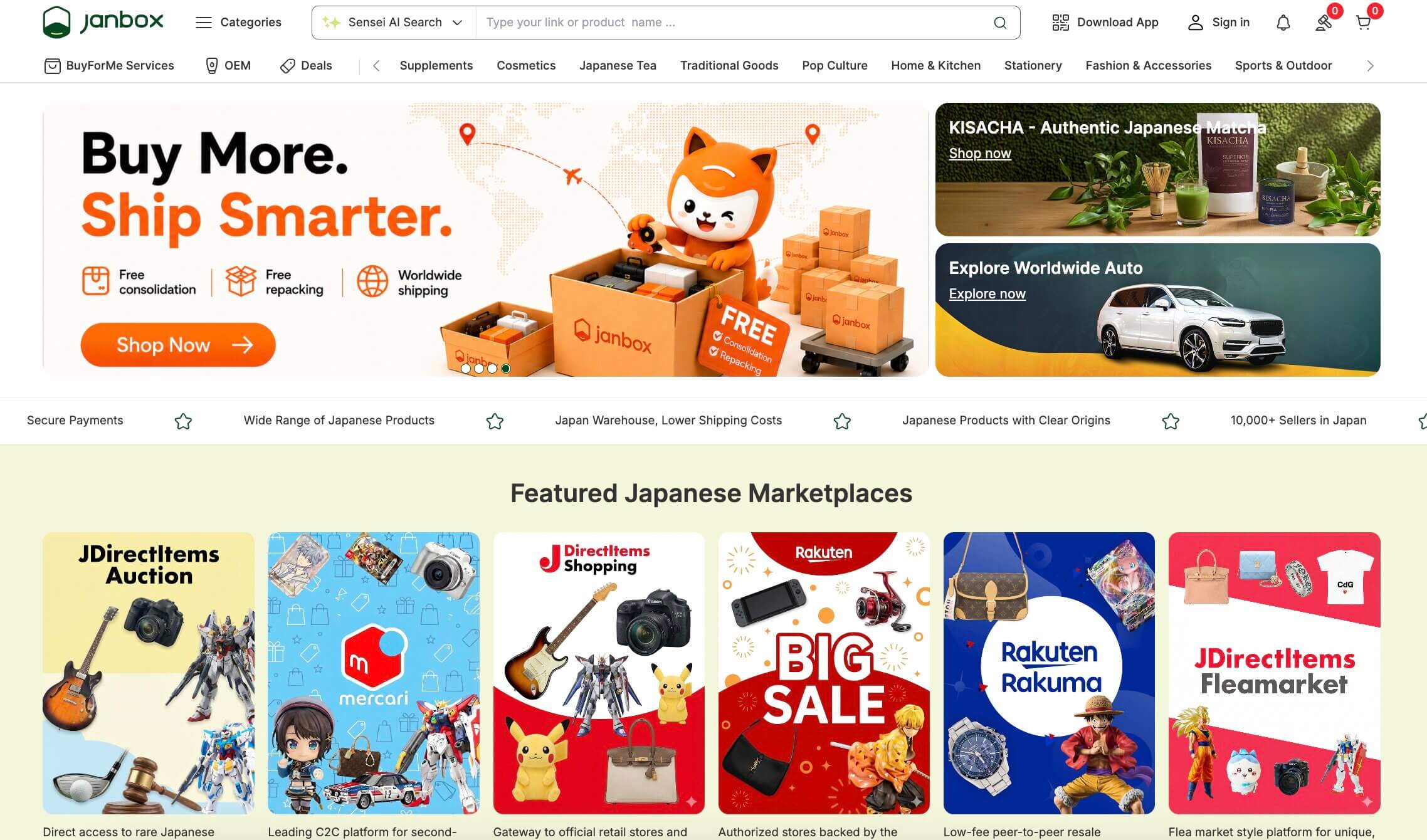
Janbox is a cross-border ecommerce marketplace that connects international buyers with products and sellers across Japan. Users can search supported Japanese marketplaces, purchase products, manage orders, and arrange international delivery through one system.
Its broad product coverage makes it useful for sellers working with categories such as anime merchandise, fashion, beauty products, electronics, collectibles, and traditional Japanese goods. Rather than searching each Japanese website separately, merchants can explore products from multiple sources in one place.
Janbox may be particularly useful when:
You want access to products from several Japanese marketplaces.
The original store does not offer convenient international purchasing.
You need help managing purchases and shipping from Japan.
You want to source both mainstream products and harder-to-find items.
However, sellers should still confirm stock availability, processing time, packaging conditions, and whether their fulfillment model can support direct delivery to end customers. Janbox simplifies access to the Japanese ecommerce ecosystem, but merchants remain responsible for building a reliable order-management process around it.
Ichiba
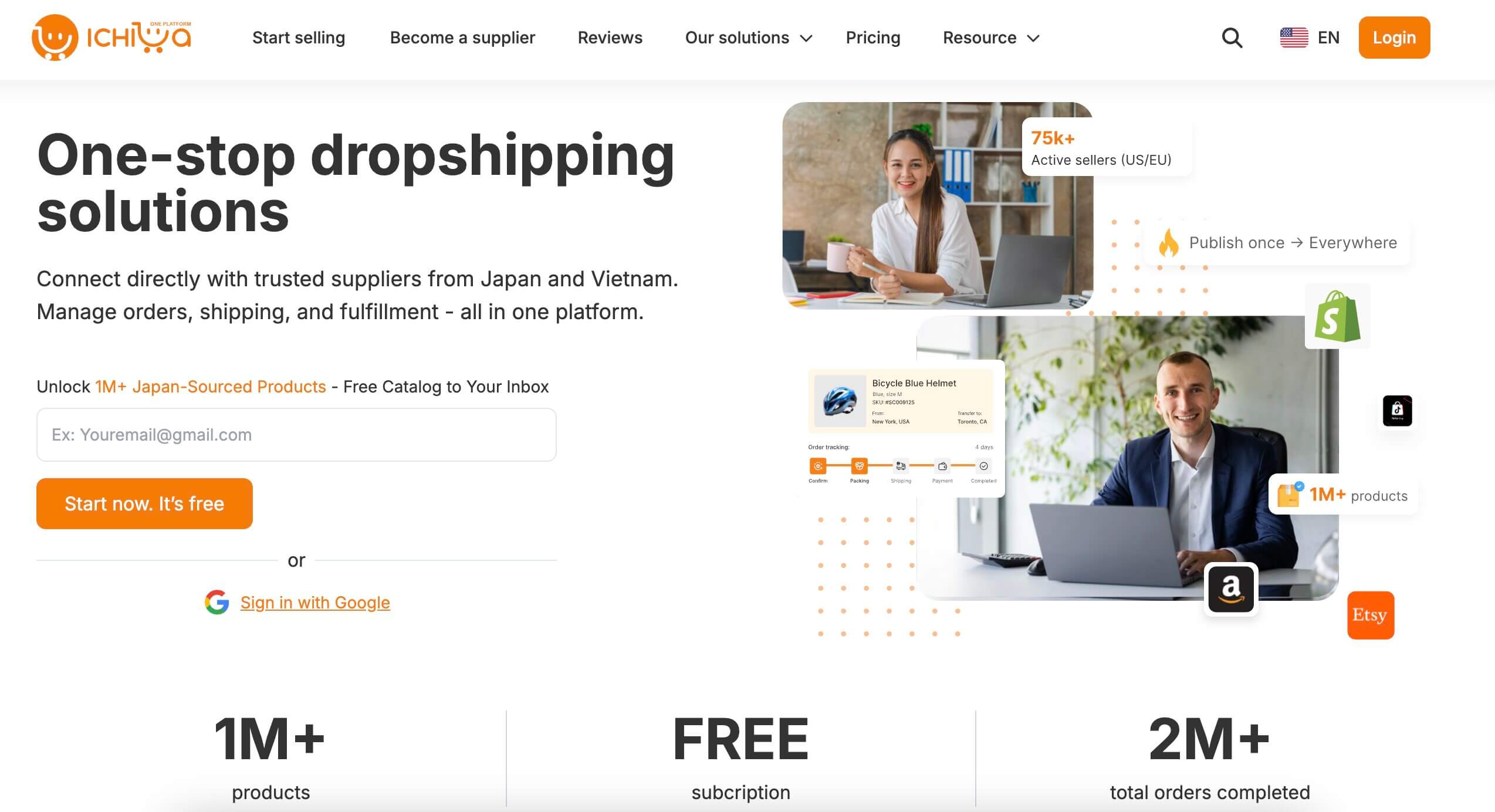
IChiba is a cross-border ecommerce and dropshipping platform that helps merchants source products, manage orders, and fulfill international shipments through a single system. Unlike traditional Japanese marketplaces, IChiba is designed specifically for ecommerce sellers looking to streamline sourcing and fulfillment rather than purchasing products manually.
The platform offers tools that support merchants throughout the selling process, including supplier connections, order management, inventory coordination, and shipping services. This makes it particularly useful for businesses that want a more structured dropshipping workflow instead of managing purchases across multiple independent marketplaces.
IChiba may be a good fit if you:
Want a platform built specifically for ecommerce sellers.
Need order and fulfillment management alongside product sourcing.
Plan to scale beyond manually placing individual orders.
Prefer working with an integrated sourcing and logistics solution.
Before choosing IChiba, review its supplier network, supported product categories, integration capabilities, fulfillment model, and shipping coverage to ensure they match your business requirements.
Buyee
Buyee is a proxy shopping service that purchases Japanese products on behalf of international customers and ships them overseas. It supports purchases from Japanese stores and auction platforms, including products that may not otherwise be available to buyers outside Japan.
It is especially relevant for product categories such as:
Anime collectibles
Trading cards
Used fashion
Vintage items
Hobby goods
Auction products
Limited-edition merchandise
Buyee also allows eligible purchases to be combined into fewer international shipments. This can be useful for sourcing samples or multiple products, although consolidation is less relevant when every customer order must be shipped separately.
Because Buyee is designed primarily to support international purchasing, sellers should not assume that it offers automated dropshipping features. Order handling, customer addresses, packaging, inventory updates, and returns may require manual management.
ZenMarket
ZenMarket helps international buyers purchase from Japanese websites that do not normally ship overseas. It provides access to integrated marketplaces and also allows users to submit links from other Japanese online stores.
The service can be useful for sourcing products from categories such as anime, musical instruments, stationery, beauty, fashion, electronics, and specialist hobby stores. Purchases are delivered to its warehouse in Japan before users select an international shipping method.
ZenMarket may suit sellers who:
Need access to stores that only serve the Japanese market.
Source from several websites.
Want to purchase products from Japanese auctions.
Need international shipping support after domestic delivery.
As with Buyee, ZenMarket is not a conventional supplier that automatically fulfills ecommerce orders from your storefront. Merchants need to decide whether to place orders individually or use the service mainly for product testing, samples, and inventory sourcing.
SaleHoo
SaleHoo is a paid directory of pre-vetted wholesalers and dropshipping suppliers. Unlike Japan-focused shopping platforms, it is designed to help ecommerce merchants identify potential supply partners across multiple countries and product categories.
Its main advantage is supplier discovery. Sellers can use the directory to research companies, compare products, and look for suppliers that already understand wholesale or dropshipping relationships.
SaleHoo may be worth considering when:
You want a supplier rather than a retail marketplace.
You need wholesale pricing or direct fulfillment.
You prefer to screen suppliers through an established directory.
Your niche can include Japanese-style or Japanese-branded products sourced through global distributors.
The limitation is that it does not focus exclusively on Japan. Product origin, brand authorization, warehouse location, and supplier experience with Japanese goods should therefore be verified individually.
AliExpress
AliExpress is a global marketplace widely used by dropshipping businesses because many sellers are familiar with shipping individual orders directly to consumers. Its broad catalog and relatively low entry costs make it useful for testing products before committing to larger inventory purchases.
Compared with Japan-focused platforms, however, AliExpress is less suitable when your store’s positioning depends on products that are genuinely made in Japan, officially licensed, or exclusive to the Japanese market. Similar product designs do not necessarily have the same origin, quality, or licensing status.
AliExpress is better suited to:
Testing general product demand.
Finding affordable accessories.
Launching with a limited budget.
Using established ecommerce integrations and order-management tools.
Always verify the seller, product origin, customer reviews, delivery estimate, and intellectual property status. Avoid presenting an item as an authentic Japanese product unless its origin can be confirmed.
How to Start a Dropshipping Business from Japan
Starting a dropshipping business from Japan requires more than finding an interesting product and listing it online. You need to confirm that customers want it, calculate the true cost of international fulfillment, and build a sourcing process that remains manageable as orders grow.
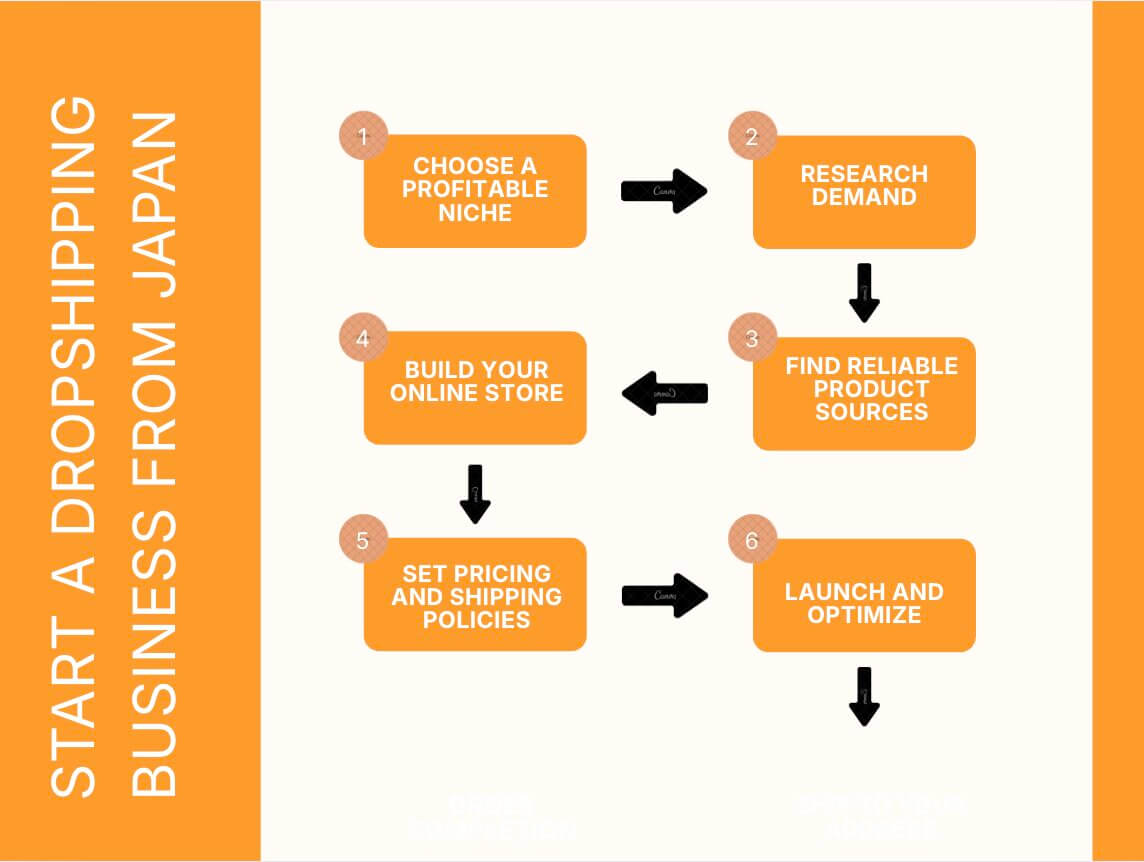
Step 1. Choose a Profitable Niche
Begin with a focused niche rather than filling your store with unrelated Japanese products. A clear niche makes it easier to understand your customers, build a recognizable brand, and create marketing content around a specific interest.
Good opportunities often sit at the intersection of global demand and limited local availability. Examples include Japanese stationery for artists, authentic anime collectibles, J-beauty skincare, model-building supplies, or specialty coffee equipment.
When evaluating a niche, consider:
Who is most likely to buy these products?
Why would they source them from Japan?
Are the products difficult to find locally?
Can you earn a reasonable margin after shipping and fees?
Is demand likely to continue beyond a temporary trend?
Avoid choosing a category only because it is popular. Broad categories such as anime or Japanese beauty can be highly competitive, so narrowing them into a more defined audience often creates a stronger starting position.
Step 2. Research Demand
Once you have a niche in mind, validate demand before investing time in building the store. Search volume can provide a useful signal, but it should not be the only factor you consider.
Review Google Trends, keyword tools, marketplace search results, social media conversations, and communities related to your niche. Product reviews and sold listings can also reveal which brands, characters, designs, and price points customers already prefer.
Pay attention to:
Whether interest is stable, seasonal, or declining
How many stores already sell similar products
Common complaints in customer reviews
The price shoppers are willing to pay
Products that repeatedly sell out or attract preorders
You can also test a small selection of products before expanding the catalog. Early traffic, add-to-cart activity, and customer questions often provide more useful feedback than assumptions made during product research.
Step 3. Find Reliable Product Sources
A dependable product source is critical when you do not physically handle inventory. The seller must provide accurate product information, consistent quality, reasonable processing times, and reliable order fulfillment.
Japanese products can be sourced through domestic marketplaces, specialist retailers, brand stores, wholesalers, and cross-border ecommerce platforms. Before working with a source, check:
Seller ratings and recent reviews
Product authenticity
Stock availability
Order processing times
Return and cancellation policies
Domestic and international shipping options
Whether tracking information is provided
Whenever possible, place a test order before listing a product. This allows you to inspect the packaging, confirm product quality, measure delivery time, and understand the customer experience firsthand.
You should also avoid relying on a single seller for your best-selling products. Japanese limited editions and collectibles can sell out quickly, so having alternative sources reduces the risk of unexpected cancellations.
Step 4. Build Your Online Store
Your store should do more than display products. It needs to explain why the items are worth ordering from Japan and give customers enough confidence to purchase from an unfamiliar business.
Choose an ecommerce platform that supports secure payments, mobile shopping, inventory management, analytics, and the markets you intend to serve. Then organize your catalog around how customers naturally shop, such as by product category, brand, character, collection, or use case.
Each product page should include:
Accurate product names and specifications
Clear images
Size, material, and compatibility details
Information about authenticity or licensing
Estimated processing and delivery times
Return and cancellation conditions
Any customs or import considerations
Avoid copying machine-translated descriptions directly from Japanese listings. Rewrite them in clear English and remove claims you cannot verify. For collectibles, mention edition details and packaging condition. For cosmetics or food, include ingredients, expiry information, and relevant usage guidance whenever available.
Step 5. Set Pricing and Shipping Policies
The product price shown by a Japanese seller is only one part of your total cost. You may also need to account for domestic delivery within Japan, platform fees, international shipping, currency conversion, payment processing, customs duties, taxes, returns, and marketing expenses.
A basic pricing calculation may look like this:
Product cost + sourcing fees + domestic shipping + international shipping + transaction fees + expected operating costs + profit margin
Do not set your retail price by simply copying a competitor. Two stores selling the same product may have very different shipping arrangements and operating costs.
Your shipping policy should clearly state:
Order processing time
Estimated delivery range
Available tracking
Countries you serve
Potential customs charges
How delays are handled
What happens if a package is lost or damaged
International delivery usually takes longer than domestic ecommerce, so transparent expectations are important. It is better to provide a realistic delivery window than promise fast shipping and disappoint customers later.
Step 6. Launch and Optimize
Start with a limited catalog rather than adding hundreds of products at once. A smaller launch makes it easier to check listings, monitor orders, answer customer questions, and identify issues in your sourcing and fulfillment process.
After launch, track more than total sales. Review:
Product page conversion rates
Add-to-cart rates
Customer acquisition costs
Average order value
Shipping times
Refund and cancellation rates
Profit after fulfillment costs
Products frequently viewed but rarely purchased
Use this information to improve product selection, pricing, store navigation, and marketing. Products with strong traffic but weak conversion may need better descriptions, clearer shipping information, or more competitive pricing. Items with high return rates may need to be removed entirely.
As the store grows, focus on the categories and products that generate repeatable sales rather than continually chasing new trends. A successful Japan dropshipping business is built through reliable sourcing, realistic margins, and a shopping experience customers are willing to return to.
Challenges of Dropshipping from Japan
Japan gives sellers access to distinctive products, but the sourcing and fulfillment process can be more complicated than working with conventional dropshipping suppliers. Most of the difficulty comes from operating across different languages, marketplaces, shipping systems, and import regulations.
Limited International Access
Many Japanese stores are built for domestic customers. Their websites may only be available in Japanese, require a local address or payment method, or refuse to ship outside the country. This can prevent international sellers from accessing promising products even when customer demand is clear.
Higher and More Complex Shipping Costs
International shipping from Japan can take up a large share of the final selling price, especially for heavy, oversized, or low-value products. Merchants may also need to account for domestic delivery within Japan before the parcel begins its international journey.
Shipping costs can vary according to:
Product weight and package dimensions
Destination country
Delivery method
Tracking and insurance
Fuel or remote-area surcharges
Customs duties and taxes
These expenses should be calculated before a product is added to the store. Lightweight stationery, small accessories, beauty products, and compact collectibles may offer healthier margins than bulky household goods or large figures.
Longer Delivery Times
Orders shipped from Japan will generally take longer to reach international customers than products held in a local warehouse. Processing time at the Japanese store, domestic delivery to a warehouse, and international transit may all affect the final timeline.
Long delivery times are not necessarily a dealbreaker when the product is rare, authentic, or difficult to purchase locally. However, the expected timeframe must be communicated clearly on the product page and during checkout.
Avoid promising delivery dates based only on the international courier estimate. The complete timeline should include seller processing, domestic shipping, warehouse handling, and potential customs delays.
Stock Changes and Limited Releases
Many attractive Japanese products are seasonal, limited-edition, or produced in small quantities. Anime collaborations, trading cards, regional souvenirs, fashion releases, and character merchandise can sell out quickly.
This creates a risk when your store displays a product that is no longer available from the original seller. Inventory may also differ across marketplaces, especially when products are sold by independent retailers or individual sellers.
Language and Product Information
Japanese product listings may not include an English description, and automatic translations can miss important details about size, condition, compatibility, ingredients, or included accessories.
This is especially risky for:
Secondhand collectibles
Clothing and shoes
Electronics
Cosmetics
Food products
Model kits and replacement parts
Customs and Product Restrictions
Some products can be purchased legally in Japan but may face restrictions when imported into another country. Food, beverages, cosmetics, supplements, batteries, liquids, aerosols, and certain electronics commonly require additional attention.
Customs charges can also affect the customer experience. Depending on the destination and order value, the buyer may need to pay duties or import taxes before receiving the parcel.
Your store should clearly explain who is responsible for these charges. Product eligibility should also be checked before sale, not after a customer has already placed an order.
Returns Can Be Difficult
International returns are often expensive and time-consuming. Some Japanese sellers may not accept returns for buyer error, secondhand goods, opened products, or limited-edition items. Returning the item to Japan may cost more than the product itself.
To reduce return disputes:
Provide detailed product descriptions.
Include accurate measurements and compatibility details.
Explain the condition of secondhand products.
Publish clear cancellation and return rules.
Review the original seller’s policy before listing the item.
Japan dropshipping works best when the seller treats sourcing and fulfillment as an operational system rather than a simple product-import process. Janbox can remove much of the friction involved in finding products, buying from domestic marketplaces, managing orders, and shipping internationally. It does not eliminate every risk, but it gives merchants a more practical route into Japan’s ecommerce market than managing separate stores and logistics providers alone.
Conclusion
Dropshipping from Japan gives sellers access to authentic, high-quality products that are often difficult to find elsewhere. Success depends on choosing the right niche, calculating shipping costs carefully, and working with reliable product sources.
Janbox can simplify the process by helping international sellers discover products across Japanese marketplaces, manage purchases, and arrange overseas shipping through one platform.
FAQS
How long does shipping from Japan take?
Delivery time depends on the original seller’s processing period, domestic shipping within Japan, warehouse handling, the international carrier, the destination, and customs clearance.
Express shipping may arrive within several business days after dispatch, while economy methods can take several weeks. The delivery estimate shown to customers should cover the full order journey rather than international transit alone.
Can I dropship anime products from Japan?
Yes, but the products should be authentic and officially licensed. Anime customers often pay close attention to brand markings, manufacturer details, edition information, and packaging condition.
Avoid counterfeit figures, unauthorized artwork, and replica merchandise. Seller ratings, marketplace reviews, product photos, and manufacturer information should be checked before a listing is added to your store.
Do customers have to pay customs duties?
They may. Customs duties, import taxes, and handling fees depend on the destination country, product type, declared value, and local import thresholds.
Your shipping policy should clearly explain whether taxes are included at checkout or may be collected from the customer when the parcel enters the destination country.
Should I order a sample before selling a product?
Yes, especially for products that may become central to your store. A sample order allows you to verify quality, authenticity, packaging, product condition, delivery time, and the accuracy of the original listing.
This also gives you the opportunity to create original photos and more reliable product descriptions instead of depending entirely on marketplace content.
Table of Contents
Related Posts