How to Buy Sencha from Japan: Best Places to Find Authentic Japanese Tea
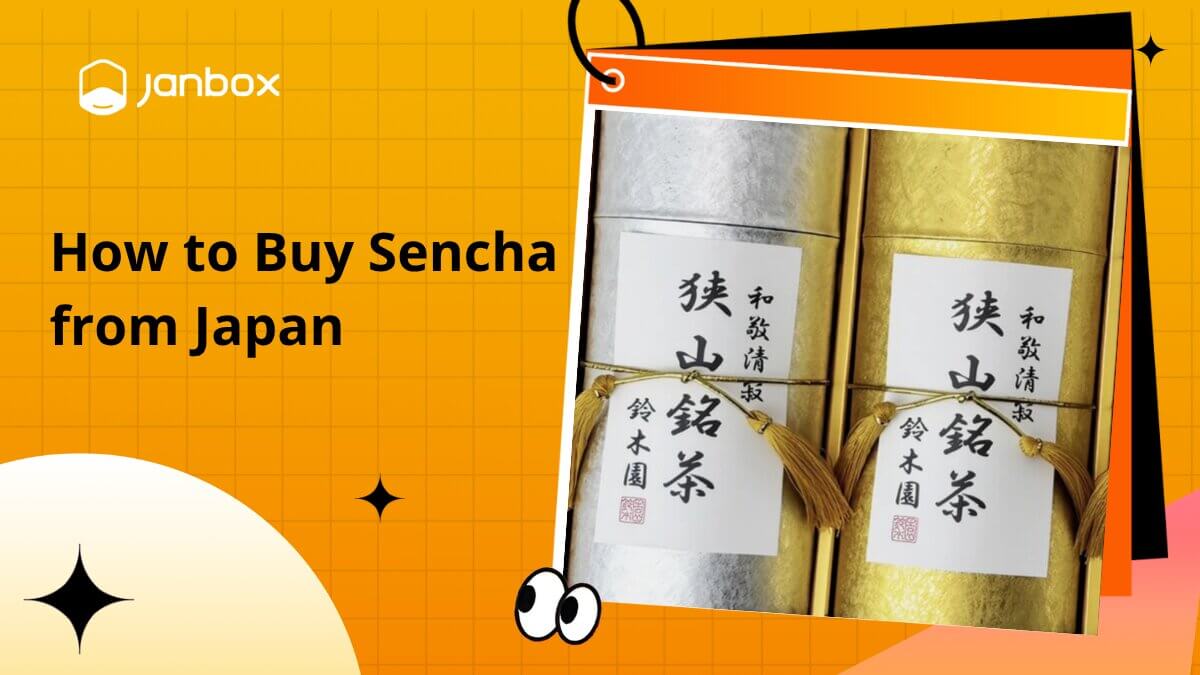
When you're buying Japanese tea from overseas, choosing a bag labeled simply “sencha” doesn't tell you very much. A light-steamed sencha from Shizuoka can taste quite different from a deep-steamed tea from Kagoshima, while seasonal shincha brings another experience altogether.
So, if you want to buy sencha from Japan, it helps to know a little about the tea before deciding where to shop. This guide walks through the main types and tea regions worth exploring, then looks at where to find authentic Japanese sencha online and how to order it from outside Japan.
What Is Sencha and Why Is It So Popular in Japan?
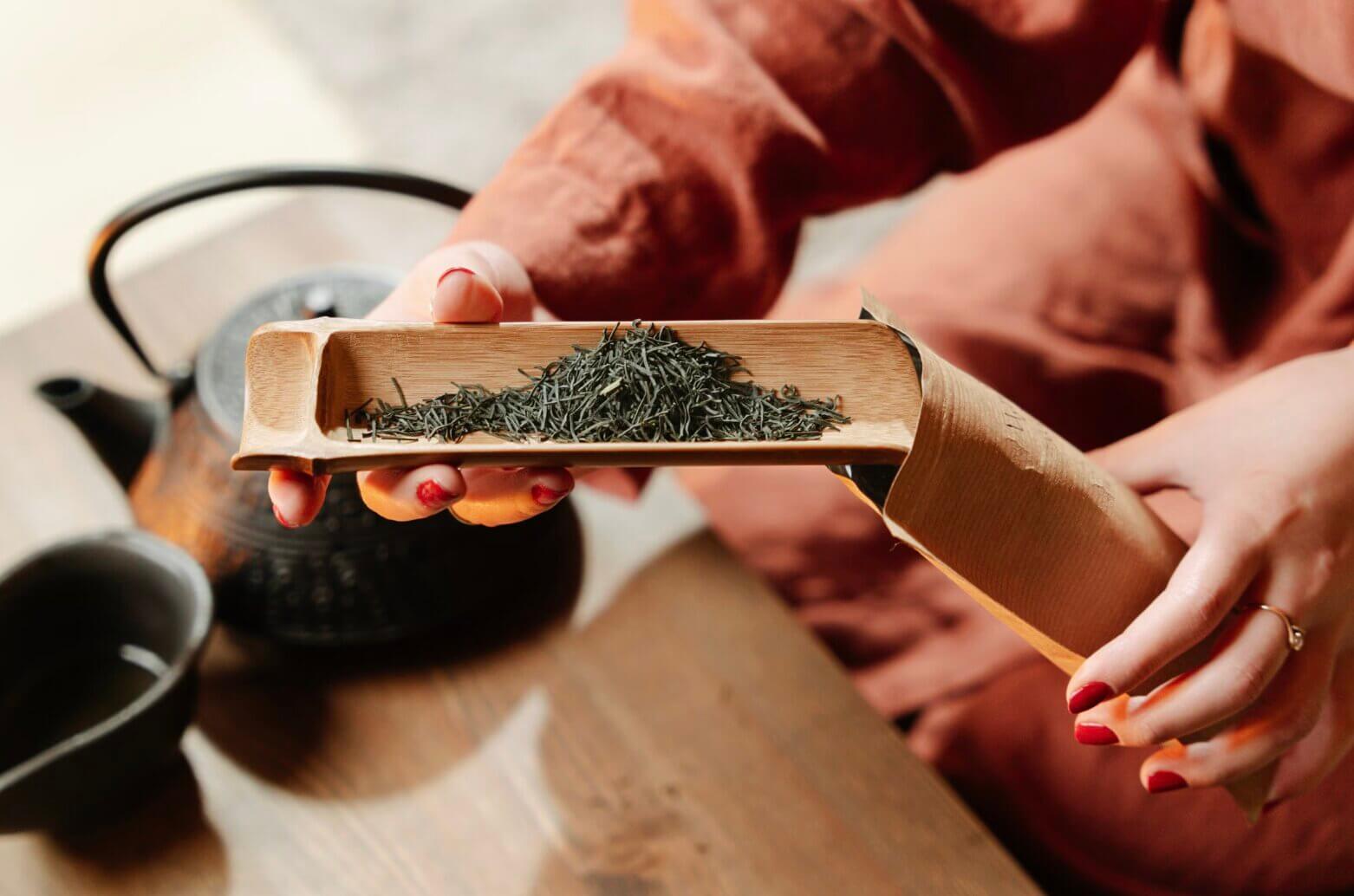
Sencha is a type of Japanese green tea made from whole tea leaves. After harvesting, the leaves are typically steamed to stop oxidation, then rolled and dried. When you make a cup, the leaves are steeped in hot water and removed before drinking.
This is one of the key differences between sencha and matcha. With sencha, you drink an infusion made from the leaves. With matcha, the tea leaves are processed into a fine powder, so you consume the tea itself.
Sencha is deeply rooted in everyday tea drinking in Japan, and part of its appeal comes from just how much variety exists within the category. Depending on where and how it is produced, a cup can range from light, fresh, and slightly astringent to deeply vegetal, sweet, and rich in umami.
A few factors can change what you taste:
Growing region: Climate, geography, and local production styles differ across areas such as Shizuoka, Kagoshima, and Uji.
Steaming time: Light, medium, and deep steaming create noticeably different leaf textures and cups.
Harvest: First-harvest and seasonal teas can differ from later harvests in aroma and character.
Cultivar: Japan grows multiple tea cultivars, each with its own characteristics.
Shading: Some sencha is shaded before harvest to develop greater sweetness and umami.
This variety is also why buying sencha can be confusing at first. Two packages may both say “Japanese sencha” while offering very different drinking experiences. Understanding the main types is a much better starting point than choosing based on packaging or price alone.
Which Type of Sencha Should You Buy?
Not all sencha tastes the same. Steaming time, shading, and harvest season can change everything from the color of the tea to its body and level of umami. You do not need to learn every Japanese tea term before buying, but knowing these five styles will make choosing much easier.
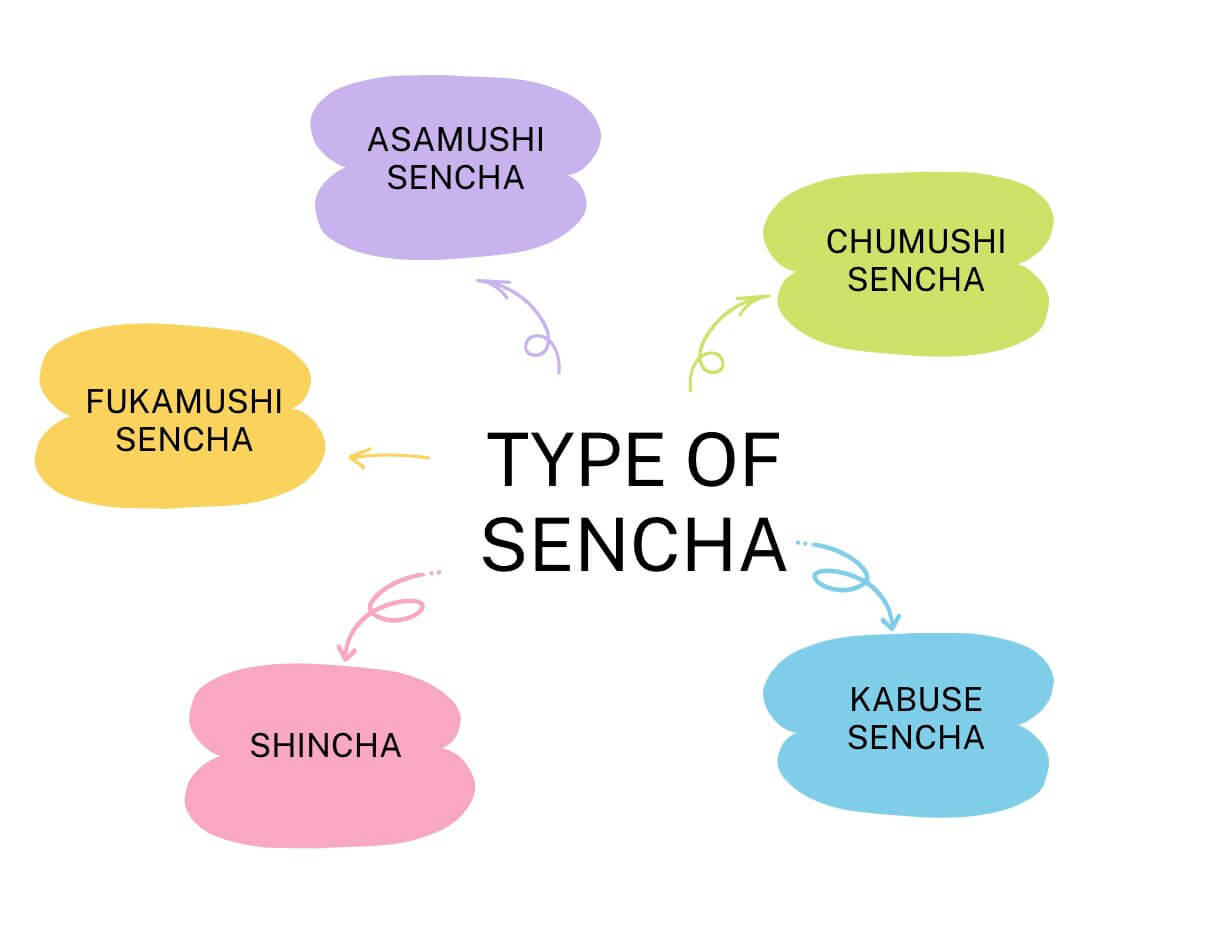
Asamushi Sencha
Asamushi is lightly steamed, which helps the leaves retain more of their original shape. The brewed tea tends to have a clearer color, lighter body, fresh aroma, and more noticeable astringency than deeper-steamed sencha.
Choose it if: You enjoy a lighter, more delicate cup with a fresh character.
Chumushi Sencha
Chumushi is medium-steamed and sits between asamushi and fukamushi. It offers a middle ground between freshness, sweetness, body, and astringency, without leaning too heavily toward either end.
Choose it if: You're new to Japanese sencha and want a balanced place to start.
Fukamushi Sencha
Fukamushi is steamed for longer, which breaks down the leaves more. This is why the dry tea often contains finer leaf particles and produces a darker, cloudier cup with a fuller body and rich vegetal flavor.
It can also taste softer in astringency than lighter-steamed sencha.
Choose it if: You prefer a richer, fuller green tea.
Shincha
Shincha, or “new tea,” refers to freshly released tea from the year's first harvest season. It is valued for the fresh aroma and seasonal character associated with newly harvested leaves.
Unlike regular sencha that you can shop for throughout the year, shincha has a much more limited seasonal window, which makes buying directly from Japan particularly interesting.
Choose it if: You want to experience Japanese sencha at its freshest and enjoy seasonal teas.
Kabuse Sencha
Kabuse sencha is made from tea plants that are shaded for a period before harvest. Reduced sunlight changes the character of the leaves, generally bringing more sweetness and umami while softening some of the astringency.
It can be a good middle ground for people interested in shaded Japanese teas without moving directly to gyokuro.
Choose it if: You prefer sweeter tea with more noticeable umami.
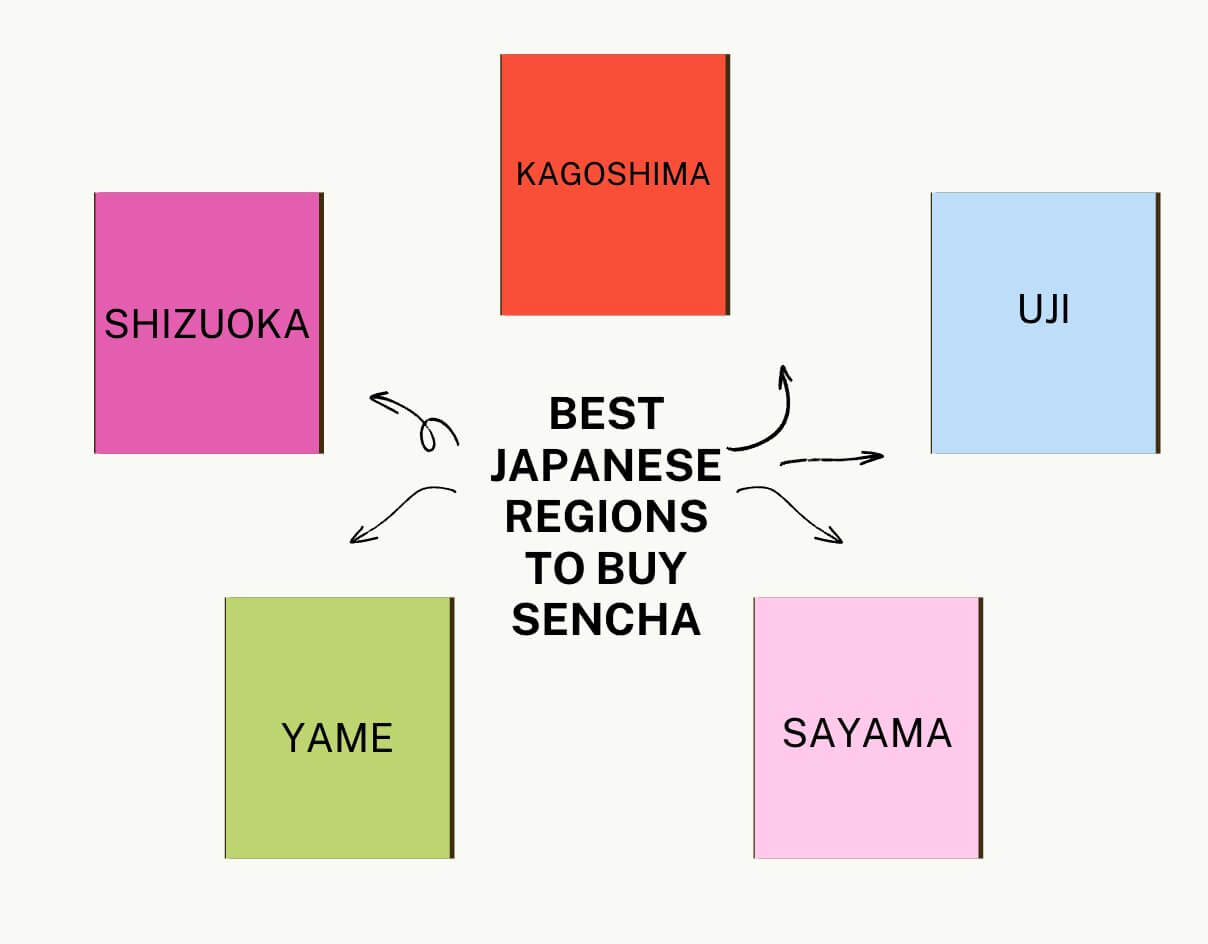
Best Japanese Regions to Buy Sencha From
Where your sencha comes from can tell you a lot about what to expect in the cup. Japan has tea-growing regions with different climates, cultivars, and production traditions, so exploring by origin is a good way to find the style you enjoy.
Shizuoka
Shizuoka is one of Japan's major tea-producing regions and a natural starting point for anyone buying sencha for the first time. Its large tea industry means you'll find everything from approachable everyday sencha to more specialized regional teas.
The region is also well known for fukamushi, particularly in tea-producing areas such as Kakegawa. This gives shoppers plenty of room to compare lighter traditional sencha with deeper-steamed styles without leaving one region.
Good for: First-time buyers who want a broad selection to explore.
Kagoshima
Located in southern Japan, Kagoshima has a warmer climate that allows its tea season to begin relatively early. The region produces a wide range of sencha, including deep-steamed teas and teas made from different Japanese cultivars.
Kagoshima is especially interesting once you want to move beyond the most familiar sencha and compare how cultivar, harvest, and processing can change the cup.
Good for: Exploring different cultivars, early-season teas, and richer sencha styles.
Uji
Uji in Kyoto has a long history closely tied to Japanese tea culture. Although it is particularly famous for matcha and gyokuro, sencha is also part of the region's tea production.
Rather than assuming an Uji label automatically means better tea, look at the individual producer, harvest, and processing. It is a region worth exploring for its established tea houses and more premium offerings.
Good for: Buyers interested in historic tea producers and premium Japanese tea.
Yame
Yame in Fukuoka is strongly associated with high-quality shaded teas, especially gyokuro, but its sencha deserves attention too.
For shoppers, Yame is an interesting region to explore when looking for teas that lean toward sweetness and umami, particularly if you already enjoy the character of shaded Japanese green tea.
Good for: Tea drinkers who prefer sweeter, more umami-forward profiles.
Sayama
Sayama tea is mainly produced around Saitama and neighboring areas. Compared with Japan's largest tea regions, production is smaller, but Sayama has developed a strong regional identity.
The area is particularly associated with Sayama hiire, a finishing process involving stronger roasting that can bring greater depth and a distinctive aroma to the finished tea.
Good for: Buyers who want to explore a smaller Japanese tea region with a bolder character.
There is no single region that produces the “best” sencha for everyone. Shizuoka is an approachable starting point, Kagoshima offers plenty of variety, while Uji, Yame, and Sayama give you different directions to explore as you learn which Japanese tea styles suit your taste.
Best Places to Buy Sencha from Japan Online
Once you know the type and region you want to explore, the next question is where to buy it. The best source depends on whether you want an everyday sencha, a specific regional tea, a seasonal shincha, or simply more Japanese options than you can find locally.
Some Japanese sellers ship overseas, while others primarily serve domestic customers. Here is how the main options compare:
Shopping Source | Best For | Selection | Overseas Access |
Japanese Tea Specialists | Curated quality sencha | Focused | Varies |
Tea Producers | Regional and seasonal tea | Specialized | Varies |
Rakuten Japan | Comparing Japanese tea sellers | Very broad | Seller-dependent |
Amazon Japan | Everyday sencha | Broad | Product-dependent |
Japanese Department Stores | Established tea houses and gift tea | Curated | Mostly Japan-focused |
Accessing Japanese shopping sources | Multi-source | International-focused |
Japanese Tea Specialists
Japanese tea specialists are a good place to start when you want more information than a typical marketplace listing provides. Because these retailers focus specifically on tea, their product pages often make it easier to understand what you are buying.
Look for details such as:
Growing region
Harvest
Steaming style
Cultivar
Producer
Brewing recommendations
This is particularly helpful when comparing two senchas that may look similar but have very different flavor profiles.
Best for: Buyers who want a curated selection and more detailed tea information.
Buy Directly from Japanese Tea Producers
Buying from the producer can take you much closer to the regional Japanese tea market. This route is especially interesting when you are looking for single-origin sencha, specific cultivars, first-harvest teas, or seasonal shincha.
Producer stores can also introduce you to smaller growing areas and teas that may never reach major international retailers.
The trade-off is accessibility. Many smaller producers build their online stores primarily for customers in Japan, so English-language support, overseas payment, and international shipping may be limited.
Best for: Tea enthusiasts searching for regional, seasonal, or producer-specific sencha.
Rakuten Japan
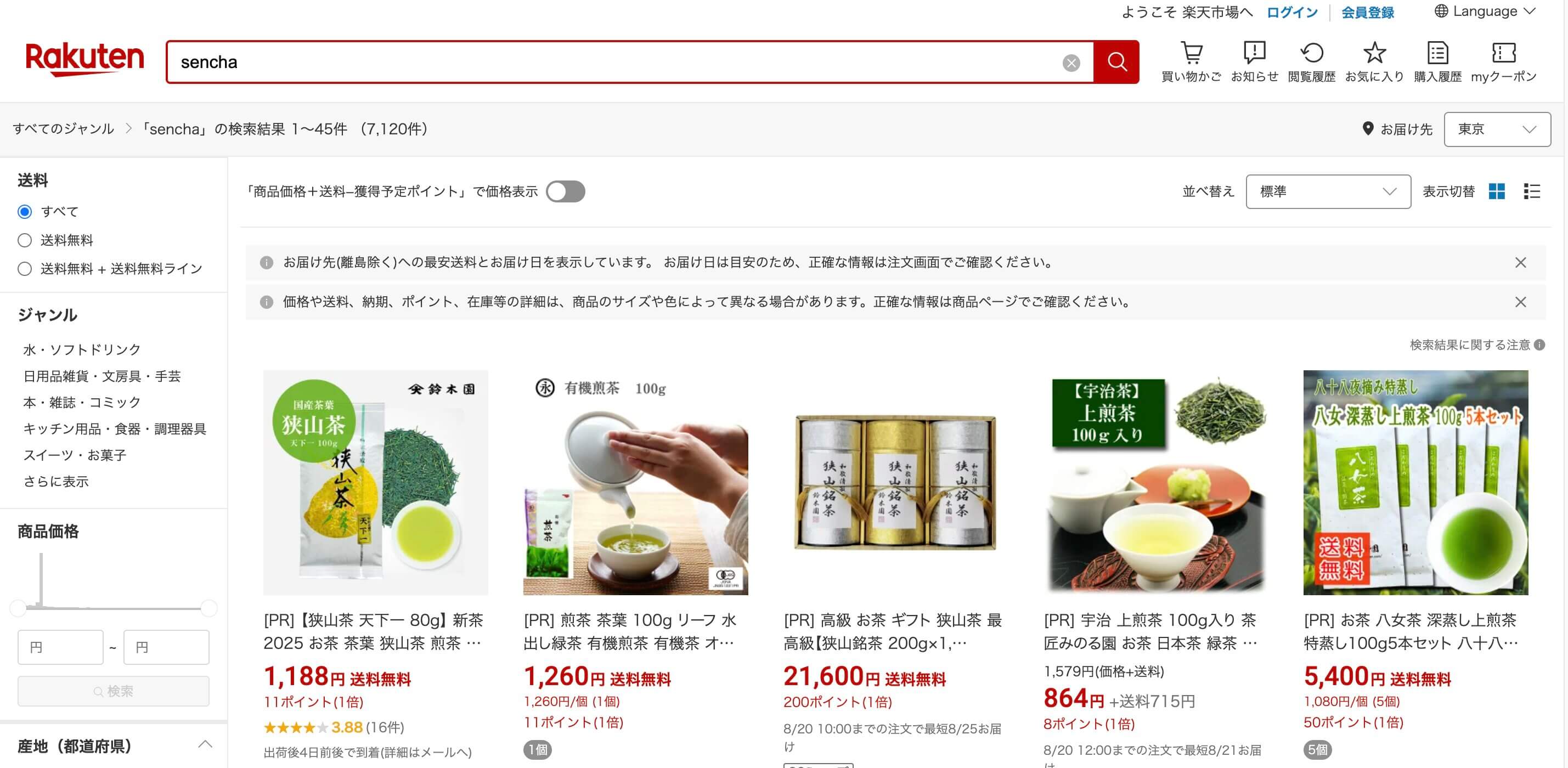
Rakuten Japan is useful when you want to browse several Japanese tea shops without relying on the inventory of a single producer. Search for sencha and you can compare teas from different regions, producers, and price levels in one marketplace.
When comparing listings, pay attention to:
Region and producer
Harvest information
Steaming style
Package size
Price per 100g
Seller information
Available shipping
The lowest-priced bag is not necessarily the best deal. A larger pack may cost less per gram but make little sense if freshness declines before you can finish it.
Best for: Comparing a wide range of Japanese tea sellers and products.
Read more: How to Buy from Rakuten Japan in 2026: Step-by-Step Guide for International Buyers
Amazon Japan
Amazon Japan is more practical for everyday sencha, established tea brands, multipacks, and larger packages than for highly specialized tea discovery.
Its broad inventory makes comparing prices and pack sizes relatively easy. However, marketplace listings can vary in how much information they provide about origin, harvest, cultivar, and processing.
Check the seller and exact product details rather than choosing based only on ratings or the words “premium Japanese green tea.”
Best for: Mainstream sencha and regular everyday drinking.
Read more: How to Buy from Amazon Japan? A Guide for Non-Japanese Shoppers
Japanese Department Stores and Tea Houses
Japanese department stores and established tea houses are worth exploring when you want premium sencha, seasonal releases, beautifully packaged tea, or gift sets.
They can also be a good way to discover long-established Japanese tea names rather than browsing hundreds of marketplace listings.
The main limitation is international access. Some stores offer overseas purchasing options, while others remain focused on domestic checkout and delivery.
Best for: Premium tea, seasonal collections, and Japanese tea gifts.
Janbox
Unlike a single tea shop or marketplace, Janbox is a cross-border marketplace built around access to the wider Japanese shopping market. It brings products from Japanese marketplaces and partner sellers into one platform, while supporting the purchasing and international logistics that come with shopping from Japan.
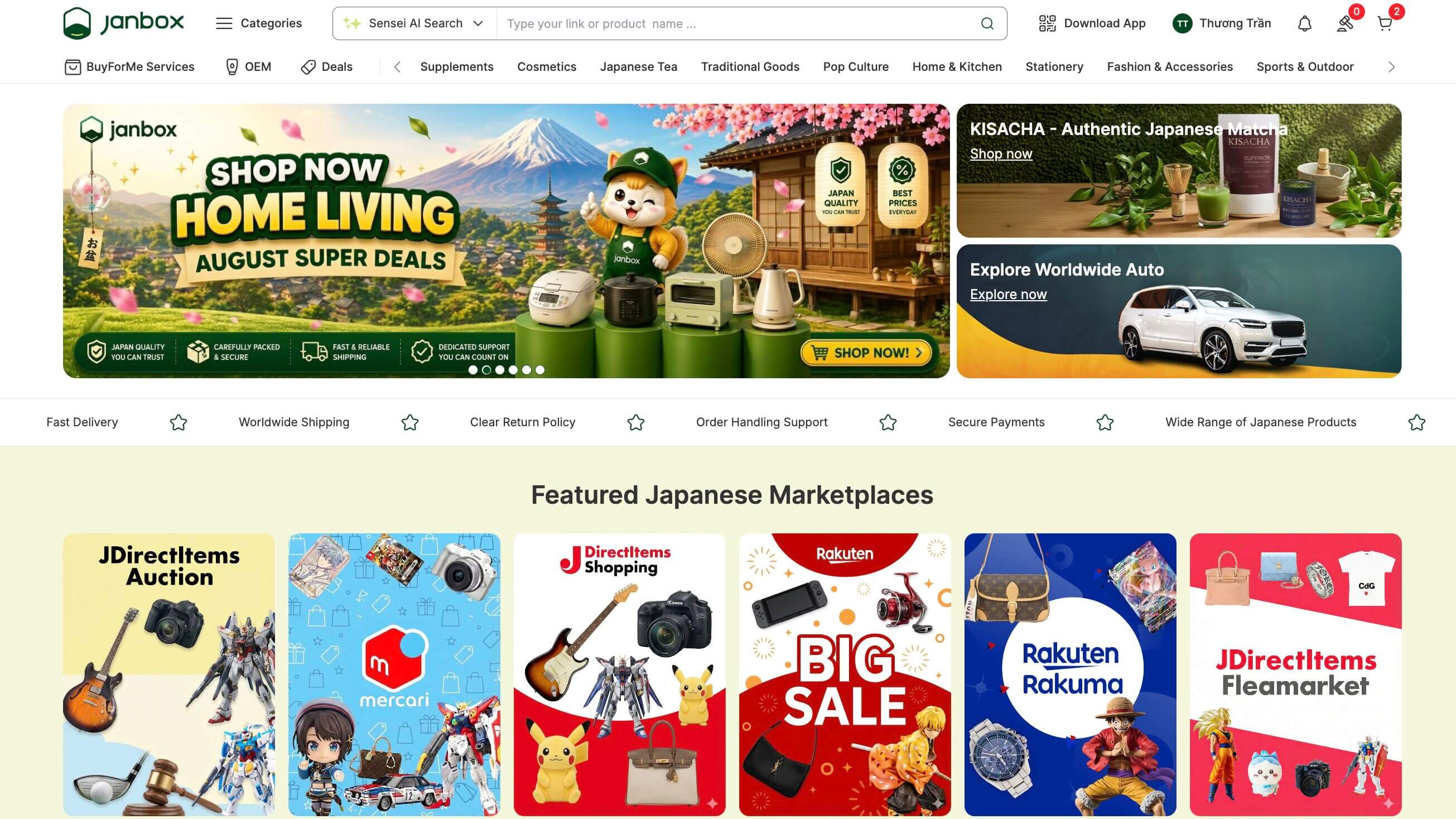
Some of its standout features include:
Access to a large Japanese seller network: Janbox currently highlights 10,000+ sellers in Japan, giving shoppers a much broader pool of products than relying on one tea retailer.
Japanese products with clear origins: Janbox states that product sources on its platform are vetted according to its standards for origin, legality, and quality.
Worldwide reach: Janbox states that its international shipping network covers more than 220 countries, although availability still depends on the product and destination regulations.
Several international shipping options: Depending on the destination and parcel, available carriers may include EMS, DHL, FedEx, and other international or regional services.
Extra package services when needed: Optional services include package consolidation, item inspection, protective packaging, additional photos, and shipping insurance.
Order tracking and customer support: International tracking is available after shipment, while Janbox also lists multilingual customer support for shoppers who need help during the purchasing process.
Best for: Overseas shoppers who want broader access to Japan's domestic tea market rather than limiting their search to stores that already support international checkout.
Why Is Sencha Sometimes Hard to Buy Directly from Japan?
Finding good sencha in Japan is rarely the problem. The difficulty starts when the tea you want is sold by a domestic shop or small producer that is not set up for overseas customers.
Many smaller tea producers focus on domestic buyers. Regional farms and tea shops may sell online but require a Japanese address, use Japan-focused payment methods, or offer domestic delivery only.
Japanese listings can be difficult to understand. Product pages may contain little or no English, and important tea details are often written in Japanese. Useful terms include 煎茶 (sencha), 深蒸し茶 (fukamushicha), 新茶 (shincha), 一番茶 (ichibancha), and 茶葉 (tea leaves).
Seasonal teas have limited buying windows. Shincha and other seasonal releases may only be available for a short period. Waiting for the same tea to appear through an international retailer could mean missing that year's release.
Regional tea shopping can mean several separate orders. A Shizuoka sencha, Kagoshima fukamushi, and Uji sencha may come from three different sellers. Buying directly could leave you managing several domestic and international shipments instead of one tea order.
International food import rules still apply. Tea import requirements vary by destination, so check customs rules, permitted ingredients, quantity limits, and other applicable restrictions before ordering from Japan.
These barriers do not necessarily mean you have to give up on a domestic Japanese listing. For teas that are difficult to purchase directly, a cross-border platform can provide another route to the Japanese market.
How to Buy Sencha from Japan with Janbox
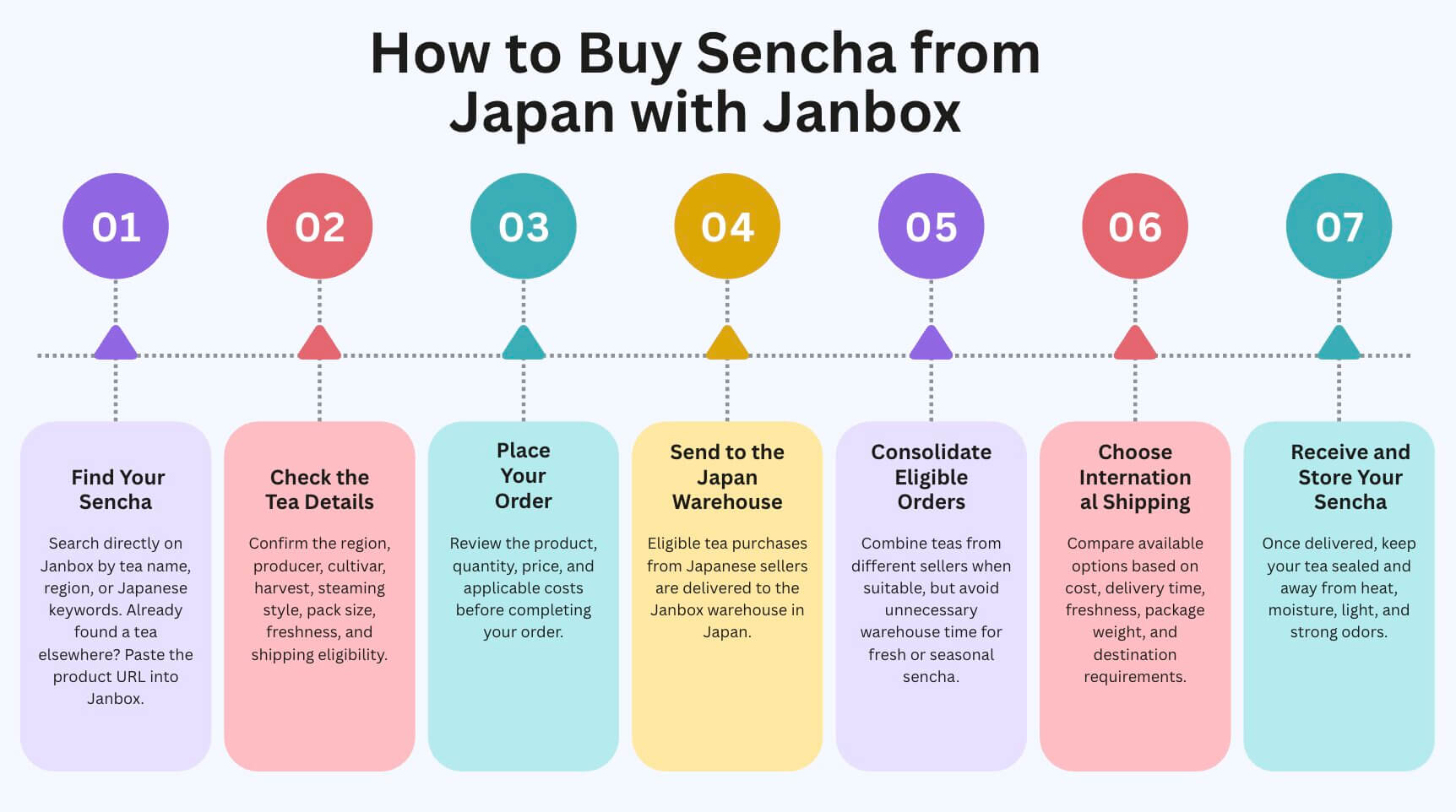
As mentioned above, Janbox can be useful when the sencha you want comes from a Japanese tea shop or marketplace that primarily serves domestic customers. Instead of giving up on a tea because the seller does not ship overseas, you can access eligible Japanese listings through Janbox and manage the purchase and international delivery in one place.
For sencha, freshness matters, so it is worth checking the tea carefully and keeping the overall delivery timeline in mind.
Step 1. Find the Sencha You Want
You can start in two ways.
The first is to search directly on Janbox. Try the tea name, region, or Japanese keywords such as:
Sencha
Shizuoka sencha
Fukamushi sencha
煎茶
深蒸し茶
新茶
Searching in Japanese can uncover domestic listings that may not appear when you use English terms alone.
Already found a sencha from a Japanese tea shop or marketplace? Copy the product URL and paste it into the Janbox search bar instead of searching for the same tea again.
Step 2. Check the Tea Before Ordering
Once you find a promising tea, check exactly what you are buying. Two products labeled “sencha” can differ considerably in origin, processing, and flavor.
Look for:
Region: Shizuoka, Kagoshima, Uji, Yame, or another origin
Producer: The farm, tea house, or company behind the tea
Cultivar: Yabukita, Saemidori, Yutakamidori, or another variety when stated
Harvest: First harvest, shincha, or later harvest
Steaming style: Asamushi, chumushi, fukamushi, or another style
Package size: Check grams rather than comparing package prices alone
Ingredients: Particularly for blended or flavored teas
Freshness: Check harvest, production, or best-before information where provided
Shipping eligibility: Confirm that the tea can be sent to your destination
You do not need every listing to provide every detail, but the information available should be enough to know what kind of tea you are ordering.
Step 3. Place Your Order
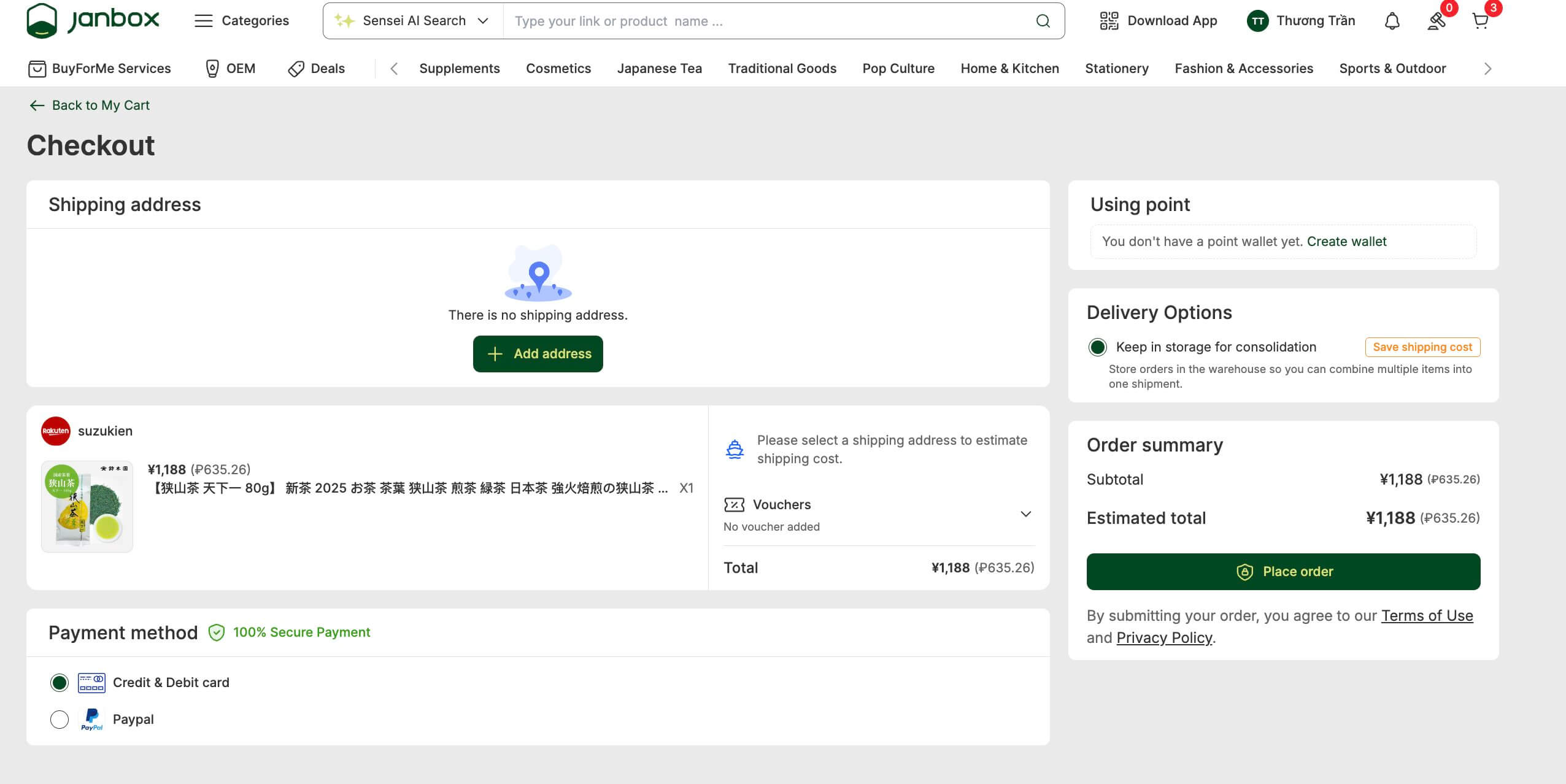
After confirming the tea, review the product price, quantity, and applicable costs before completing your order through Janbox.
For sencha, bigger is not always better. A large bag may look cheaper per gram, but a smaller pack can make more sense when trying a new producer or tea style for the first time.
Step 4. Receive Eligible Tea at the Japan Warehouse
Eligible purchases are delivered to the Janbox warehouse in Japan before international shipping.
This becomes useful when you are shopping from several Japanese sources. Orders from different producers or marketplaces can arrive separately at the warehouse, giving you the option to manage them before arranging overseas delivery.
For seasonal tea, pay attention to timing. Fresh shincha should not spend unnecessary time waiting between purchase and international shipment.
Step 5. Consolidate Eligible Tea Orders
If you are building a tasting selection, eligible orders can be consolidated rather than shipped internationally one by one.
For example, you might buy:
Shizuoka sencha
Kagoshima fukamushi
Uji sencha
These teas may come from different Japanese sellers but can potentially be prepared as fewer international parcels when eligible.
However, do not leave fresh tea sitting unnecessarily long just to wait for another package. Consolidation is useful when arrival dates are reasonably close, but freshness should still be part of the decision.
Step 6. Choose International Shipping
Once your tea is ready, compare the available international shipping methods. The cheapest option is not necessarily the best choice for a freshness-sensitive product.
Consider:
Shipping cost
Estimated delivery time
Package weight
Tea freshness
Available tracking
Destination import requirements
Tea is a food product, so check the import and customs rules for your country before arranging shipment.
Step 7. Receive and Store Your Sencha
Once your sencha arrives, store it properly so the quality you paid for does not quickly deteriorate.
Keep the tea away from heat, moisture, direct light, air, and strong odors. After opening the package, reseal it tightly after each use and avoid leaving it exposed while preparing tea.
With fresh or seasonal sencha, it generally makes more sense to buy an amount you can enjoy while the tea is still at its best rather than building a large stockpile.
Conclusion
Buying sencha from Japan becomes much easier once you know what to look for. Start with the flavor you enjoy, compare steaming styles and regions, then look beyond generic “Japanese green tea” labels to understand the origin, harvest, and producer behind each tea.
Japanese tea specialists, producers, marketplaces, and tea houses all offer different reasons to shop there. When a domestic seller does not support overseas customers, Janbox provides another way to access eligible Japanese tea listings and arrange the journey from Japan to your destination.
FAQs
Which region in Japan is famous for sencha?
Shizuoka and Kagoshima are two major Japanese tea-producing regions with extensive sencha selections. Uji, Yame, and Sayama are also worth exploring for different regional styles and tea traditions.
What is the difference between sencha and fukamushi sencha?
Fukamushi sencha is sencha that has been steamed for longer. The extended steaming breaks the leaves down more, typically producing a darker, cloudier infusion with a fuller body than lightly steamed sencha.
Is shincha the same as sencha?
Shincha means “new tea” and generally refers to freshly released tea from the year's first harvest season. Sencha describes the broader tea style, while shincha emphasizes the freshness and season of the tea.
Is Shizuoka or Kagoshima sencha better?
Neither region is automatically better. Shizuoka offers a very broad range of sencha, while Kagoshima is particularly interesting for diverse cultivars, early harvests, and deep-steamed styles. Your taste matters more than the region's reputation alone.
Can I buy sencha directly from Japan?
Yes. You can shop through Japanese tea specialists, producers, marketplaces, department stores, and tea houses. Some sellers ship internationally, while domestic-focused stores may require another cross-border shopping route.
Can Japanese sencha be shipped internationally?
It depends on the destination, product, and applicable import rules. Since tea is a food product, check your country's customs and food import requirements before ordering.
How should I store sencha after opening?
Keep sencha tightly sealed and away from heat, moisture, light, air, and strong odors. Buying smaller quantities can also help you finish the tea while its aroma and flavor remain fresh.