How to Buy from Mercari Japan – Safe, Easy & Proven Methods
Ever found something on Mercari Japan that’s half the price you’d pay elsewhere, only to realize you can’t actually buy it?
That moment happens a lot. Mercari is one of the most active peer-to-peer marketplaces in Japan, where people list everything from barely-used electronics to rare anime collectibles and limited fashion pieces. Prices move fast, listings disappear quickly, and some of the best deals never make it to global platforms.
The problem starts when you try to check out. Mercari is built for local users, which means no international shipping, limited payment options, and account requirements that don’t work outside Japan. That creates a gap between finding a deal and actually securing it.
This guide walks through how to buy from Mercari Japan step by step, including what methods work, how to avoid common risks, and how to make sure the item you’re buying is worth it before it’s gone.
What is Mercari Japan & Why Global Buyers Love It
If you’re exploring how to buy from Mercari Japan, it helps to understand why this platform attracts so much attention in the first place. Mercari is not built around brands or official stores. It is driven by individual sellers, which changes both how pricing works and what kind of products you can find.
That difference is exactly what makes it valuable.
What is Mercari Japan?
Mercari Japan is a peer-to-peer marketplace, similar in structure to eBay, where individuals list items directly for sale. Instead of browsing curated storefronts, you’re looking at listings created by real users, each with their own pricing, descriptions, and conditions.
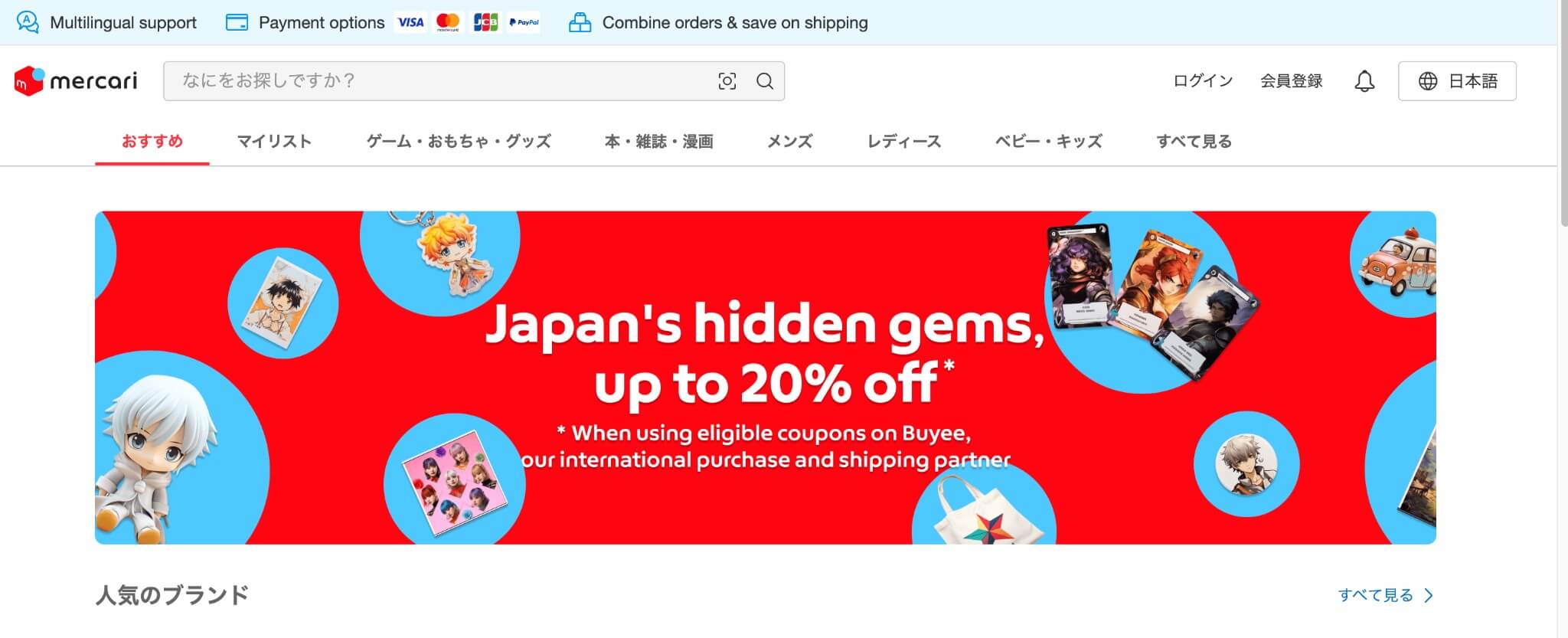
One feature that makes Mercari different from many traditional marketplaces is that buyers and sellers can often negotiate prices directly. It’s common for users to make offers or ask for discounts before completing a purchase, which creates a more flexible shopping experience compared to fixed-price retail platforms.
The platform is heavily focused on secondhand goods, but “secondhand” in Japan often means lightly used or even unopened. Many sellers list items shortly after purchase, which keeps product quality relatively high compared to other resale platforms.
This model creates a fast-moving environment. Listings appear and disappear quickly, and pricing is often more flexible because sellers are motivated to sell rather than hold inventory.
From a seller’s perspective, the best way to sell on Mercari is to price competitively and respond quickly, which is why buyers often benefit from lower prices and faster deal cycles.
Why Mercari Japan is Popular Internationally?
Mercari’s appeal comes from a combination of pricing, availability, and exclusivity.
Because items are sold directly by individuals, prices are often lower than on global marketplaces. Sellers are not bound by fixed retail pricing, and many are simply trying to clear inventory, which creates opportunities for buyers.
Another major factor is access to products that rarely appear outside Japan. Many items listed on Mercari are tied to local releases, seasonal drops, or niche communities.
These include:
Anime goods and limited-edition collectibles
Japanese fashion brands such as Uniqlo or Comme des Garçons
Electronics, accessories, and hobby-related items
In many cases, these products are either unavailable internationally or significantly marked up when resold on global platforms.
The combination of lower pricing and unique inventory makes Mercari one of the most attractive sources for buyers looking beyond standard retail options.
Mercari vs Other Japanese Marketplaces
To get a clearer sense of what Mercari does well, it helps to look at how it compares with other popular platforms in Japan. Each one follows a different model, which affects how pricing works, what kind of products you can find, and how easy it is to complete a purchase.
Platform | Type | International Access | Best For |
Mercari | C2C | ❌ | Cheap secondhand deals |
Rakuten | B2C | Limited | New products & variety |
Yahoo Auctions | Auction | ❌ | Rare & collectible items |
Mercari focuses on speed and pricing. Listings are fixed-price and often sell quickly, which makes it ideal for deal hunting.
Rakuten offers more structured shopping, with official stores and broader product categories, but pricing is less flexible.
Yahoo Auctions introduces bidding, which is better for rare items but requires more time and strategy.
Mercari sits in between. It combines the accessibility of fixed pricing with the variety of a resale marketplace, which is why many buyers turn to it when looking for both value and unique items.
Can You Buy Directly from Mercari Japan?
At first glance, Mercari feels open to anyone. You can browse listings, compare prices, and even move through most of the checkout flow without restriction. The difficulty only becomes clear at the final step, where the platform expects conditions that are built entirely around domestic users.
For anyone trying to use Mercari to buy and sell anything from outside Japan, the limitation does not come from access. It comes from how the system handles delivery, payment, and account verification.
Why Mercari Japan Blocks International Buyers?
Mercari is structured around local transactions, which means every order is expected to follow a domestic flow.
Sellers typically ship only within Japan, so a Japanese delivery address becomes mandatory. Without it, the order cannot move past the shipping stage, even if the item is available.
Payment introduces another barrier. Many transactions rely on Japanese-issued cards or local payment systems, which makes foreign cards unreliable at checkout. Even when a card appears to work, verification steps can still fail without clear explanation.
There is also no built-in support for international shipping. This means the platform itself does not provide a direct way to complete an overseas order.
Common Challenges
Beyond the official restrictions, there are practical issues that make direct buying inconsistent.
Account setup can become a blocker early on. Verification may require a Japanese phone number or identity confirmation tied to local credentials, which limits access for international users.
Seller communication adds another layer of difficulty. Most listings are written for local buyers, and while translation tools can help, they do not always capture important details about condition, defects, or shipping expectations.
Even if these steps are managed, shipping remains the final constraint. Without a workaround, orders cannot be completed because sellers do not ship outside Japan.
These combined challenges explain why direct buying is possible in rare cases but not a reliable method.
Is It Safe to Buy from Mercari Japan?
Once access is solved, the next concern shifts to safety. Many buyers question whether Mercari is safe to buy from, especially when dealing with individual sellers and secondhand goods.
In general, the platform maintains a stable environment. Each seller has a visible rating system based on previous transactions, which allows buyers to assess reliability before committing to a purchase. This transparency plays a major role in keeping the marketplace functional despite its peer-to-peer structure.
There is also a buyer protection flow in place. Payments are held until the item is delivered and confirmed, which helps reduce common transaction risks and prevents immediate loss if something goes wrong.
At the same time, the risks are different from standard retail platforms. Returns are rarely practical for international buyers due to shipping cost and complexity, so most purchases should be treated as final. Item condition can also vary, especially for secondhand listings where small details may not be fully reflected in photos or descriptions.
Because of this, the platform itself can be considered reliable, but the outcome still depends on how carefully each listing is reviewed before buying.
Best Way to Buy from Mercari Japan: Step-by-Step Guide
Once you understand why buying directly from Mercari is difficult, the next step is choosing a method that actually works in practice. Among the available options, proxy buying remains the most stable approach for international users because it removes the key barriers around payment, shipping, and account limitations.
The goal is to move from finding a listing to receiving the item without interruptions along the way.
Method 1 – Use a Proxy Buying Service (Recommended)
A proxy service acts as a local buyer on your behalf. Instead of trying to complete the purchase directly on Mercari, you shift the process into a system that handles domestic checkout, communication with the seller, and international delivery.
What makes this method effective is that it aligns with how Mercari is designed. From the seller’s perspective, the order is still processed locally, which is why transactions go through more consistently.
How the Process Works
To make the process easier to follow, the steps below walk through how a typical order works in practice using Janbox. This proxy platform lets you purchase items from Mercari Japan and handle payment, domestic shipping, and international delivery in one place.
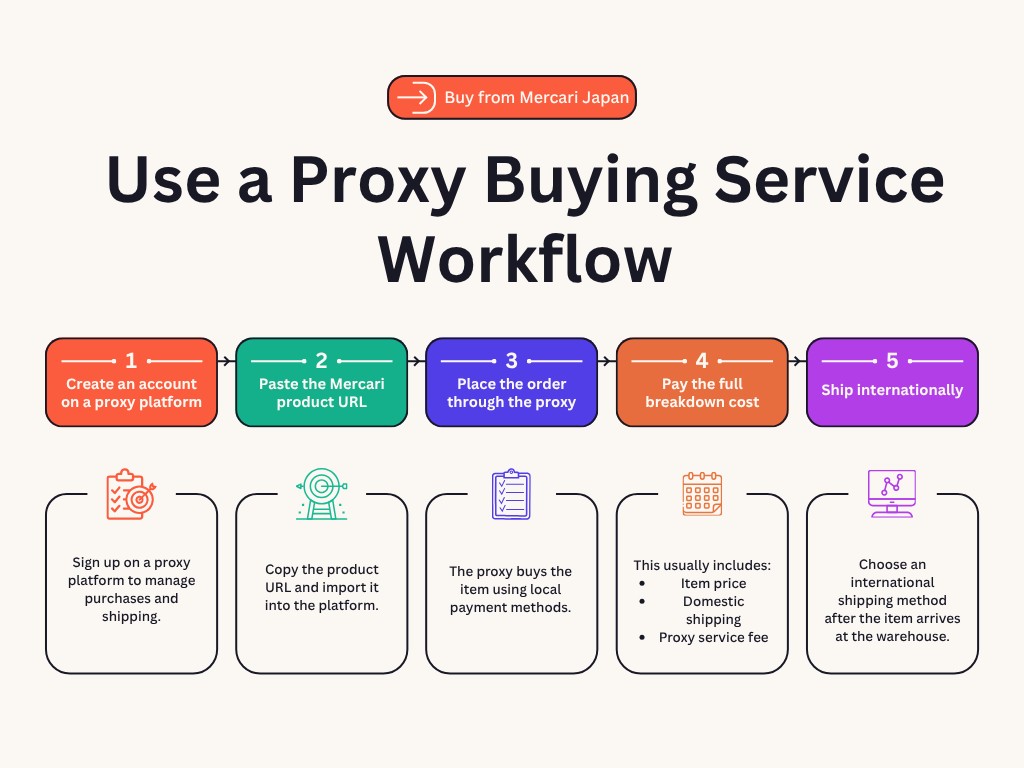
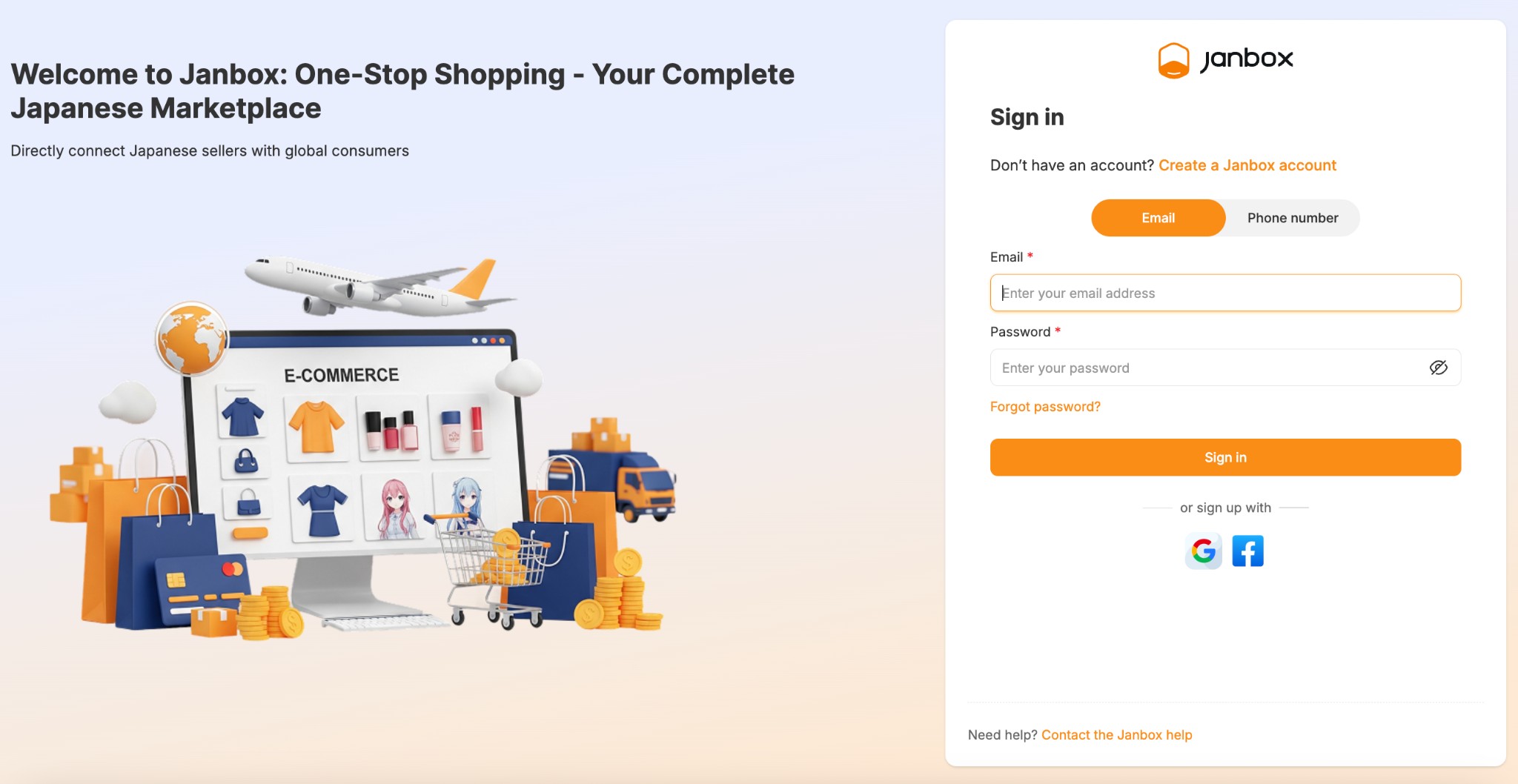
Step 1 – Create an account on a proxy platform
This becomes your main interface for managing orders. It replaces the need to interact with Mercari’s account system fully.
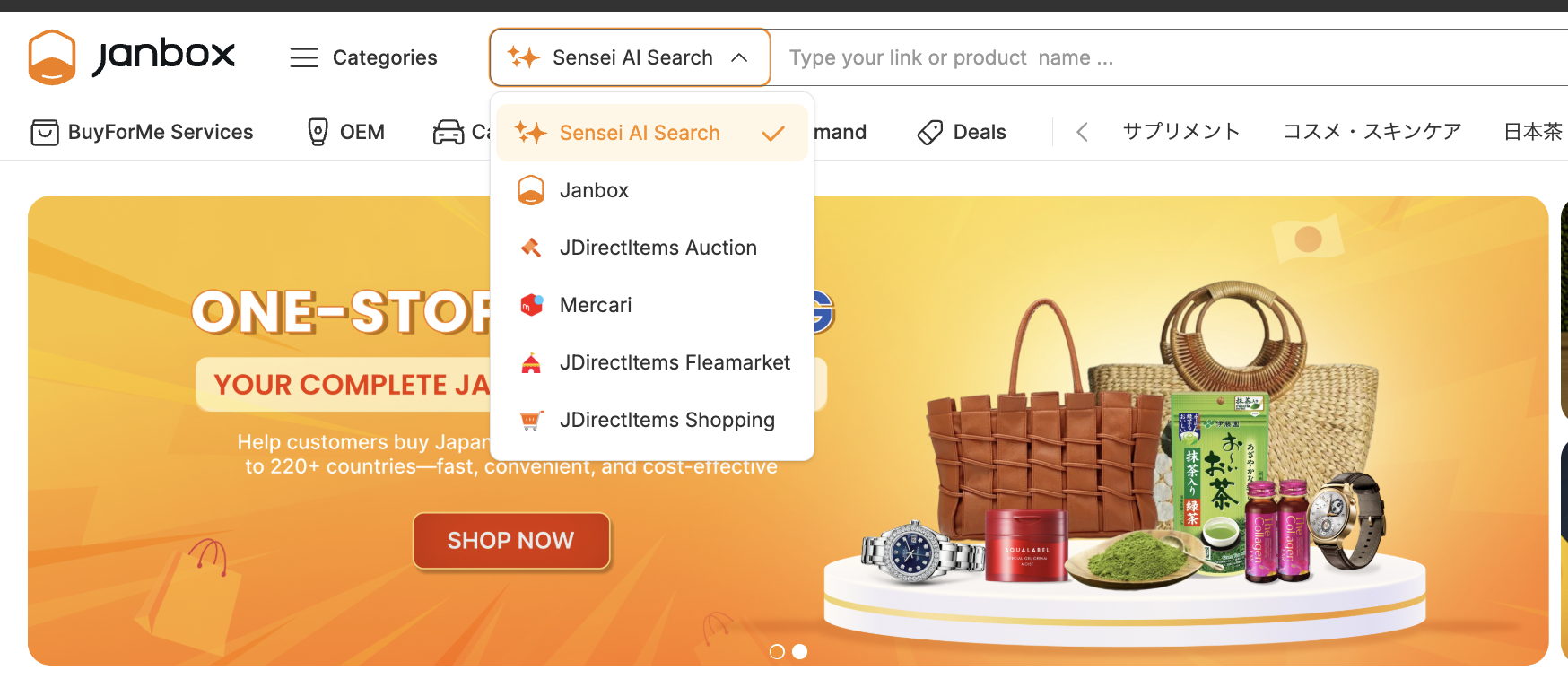
Step 2 – Paste the Mercari product URL
Once you find an item, you copy the link and import it into the proxy platform. This shifts the process away from Mercari’s checkout environment.
Step 3 – Place the order through the proxy
The proxy handles the purchase using local-compatible payment methods, which avoids card rejection or verification issues.
Step 4 – Pay the full breakdown cost
At this stage, you typically pay for:
Item price
Domestic shipping within Japan
Service fee charged by the proxy
Unlike direct checkout, these costs are often presented more clearly before the order is confirmed.
Step 5 – Ship internationally
After the item arrives at a warehouse, you select an international shipping method and complete the delivery process.
Popular Proxy Services
Once you decide to use a proxy, the next step is choosing which platform to work with. While most services can help you access Mercari, the experience can feel very different depending on how they handle pricing, speed, and the overall buying flow.
Looking at them side by side makes it easier to see where each option fits.
Service | Fees | Speed | Best For |
Buyee | Medium | Fast | Beginners |
ZenMarket | Low | Medium | Budget users |
Janbox | Medium | Fast | Full buying flow |
FromJapan | Medium | Medium | Niche sourcing |
Neokyo | Medium | Medium | Collectors |
What the Differences Actually Mean
The comparison above highlights the surface-level differences, but the real experience becomes clearer once you start placing orders.
Janbox stands out for keeping the entire process in one flow. From the moment you import a product to the final shipping step, everything stays connected, which reduces the need to switch between tools or wait for manual confirmations. This makes it especially useful when handling multiple items or comparing listings across platforms.
Buyee, on the other hand, is often easier for beginners to pick up. The interface is simple and quick to set up, which helps new users complete their first purchase without much friction. Over time, however, the fee structure can become more noticeable, especially when orders become more complex.
ZenMarket focuses more on cost efficiency. Its lower fee structure makes it appealing for buyers who prioritize savings, but the process can feel slower and requires more patience when managing orders.
FromJapan and Neokyo tend to serve more specific use cases. They work reliably, but are often chosen for niche sourcing or collecting rather than for a smooth, everyday buying experience.
Method 2 – Use a Forwarding Service (Advanced Users)
Forwarding services work differently. Instead of buying the item for you, they provide a Japanese address that you can use during checkout.
You remain responsible for placing the order directly on Mercari, which means all platform restrictions still apply.
To make this method work, you must already be able to complete the purchase yourself. This includes:
A functioning Mercari account
A Japanese-compatible payment method
Ability to pass any required verification
Without these, forwarding alone will not solve the buying problem.
How the Process Works
If you prefer to stay in control of the purchase instead of relying on a proxy to handle everything, a forwarding setup is the alternative approach. Instead of having someone buy the item for you, you complete the order directly on Mercari and use a Japanese address provided by the forwarding service.
In practice, the process looks like this. You place the order on Mercari using that Japanese address, just as a local buyer would. The seller ships the item within Japan, and once it arrives at the forwarding warehouse, it is prepared and sent to your international address.
This approach keeps you closer to the original buying flow on Mercari, but it also means every step, from checkout to payment and communication, is handled by you rather than through an intermediary.
Pros and Cons
That difference in control directly affects how the costs and effort are distributed.
On the positive side, forwarding can reduce overall expenses. Without a proxy service fee, the total cost is often lower, especially for buyers who already have a working setup with payment and account access.
At the same time, the process becomes more demanding. You are responsible for completing the purchase, dealing with payment compatibility, and communicating with the seller when needed. If an issue comes up, there is no built-in layer to step in and resolve it for you.
In other words, forwarding gives you more control over the transaction, but also requires more involvement at every stage.
Full Cost Breakdown – What You Really Pay
Buying from Mercari Japan often feels cheap at first glance. Prices are usually lower than global marketplaces, especially for secondhand items. The difference appears after the purchase, when additional costs start stacking across each stage of the process.
What matters here is not each cost individually, but how they accumulate from the moment you place the order to the moment the package arrives.
Typical Fees
Every Mercari order follows a layered cost structure. Unlike a standard checkout, the full amount is not shown upfront in one place.
The total usually includes:
Item price
Domestic shipping within Japan
Proxy service fee
International shipping
Customs or import tax
Each component is calculated differently. The item price depends on the seller. Domestic shipping varies by location and package size. Proxy fees are either percentage-based or fixed. International shipping depends heavily on weight and dimensions.
The key detail is how these costs interact. A low item price does not always mean a cheaper order. If the seller charges high domestic shipping or the package becomes bulky, the final cost can increase significantly.
Hidden Costs to Watch Out For
Beyond the visible fees, there are smaller costs that are easy to miss but can affect the final total.
Currency conversion is one of the most common. Payments are processed in yen, and the rate applied by your card or platform may differ from the market rate. Over multiple purchases, this difference becomes noticeable.
Storage fees can also apply if items are held in a warehouse for too long before shipping. This often happens when buyers wait to consolidate multiple orders but exceed the free storage period.
Consolidation itself may carry a fee depending on how items are repacked. While it usually reduces shipping cost overall, the handling process can still add a small charge.
These costs rarely appear all at once, which is why they are often underestimated.
Cost Optimization Tips
Reducing total cost depends more on how you manage shipping and timing than on the product itself.
Bundling multiple items into one shipment lowers the cost per item by reducing repeated shipping charges
Choosing slower shipping methods such as surface mail helps reduce cost when delivery speed is not critical
Avoiding oversized items prevents dimensional weight pricing, which can increase shipping cost disproportionately
Experienced buyers focus on these decisions early. Instead of reacting to costs after checkout, they plan purchases around how items will be shipped and combined.
How to Avoid Scams & Buy Safely on Mercari Japan
Once you have a clear view of pricing and costs, the next step is making sure the item you receive matches what you expect. Mercari offers strong deals, but because everything comes from individual sellers, quality and reliability can vary from one listing to another.
If you’re learning how to order from Mercari Japan, the key difference between a good purchase and a bad one usually comes down to how you read the listing before buying, not after.
How to Check Seller Reliability
On Mercari, trust is built at the seller level. That means before you look at the product, you should look at the person selling it.
A reliable seller usually shows consistent signals:
Ratings and reviews: High ratings with detailed feedback suggest previous buyers received items as described
Number of transactions: Sellers with a long history tend to be more predictable than new accounts
Profile consistency: Clear descriptions, regular activity, and real product photos often indicate a serious seller
These factors work together. A seller with strong ratings but very few transactions is different from one with hundreds of completed sales.
Red Flags to Watch For
Once the seller looks acceptable, the next step is checking the listing itself. This is where most risky purchases can be filtered out early.
Pay attention to patterns like:
Prices that are too low: A big price gap compared to similar listings often means something is missing, whether it is condition details or completeness
No product description: If the listing does not explain condition, usage, or defects, you are buying without context
Stock images only: On a secondhand marketplace, real photos matter. Without them, there is no way to verify the actual condition of the item
A good listing usually explains more than it hides. When information feels incomplete, that is often intentional.
Smart Buying Tips (From Real Buyers)
After filtering out risky listings, the final step is improving how you evaluate the ones that look promising. This is where experienced buyers approach things differently.
Always check the original Japanese description: Auto-translation can miss details about damage, missing parts, or condition notes
Ask for confirmation when details matter: For higher-value items, using a proxy to confirm condition or request clarification can reduce risk significantly
Be cautious with “junk” listings: These are often sold as-is. They can be valuable for experienced buyers, but risky if you are not familiar with how to assess condition
The goal is not to avoid risk completely, but to control it before committing to a purchase.
Best Products to Buy from Mercari Japan
After learning how to evaluate sellers and avoid risky listings, the next step is knowing what is actually worth buying on Mercari. Not every category performs the same way on a peer-to-peer marketplace, especially when shipping internationally.
Some products hold strong value because of pricing and availability, while others introduce unnecessary risk due to handling, condition, or shipping limitations.
High-Demand Categories
Mercari stands out when it comes to products that are either hard to find globally or significantly cheaper within Japan. These categories tend to offer the best balance between value and reliability when sourced correctly.
Anime and manga collectibles: Japan is the primary market for these items, so listings often include limited editions, event-exclusive goods, or older releases that are difficult to find elsewhere. Prices are usually lower because sellers are part of the local fan ecosystem rather than resellers targeting international buyers.
Japanese streetwear: Brands like Uniqlo, Comme des Garçons, and other domestic labels appear frequently, often in near-new condition. Many users resell items shortly after purchase, which creates a steady supply of affordable pieces compared to global resale platforms.
Luxury secondhand goods: Japan has strict standards around counterfeit products, and many sellers maintain items carefully. This results in a secondhand market where branded goods can be found in good condition at more competitive prices. The key is verifying authenticity and condition before buying.
Electronics (used but high quality): Secondhand electronics in Japan are often well maintained, with detailed descriptions and accurate condition grading. Smaller devices, accessories, or hobby electronics tend to offer better value compared to bulkier items.
These categories work well because they combine local supply, consistent demand, and relatively predictable quality.
What to Avoid
At the same time, some products introduce more risk than value, especially when international shipping is involved.
Fragile items: Products like glassware, ceramics, or delicate collectibles carry a higher risk of damage during international transit. Even with careful packaging, long-distance shipping increases the chance of issues.
Restricted items (batteries, liquids): Shipping carriers often limit or reject items such as batteries, cosmetics, or liquids. These restrictions can delay orders or prevent them from being shipped altogether.
Counterfeit-prone luxury goods: While Japan is generally strict, certain categories still carry risk, especially when listings lack clear proof of authenticity. If pricing feels unusually low and documentation is missing, it is better to skip the item.
Mercari Japan Reviews – What Real Buyers Say
By the time you go through the process of finding a product, choosing a buying method, and estimating total cost, a clearer picture of Mercari starts to form. For many buyers, the experience sits somewhere between a hidden opportunity and a slightly complex system that takes time to get used to.
What stands out most is how different Mercari feels compared to global marketplaces. It rewards patience and attention to detail, but it also expects you to understand how listings, sellers, and shipping work together.
What Buyers Like
Many buyers keep coming back to Mercari for one reason: value. The platform consistently offers deals that are difficult to find elsewhere, especially when it comes to Japan-specific products.
Common positives mentioned by users include:
Lower prices compared to global platforms: Sellers are often individuals looking to clear items quickly, which keeps pricing competitive
Access to rare or hard-to-find items: Limited releases, older collections, and niche products appear more frequently than on international marketplaces
Unique Japanese products: Items tied to local trends, events, or brands are easier to find and often closer to original pricing
For buyers who are willing to spend time searching and comparing listings, these advantages make a noticeable difference.
Where Buyers Struggle
At the same time, the experience is not as straightforward as shopping on platforms designed for international users.
The most common challenges include:
A more complex buying process: Multiple steps, especially when using proxy services, can make the process feel less direct
Shipping costs that add up quickly: International delivery and consolidation can increase the final price beyond what buyers expect at first
No direct support for international users: The platform itself does not provide built-in solutions for overseas buyers, which means you need to rely on alternative methods
These issues do not make Mercari unusable, but they do require a different approach compared to standard e-commerce platforms.
Mercari Japan offers strong value for buyers who know how to navigate its structure. The deals and product variety are real, but so are the extra steps required to complete a purchase. Buyers who understand both sides tend to get the most out of the platform over time.
Conclusion
Most people come to Mercari Japan because they spot something they can’t find elsewhere or at a price that feels too good to ignore. The tricky part is not finding the item, but getting it all the way from a local listing to your doorstep without running into issues along the way. That’s usually where things start to feel confusing, especially the first few times.
Once you get familiar with how to buy from Mercari Japan, the process starts to feel much more manageable. You know what to check before buying, which method works best for your situation, and how to avoid the common mistakes that cost time or money. From there, it stops feeling like a workaround and becomes a reliable way to access better deals and unique items that are hard to find anywhere else.
FAQs
How to buy from Mercari Japan internationally?
The most reliable way is to use a proxy buying service. You find the product on Mercari, paste the link into the proxy platform, and let them handle the purchase, domestic delivery, and international shipping. This approach avoids issues with payment restrictions and local shipping requirements.
Is Mercari Japan safe to buy from?
Mercari is generally safe, thanks to its seller rating system and transaction tracking. However, safety depends on how carefully you evaluate each listing. Checking seller reviews, reading descriptions in detail, and verifying product condition are essential steps before placing an order.
What is the best proxy service for Mercari?
Janbox is one of the best proxy services for Mercari, especially for international buyers who want a smoother and more centralized buying experience. It combines product search, purchasing, payment, consolidation, and international shipping into one workflow, making it easier to manage multiple orders across Japanese marketplaces.
Can I use PayPal on Mercari Japan?
Mercari does not widely support PayPal for direct purchases. Most transactions rely on Japanese payment methods. This is another reason why proxy services are commonly used, as they handle payment through locally compatible systems.
How long does shipping take from Japan?
Shipping time depends on the delivery method you choose. For example:
DHL / FedEx: approximately 3–7 business days
EMS: approximately 5–10 business days
Economy shipping: approximately 2–4 weeks
Domestic shipping within Japan is usually completed within a few days before the package is forwarded internationally.
Are there import taxes when buying from Mercari?
Import duties or taxes may apply depending on your country’s regulations. These charges are based on the declared value of the package and the product type. It is important to include this in your cost estimate before ordering.
Can I return items bought from Mercari Japan?
Returns are difficult for international buyers. Most sellers do not support international returns, and shipping costs can be high. Because of this, it is important to treat most purchases as final and review listings carefully before buying.
Is Mercari cheaper than eBay?
In many cases, Mercari offers lower prices, especially for secondhand items and Japan-specific products. Sellers are often individuals who price items competitively. However, once shipping and fees are included, the final cost should be compared carefully.
Table of Contents
- What is Mercari Japan & Why Global Buyers Love It
- Can You Buy Directly from Mercari Japan?
- Best Way to Buy from Mercari Japan: Step-by-Step Guide
- Full Cost Breakdown – What You Really Pay
- How to Avoid Scams & Buy Safely on Mercari Japan
- Best Products to Buy from Mercari Japan
- Mercari Japan Reviews – What Real Buyers Say
- Conclusion
- FAQs
- How to buy from Mercari Japan internationally?
- Is Mercari Japan safe to buy from?
- What is the best proxy service for Mercari?
- Can I use PayPal on Mercari Japan?
- How long does shipping take from Japan?
- Are there import taxes when buying from Mercari?
- Can I return items bought from Mercari Japan?
- Is Mercari cheaper than eBay?
Related Posts