The Ultimate Rakuten Japan Dropshipping Guide: Sourcing & Selling in 2026
Many ecommerce sellers look to Japan when they want products that stand out from what's already available in local markets. From skincare and stationery to anime merchandise and specialty foods, Japanese products have built a strong reputation for quality and originality.
Among Japan's online marketplaces, Rakuten is one of the most popular places to discover those products. It connects thousands of brands and independent retailers, giving sellers access to a wide range of categories that are often difficult to source outside Japan.
However, Rakuten dropshipping isn't as straightforward as sourcing from global marketplaces. Most sellers are focused on the domestic market, which means international buyers may need additional support to purchase products and arrange overseas shipping.
In this guide, you'll learn how Rakuten dropshipping works, which products are worth selling, how to build a reliable sourcing workflow, and the best way to bring authentic Japanese products to customers worldwide.
Is Rakuten Worth Using for Dropshipping?
Rakuten is one of Japan's largest ecommerce marketplaces, accounting for around 27% to 28% of the country's ecommerce market and generating more than ¥6.35 trillion in annual domestic Gross Merchandise Sales (GMS). With over 100 million registered members and 56,000+ merchants, it gives sellers access to an enormous range of authentic Japanese products across almost every retail category.
For dropshippers, Rakuten Japan isn't simply another marketplace to source products. It's a gateway to thousands of Japanese brands and specialty retailers that are difficult to reach through international ecommerce platforms. That opens up opportunities to build a product catalog that feels more distinctive and less saturated than one built around global marketplaces.
Whether Rakuten is the right choice depends on what you plan to sell and how you manage sourcing. Here are three reasons many international sellers choose Rakuten.
Product Authenticity You Can Trust
One of Rakuten's biggest advantages is the quality of its seller ecosystem. The marketplace is home to official brand stores and established Japanese retailers, making it easier to source genuine products with confidence.
This is especially important for categories where authenticity directly affects customer trust, such as Japanese skincare, supplements, designer goods, and anime collectibles. Selling authentic products not only helps reduce returns and disputes but also strengthens your store's reputation over time.
Better Profit Potential with Premium Japanese Products
Many customers shop on Rakuten because they're looking for products they can't easily find in their local market. Instead of competing on the lowest price, sellers often compete by offering authentic Japanese brands, exclusive products, and better product quality.
That creates opportunities to earn healthier margins, particularly in niche categories where customers are willing to pay more for genuine products imported from Japan.
Opportunities to Lower Your Sourcing Costs
Rakuten's loyalty program can also benefit buyers. During promotional campaigns, purchases may earn a high percentage of Rakuten Points, which can be used to offset future orders.
For businesses sourcing products regularly, planning purchases around these campaigns can gradually reduce procurement costs. While the savings vary by seller and promotion, they can improve overall profitability over time, especially for repeat purchases.
How Rakuten Dropshipping Works
Rakuten doesn't offer a built-in dropshipping program like some global ecommerce platforms. Instead, sellers use Rakuten as a sourcing marketplace while managing their own online store and order fulfillment.
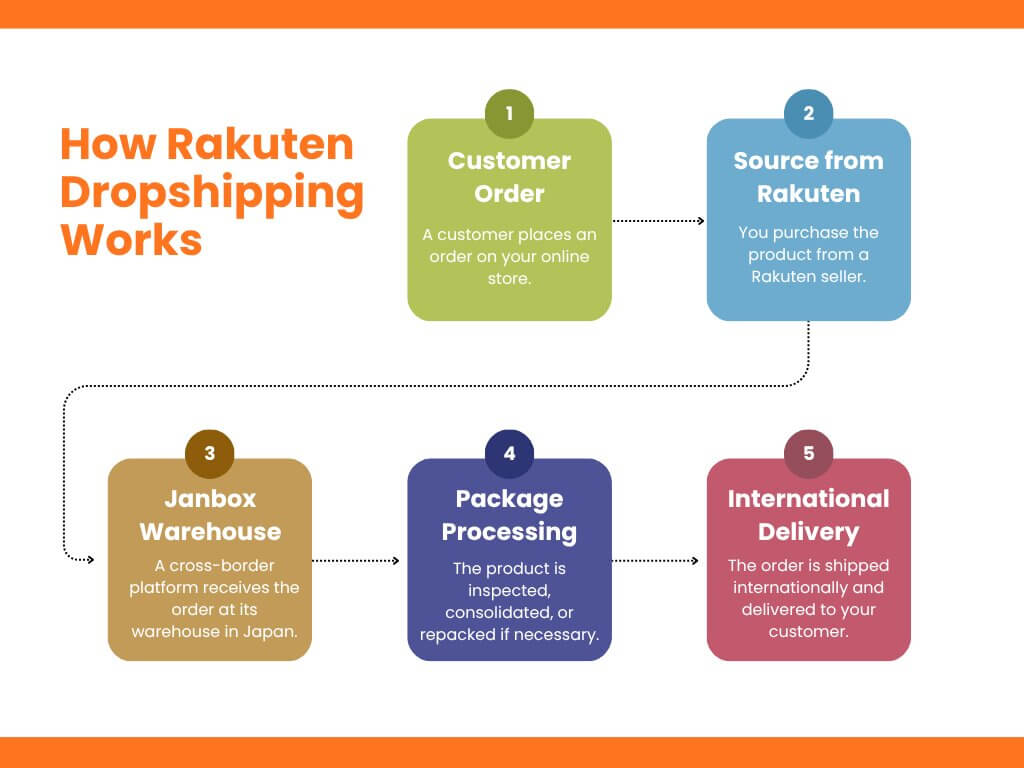
The workflow is straightforward. When a customer places an order on your store, you purchase the product from a seller on Rakuten. Since many Rakuten merchants only ship within Japan, international sellers often rely on a cross-border marketplace or sourcing platform to complete the purchase. The product is delivered to a warehouse in Japan, where it can be inspected, consolidated with other orders if needed, and prepared for international shipping before being sent to the customer.
The process typically looks like this:
A customer places an order on your online store.
You purchase the product from a Rakuten seller.
A cross-border platform receives the order at its warehouse in Japan.
The product is inspected, consolidated, or repacked if necessary.
The order is shipped internationally and delivered to your customer.
Although there are a few more steps than traditional dropshipping, this model gives sellers access to millions of authentic Japanese products that are difficult to source through international suppliers. It also allows you to test new products without holding inventory, making it a practical option for businesses targeting customers interested in Japanese brands and specialty goods.
What Products Sell Best on Rakuten?
Rakuten carries millions of products, but some categories consistently perform better for international sellers. These products are widely available on the platform, easy to source from multiple retailers, and have steady demand outside Japan.
Japanese Skincare
Rakuten is home to thousands of official beauty stores, making it one of the best places to source authentic Japanese skincare. Many brands release Japan-exclusive products, seasonal gift sets, and refill packs that are difficult to find through international retailers, giving dropshippers more opportunities to stand out.
Learn more: Where to Buy Japanese Skincare Online: Best Stores for Authentic Products
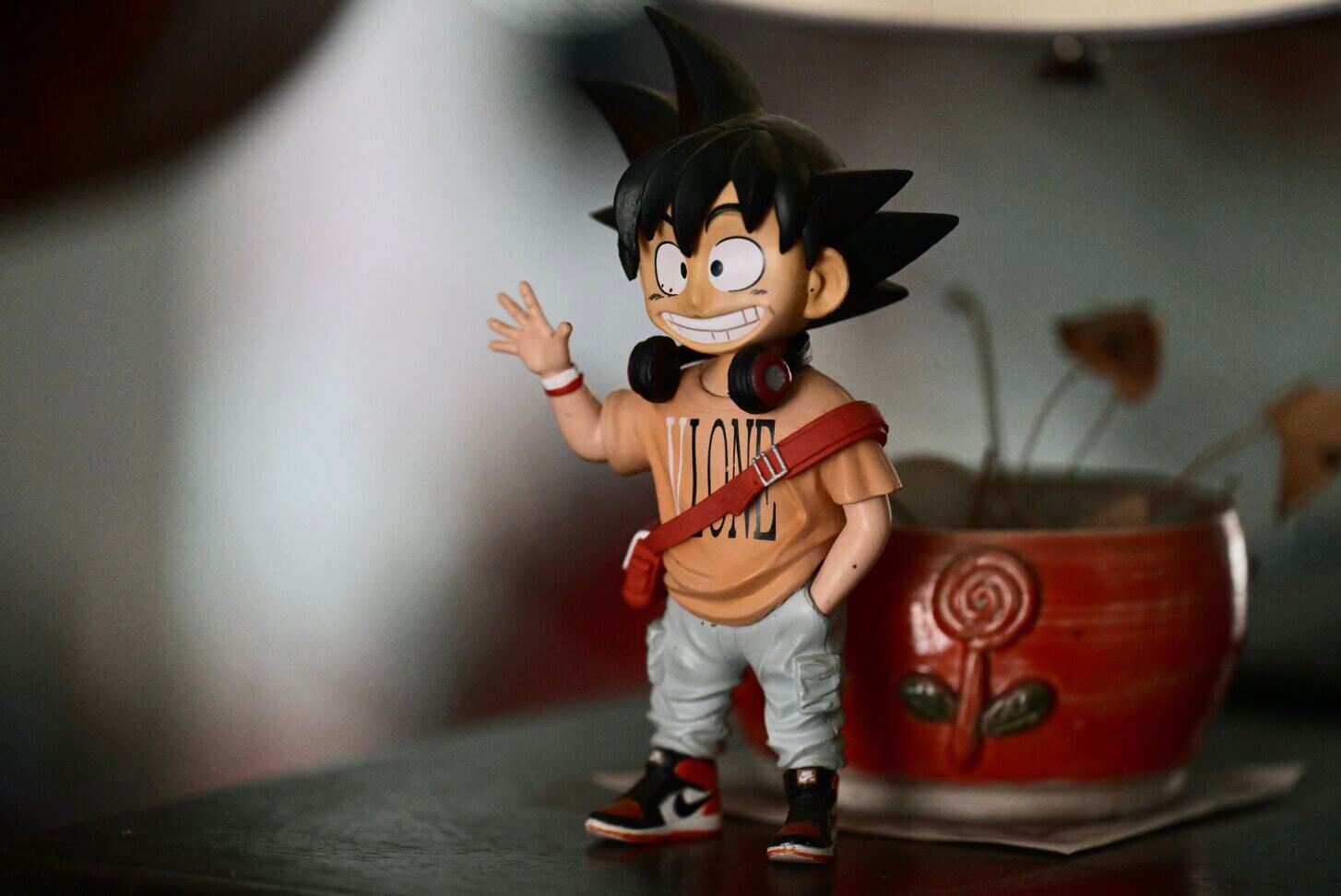
Anime Figures
Collectors often look for officially licensed figures that sell out quickly or never reach overseas markets. Rakuten gives buyers access to products from specialty hobby stores, making it a strong sourcing channel for both new releases and limited-edition collectibles.
Learn more: How much anime figures cost in Japan | 3 tips to save money
Golf Equipment
Japan has a well-established golf industry, and Rakuten offers clubs, apparel, accessories, and training equipment from both global and Japanese brands. Many international buyers specifically search for Japanese golf products because of their craftsmanship and product quality.
Kitchenware
From premium chef's knives to ceramic tableware and cookware, Japanese kitchen products have a strong reputation among home cooks and professional chefs. These items often command higher prices because customers associate them with durability and precision.
Health Supplements
Rakuten is a popular marketplace for vitamins, collagen products, probiotics, and other health supplements from established Japanese manufacturers. International consumers often prefer products made for the domestic Japanese market, creating consistent demand in this category.
Learn more: Top Trusted Japanese Supplements Online Shops for Authentic Health Products
How to Start a Rakuten Dropshipping Business
Launching a successful storefront using Rakuten Ichiba requires moving away from manual guesswork and setting up a clear, structured framework. Because you are dealing with a market that is largely closed to overseas buyers, you need to execute each operational step with precision.
The steps below will help you validate demand, choose reliable suppliers, and deliver products efficiently to customers outside Japan.
Step 1. Choose a Profitable Product Niche
Before opening a store or contacting suppliers, decide what you want to sell. A focused niche makes it easier to build your brand, attract the right customers, and compete with other dropshipping stores.
Start by researching demand with tools like Google Trends, Amazon Best Sellers, and social media platforms to understand what customers are already buying. Then compare those trends with products available on Rakuten. Categories with Japan-exclusive products or limited international availability often offer the strongest opportunities because they are harder for competitors to source.
At the same time, look at your competition. If dozens of stores are selling the same product at similar prices, it may be worth exploring a more specialized category instead.
Step 2. Find Reliable Sellers on Rakuten
Not every Rakuten store offers the same level of service or product quality. Spending a little more time evaluating sellers can help you avoid fulfillment issues later.
Start by reviewing seller ratings and customer feedback. Consistently positive reviews usually indicate reliable shipping, accurate product descriptions, and responsive customer support. Official brand stores are another good option if authenticity is important, particularly for beauty products, supplements, and collectibles.
If several sellers offer the same item, compare more than just the price. Shipping fees, stock availability, delivery times, and store reputation all affect your customers' experience.
Step 3. Use a Cross-Border Platform to Purchase Products
Because native Rakuten merchants do not accept international credit cards and will not ship items outside of Japan, you must integrate a specialized cross-border ecosystem like Janbox to bridge the gap. Janbox acts as your automated procurement engine by connecting directly with Rakuten Ichiba through an intelligent API interface.
When you use Janbox, you can easily search for live Rakuten listings, view accurate pricing data, and purchase items using your preferred global payment methods without facing local bank rejections. Once purchased, the merchant delivers the product locally to the secure Janbox warehouse facility located in Tokyo.
Janbox provides forty-five days of entirely free storage, allowing you to gather multiple items from different Rakuten sellers, inspect their quality, and consolidate them into a single optimized package to slash international express freight rates by up to eighty percent.
Step 4. Build Your Online Store
Once you've identified reliable products, the next step is creating a storefront where customers can place orders. Platforms such as Shopify and WooCommerce allow you to build a branded store, organize products into collections, and manage payments from one place.
Rather than listing hundreds of products immediately, begin with a smaller catalog. This makes it easier to monitor demand, refine your pricing strategy, and optimize product pages before expanding into new categories.
Step 5. Process Orders and Fulfill Customers
After a customer places an order, purchase the product from the selected Rakuten seller and have it delivered to your Japanese warehouse. From there, the package can be inspected, repacked if necessary, and shipped to the customer's destination.
As your order volume increases, focus on creating a consistent fulfillment process. Clear order tracking, reliable shipping, and timely communication will have a greater impact on customer satisfaction than simply offering the lowest price.
Tips for Successful Rakuten Dropshipping
Sourcing from a closed domestic marketplace like Rakuten Ichiba requires a different operational approach compared to standard dropshipping platforms. To protect your profit margins and ensure a smooth delivery process, you should implement these practical logistics and management strategies.
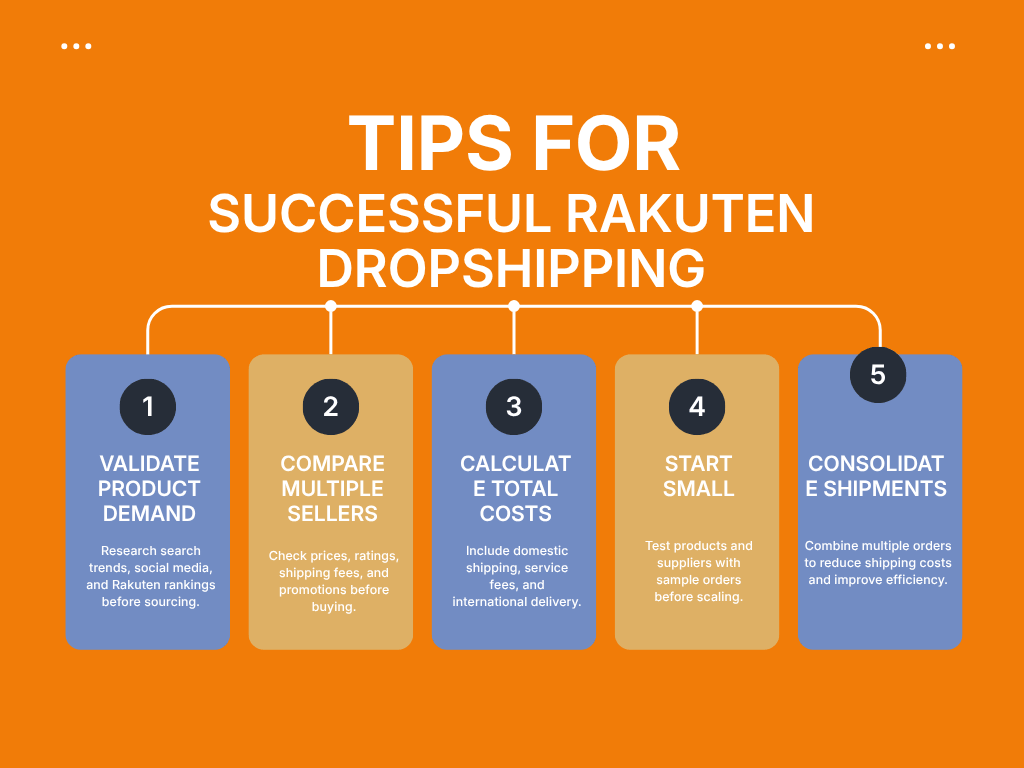
Validate demand before sourcing
Do not build your entire e-commerce catalog around a niche based on guesswork or personal taste. In the Rakuten ecosystem, trend does not mean a viral video that disappears in two days; it means verified commercial intent. You need to validate product demand by tracking specific indicators before pushing your ad budget:
Google search volumes: Use Google Keyword Planner to check historical data for search spikes in global terms like "Japanese sunscreen" or "waterproof liquid eyeliner" during spring and summer months.
Social sashtag velocity: Monitor transactional tags like #Jbeautyfinds or #AnimeUnboxing on TikTok to spot sudden growth in user generated videos for specific brand lines.
Rakuten rankings: Check the top ten item charts directly on the marketplace to see what domestic consumers are buying right now in categories like cosmetics, collectibles, or snacks.
Compare multiple sellers
Never buy from the first merchant storefront you find on Rakuten Ichiba. Because Rakuten hosts over fifty-six thousand independent shops, multiple vendors often compete to sell the exact same product SKU.
Take the time to cross-reference identical listings across different stores. Independent merchants frequently run their own localized discounts, variable product pricing, and point-multiplier promotions, so comparing options ensures you keep your target net profit margins intact.
Watch domestic shipping fees
Some Rakuten merchants list an incredibly low product base cost but attach high domestic delivery fees for transit within Japan. If you only look at the item price on the surface, these hidden logistics costs will quickly wipe out your retail markups.
Always evaluate the total landed price, which combines the base item cost plus the internal Japanese shipping fee, before committing to a supplier. Keep in mind that many Rakuten shops offer free domestic shipping if you hit their minimum spending threshold, which is typically 3,980 JPY.
Test with small orders first
Execute a single unit test purchase before driving paid advertising traffic to a specific listing. Testing the supply chain yourself is the only way to safeguard your store reputation and avoid costly customer refunds later on.
This trial run lets you personally evaluate the actual performance of the supplier. You can check the processing speed of their fulfillment pipeline, see how fast the goods arrive at your local warehouse hub, and physically inspect the durability of the manufacturer packaging.
Consolidate shipments
Shipping individual items across borders one by one will quickly destroy your profits due to base international carrier rates. International express couriers charge a heavy premium for the first half-kilogram of any shipment, making separate small packages financially unsustainable.
You need to optimize your shipping data and physical inventory through an efficient logistics pipeline:
Free storage utilization: Store your purchased items at a secure Tokyo warehouse facility for up to forty-five days to pool multiple customer orders together.
Volume optimization: Direct the warehouse team to strip away heavy, oversized outer retail boxes sent by the domestic merchants.
Bundle compression: Repack multiple products into a single, compact white-label parcel to minimize total dimensional weight before dispatching via global air express.
Conclusion
Rakuten dropshipping provides a highly lucrative route to escape saturated e-commerce markets and capture premium retail margins using genuine, high-quality Japanese merchandise. While the domestic marketplace remains closed to direct international buyers due to rigid payment and shipping barriers, integrating a modern cross-border engine like Janbox completely solves this operational friction.
By focusing on lightweight, high-demand niches, tracking your total landed costs diligently, and using consolidated warehouse logistics, you can build a highly profitable automated global storefront with absolute confidence.
FAQs
Is Rakuten good for dropshipping?
Yes, especially for Japanese skincare, collectibles, kitchenware, golf items, and other products that are harder to find overseas.
Can I dropship directly from Rakuten?
Not directly. Most Rakuten sellers only deliver within Japan, so international sellers typically use a cross-border marketplace like Janbox to purchase products, consolidate orders, and arrange international shipping. This makes it much easier to source from multiple Rakuten stores through a single platform.
What products are best for Rakuten dropshipping?
Japanese skincare, anime figures, golf equipment, kitchenware, and health supplements are strong options.
Do I need Janbox for Rakuten dropshipping?
Janbox can help if a Rakuten seller does not accept overseas orders or international shipping.
Is Rakuten dropshipping beginner-friendly?
It can be, as long as you start with small orders and understand the full cost before listing products.
Table of Contents
Related Posts