Top 10 Best Japanese E-commerce Sites to Shop in 2026
Online shopping in Japan has changed quickly over the past few years. What used to be a mostly local market is now attracting more attention from international buyers who are looking for better prices, unique products, and access to Japan-only releases.
This shift is backed by strong growth. The Japanese e-commerce market is expected to reach $319.42 billion, with a steady annual growth rate of 9.51%, according to MarkNtel Advisors (2026). At the same time, over 71% of consumers in Japan now shop through their smartphones, making online purchasing faster and more accessible than ever.
For global shoppers, this opens up new opportunities. A Japanese e-commerce site can offer everything from limited-edition collectibles to high-quality fashion and everyday goods that are rarely available outside Japan.
If you’re looking to shop from Japan, this guide will walk you through the most popular Japanese e-commerce sites, what each platform is best for, and how to choose the right option based on your needs.
What Is a Japanese e-commerce site?
A Japanese e-commerce site is an online platform designed primarily for buying and selling products within Japan’s domestic market. These platforms connect shoppers with brands, retailers, and individual sellers, offering a wide range of products from everyday essentials to niche and hard-to-find items.
What makes Japanese e-commerce sites different is how they are structured. Instead of relying on a single dominant marketplace, Japan’s online shopping ecosystem is more fragmented. Different types of platforms serve different purposes, and each plays a specific role in how people shop.
In general, Japanese e-commerce sites fall into three main categories:
Retail platforms: Focused on brand-new products from official stores and large retailers. These are commonly used for electronics, beauty, and everyday shopping.
Resale platforms: Built around peer-to-peer transactions, where individuals sell pre-owned or “like new” items. These platforms are popular for finding better prices and unique goods.
Auction-based platforms: Designed for bidding on products, often used for rare, collectible, or discontinued items.
Understanding these differences helps you choose the right type of platform depending on what you want to buy, especially when navigating Japan’s diverse online shopping landscape.
Why Shop from a Japanese e-commerce site?
Shopping from a Japanese e-commerce site gives you access to products and pricing that are often hard to find on global platforms. For many buyers, the difference becomes clear after just a few purchases.
Access to Japan-Only Products
Many products are released only in Japan, including limited-edition items, local brand collaborations, and region-specific goods. These are rarely listed on international marketplaces, so Japanese e-commerce sites are often the only way to get them.
Better Pricing, Especially for Second-Hand Items
Japan has a well-established resale market where items are kept in excellent condition. You can often find “like new” products at much lower prices, especially in categories like fashion, electronics, and collectibles.
High Product Quality and Authenticity
Sellers typically follow strict quality standards, with clear condition grading and detailed descriptions. This makes it easier to understand exactly what you’re buying and reduces the risk of receiving poor-quality items.
Exclusive Brands and Niche Categories
Japanese platforms are strong in categories that are less common elsewhere, such as anime merchandise, hobby goods, and local fashion brands. These products are often difficult to find outside Japan.
Top 10 Japanese e-commerce site platforms to Shop from Japan
Not all Japanese e-commerce sites work the same way. Some focus on brand-new products, others specialize in second-hand deals or rare items, and not all of them are easy to use if you’re shopping from outside Japan.
To help you quickly understand the differences, here’s a side-by-side comparison of the most popular platforms:
Platform | Best For | Product Type | International Friendly | Key Advantage |
Janbox | All-in-one shopping | Multi-category | Yes | Access multiple Japanese marketplaces in one place |
Rakuten | Brand shopping | New products | Limited | Official stores and trusted retailers |
Amazon Japan | Fast orders | New products | Partial | Fast checkout and wide selection |
Yahoo Shopping | Price comparison | New products | No | Competitive pricing across sellers |
Mercari | Deal hunting | Second-hand | No | Low prices and trending items |
Rakuma | Budget finds | Second-hand | No | Cheaper listings from local sellers |
Yahoo Auctions | Rare items | Auction | No | Best for collectibles and hard-to-find goods |
JDirectItems Fleamarket | Aggregated deals | Mixed | No | Browse multiple flea markets in one place |
PayPay Fleamarket | Quick local deals | Second-hand | No | Simple and casual listings |
ZozoTown | Fashion | New products | Limited | Japanese fashion and streetwear brands |
Surugaya | Collectibles | Niche items | Limited | Anime, games, and hobby products |
After going through the list, you’ll probably notice that each platform works a bit differently. Some are easier for everyday shopping, while others are better for deals or rare finds.
If you’re shopping from outside Japan, access and checkout can become just as important as the product itself, so the best option really depends on what you want to buy and how you plan to get it.
1. Janbox: All-in-One Japanese E-commerce Platform for Global Buyers
Now that you’ve seen how different Japanese e-commerce sites compare, let’s start with the first option on the list and one that works a bit differently from the rest.
Janbox works differently from most Japanese e-commerce sites because it does not rely on a single marketplace. You can browse products from multiple platforms in one place, including Rakuten, Amazon Japan, Mercari, and Yahoo Auctions, without opening separate tabs or creating multiple accounts.
For buyers outside Japan, this removes several common barriers. You don’t need to deal with Japanese-only interfaces, local payment methods, or platforms that refuse international shipping. Everything is handled in one flow, from searching products to completing your order.
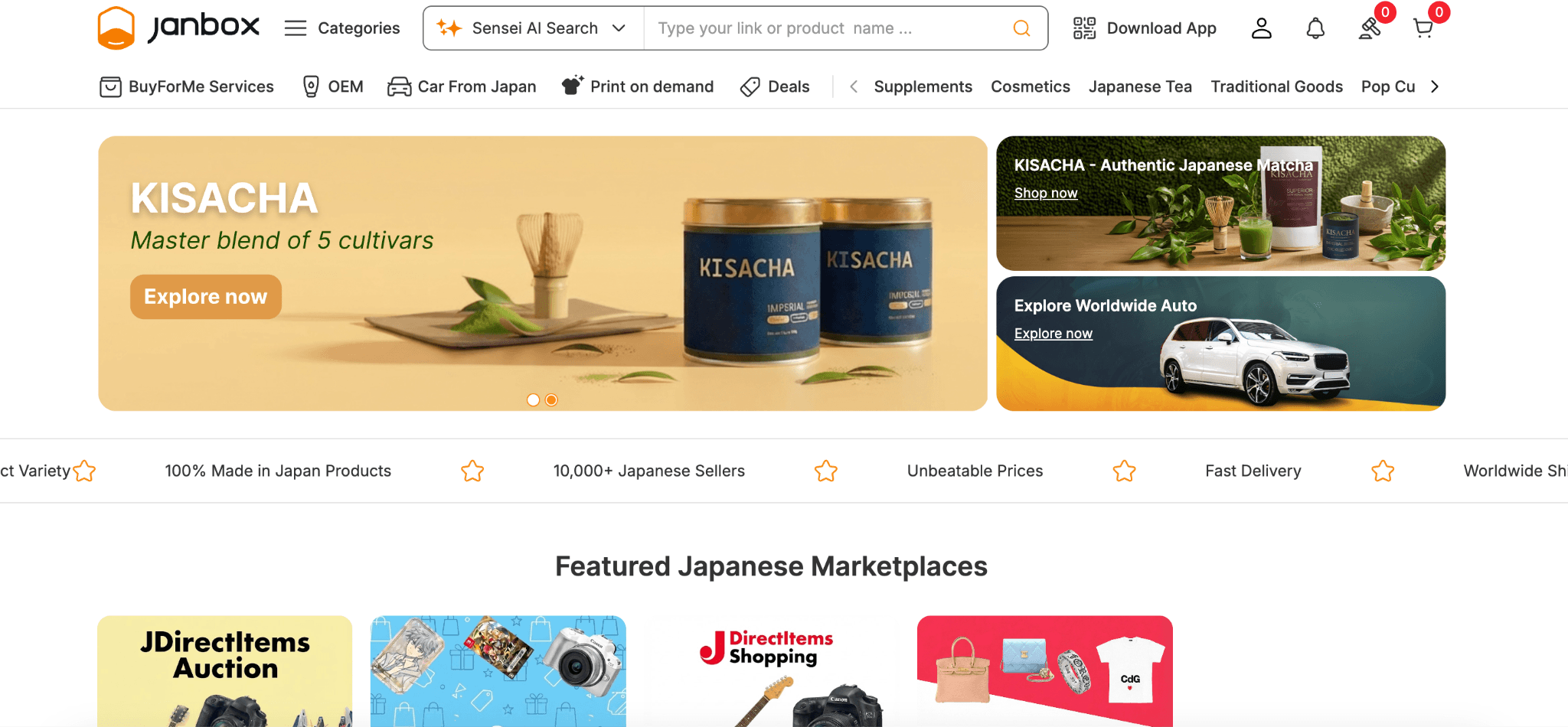
Another advantage is how straightforward the process feels. Instead of sending manual purchase requests or waiting for confirmations, you can view listings, compare options, and place orders more directly. The experience is closer to a standard online store, but with access to a much wider range of Japanese marketplaces.
If your goal is to explore different platforms and still complete your purchase without complications, Janbox offers a more practical way to do it.
Key features:
Shop across multiple Japanese e-commerce sites from one dashboard
Access Rakuten, Mercari, Yahoo Auctions, and a wide range of sellers across Japan
Compare listings and prices without switching between platforms
Buy or bid directly with a simplified checkout process
Real-time pricing and transparent cost breakdown
Combine orders to reduce international shipping fees
Designed for international users with global shipping support
2. Rakuten: Official Stores & Authentic Brands
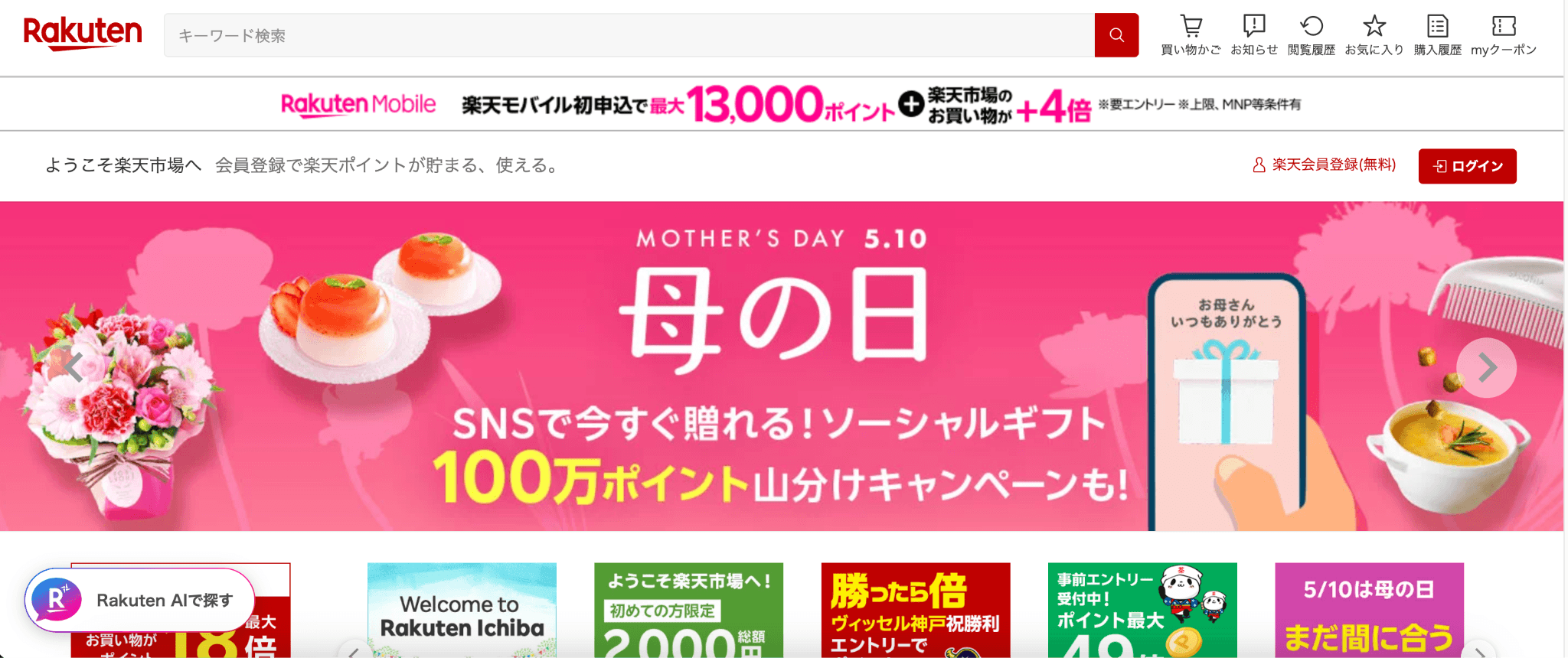
Rakuten is one of the largest Japanese e-commerce sites, known for its network of official stores and well-established retailers. It’s often the go-to platform when you’re looking for brand-new products from trusted sellers rather than second-hand deals.
What makes Rakuten different is its marketplace structure. Instead of a single retailer, it hosts thousands of individual shops, which gives you a wide range of options for the same product. This also makes it a strong choice if you want to compare prices across different sellers.
For shoppers who value authenticity and product variety, Rakuten is one of the most reliable platforms in Japan’s e-commerce space.
Key features:
Large network of official brand stores and verified sellers
Wide selection of new products across multiple categories
Multiple sellers offering competitive pricing for the same item
Frequent promotions, discounts, and seasonal campaigns
Strong reputation for product authenticity
3. Amazon Japan: Fast Shipping & Wide Selection
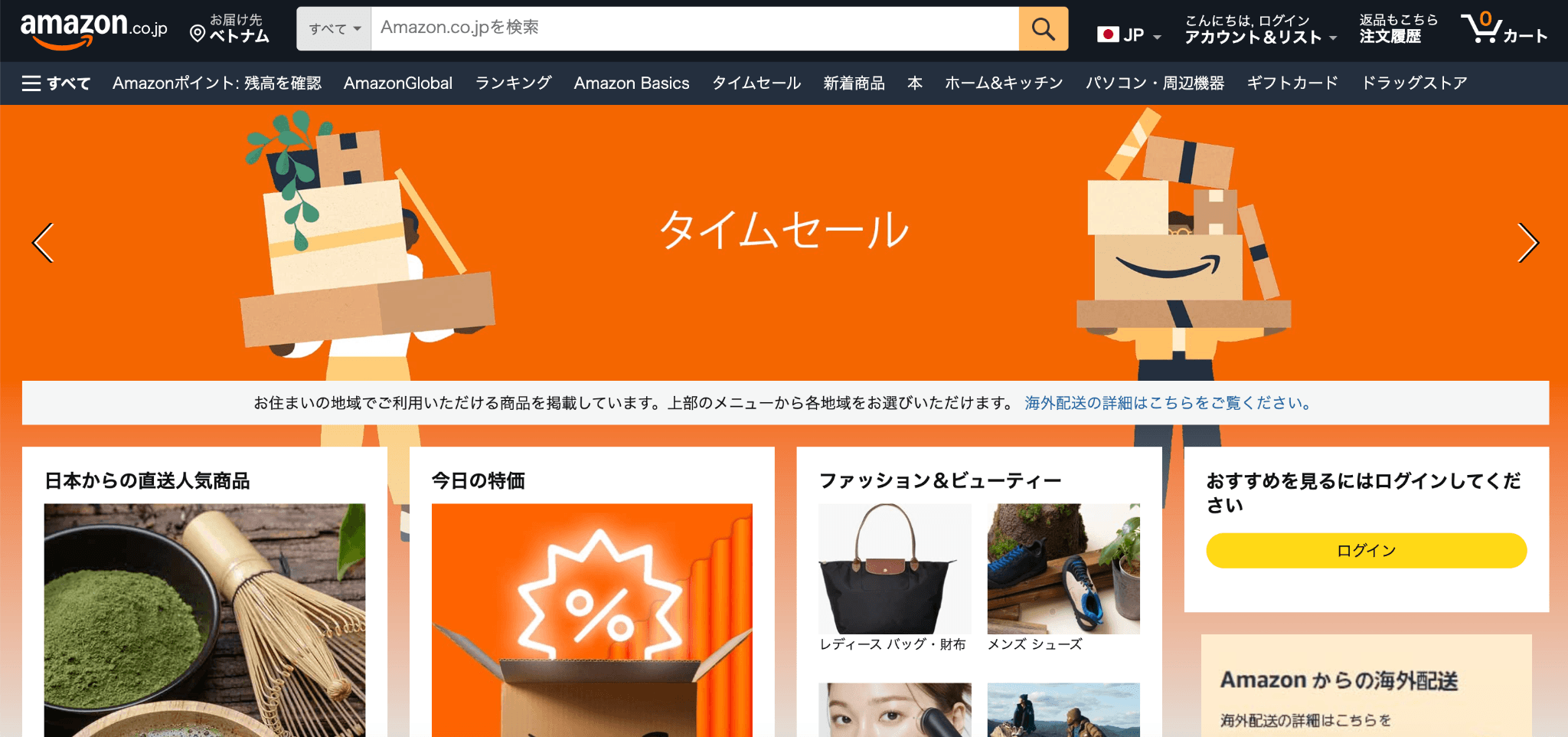
Amazon Japan offers a familiar shopping experience for anyone who has used Amazon before, but with access to Japan-exclusive products and local inventory. It’s one of the easiest platforms to navigate, especially for international users.
One of its biggest advantages is speed. With a well-developed logistics network, many items are processed and shipped quickly within Japan. Some products are also available for international delivery, making it more accessible than many local platforms.
If you’re looking for convenience, fast checkout, and a broad selection of products, Amazon Japan is one of the most straightforward ways to shop from Japan.
Key features:
User-friendly interface similar to global Amazon platforms
Fast order processing and reliable delivery within Japan
Wide selection of products, including Japan-exclusive items
Some listings available for international shipping
Easy checkout and familiar payment experience
4. JDirectItems Shopping: Competitive Prices & Daily Deals
JDirectItems Shopping, powered by Yahoo Shopping in Japan, is one of the most widely used Japanese e-commerce sites, offering a broad range of products from different sellers across the country. It works in a similar way to Rakuten, where multiple stores compete on price for the same item.
Because of this, it’s often a good place to find better deals, especially if you’re willing to compare listings. Many sellers run frequent promotions, which makes it easier to spot discounts on everyday products.
For shoppers who prioritize pricing and variety, Yahoo Shopping is a strong option when browsing Japan’s online marketplace.
Key features:
Multiple sellers offering competitive pricing on the same products
Frequent discounts, deals, and promotional campaigns
Wide selection across everyday categories
Strong marketplace presence with many local retailers
Good option for price comparison shopping
5. Mercari: Second-Hand Deals & Trending Finds
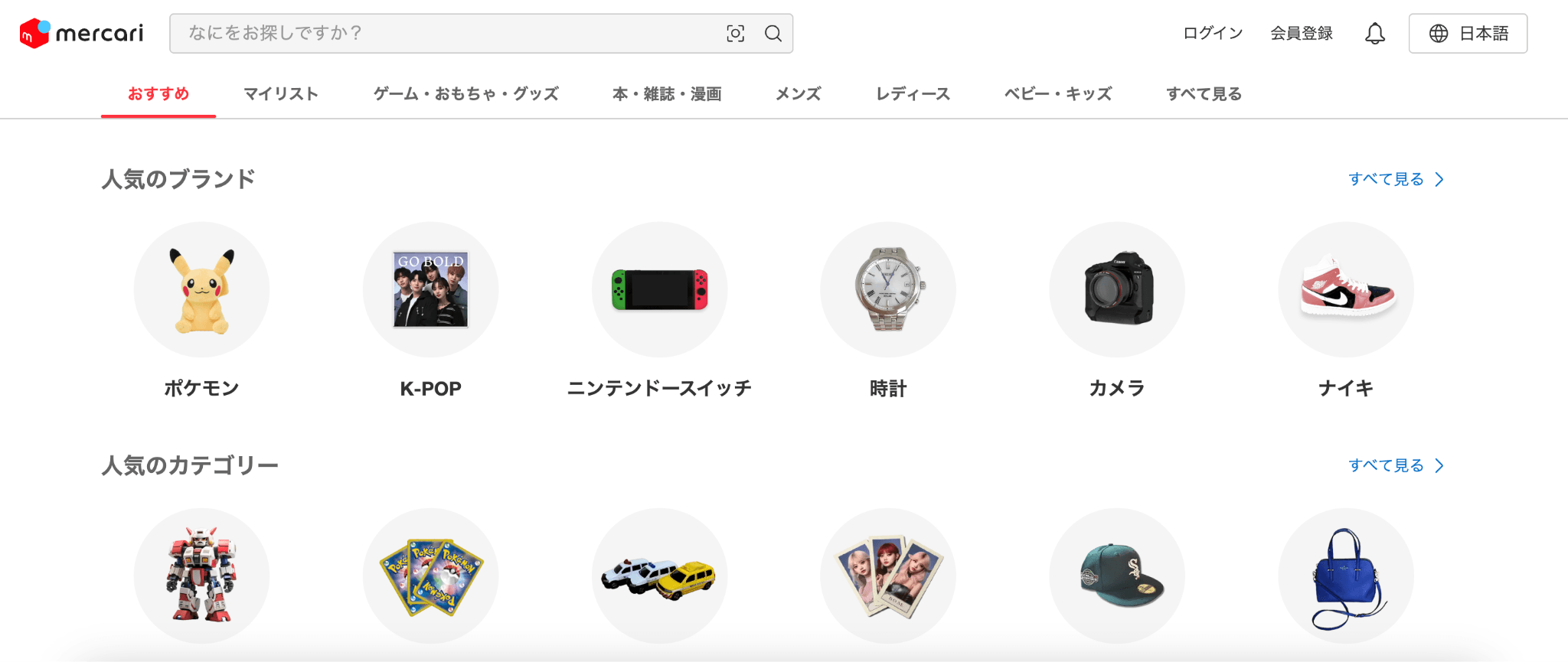
Mercari is one of the most popular resale platforms in Japan, where individuals buy and sell items directly with each other. It’s known for its fast-moving listings and the chance to find products at much lower prices compared to retail platforms.
Unlike traditional e-commerce sites, Mercari focuses heavily on second-hand goods. Many items are still in excellent condition, and new listings appear constantly, which makes it ideal for deal hunting.
If you’re looking for lower prices, unique finds, or trending items that sell quickly, Mercari is one of the most active platforms in Japan’s resale market.
Key features:
Large peer-to-peer marketplace for second-hand products
Lower prices compared to traditional retail platforms
Frequent new listings with fast turnover
Strong presence in fashion, collectibles, and electronics
Ideal for finding trending or hard-to-find items
Ability to negotiate prices directly with sellers
6. Rakuma: Affordable Listings from Local Sellers
Rakuma is another popular resale platform in Japan, often compared to Mercari but with a slightly different dynamic. While both platforms focus on peer-to-peer selling, Rakuma tends to have lower competition among buyers, which can make it easier to find better deals.
One reason for this is its pricing environment. Sellers on Rakuma are often more flexible, and listing prices can be noticeably lower compared to similar items on other resale platforms. This makes it a strong option if you are focused on saving money rather than chasing high-demand items.
At the same time, Rakuma still offers a wide variety of products, from fashion and accessories to electronics and hobby goods. Listings may move slower than on faster-paced platforms, which gives buyers more time to browse, compare, and make decisions.
For shoppers who prefer a more relaxed buying experience with a higher chance of finding affordable options, Rakuma is a practical choice within Japan’s resale market.
Key features:
Peer-to-peer marketplace with competitive pricing from individual sellers
Lower competition compared to other resale platforms
Wide range of second-hand products across multiple categories
Slower listing turnover, allowing more time to evaluate purchases
Strong option for budget-conscious buyers
7. JDirectItems Auction: Rare Items & Collector Bidding
JDirectItems Auction is powered by Yahoo Auctions Japan, one of the most established auction platforms in the country. It is widely used by collectors and long-time shoppers looking for items that are no longer available through regular retail channels.
Instead of fixed prices, listings are often sold through bidding. This creates a different kind of buying experience, where timing and strategy can influence the final price. In some cases, you can secure a good deal if there is less competition, while highly sought-after items may attract more aggressive bidding.
The platform is especially strong in categories such as vintage goods, discontinued products, and niche collectibles. It’s common to find items that are difficult to locate on standard marketplaces, including limited releases, older electronics, and specialty hobby products.
For buyers who are comfortable with auctions and willing to monitor listings, Yahoo Auctions offers access to a unique inventory that is rarely available elsewhere.
Key features:
Large auction-based marketplace with constantly changing listings
Strong focus on rare, discontinued, and collectible items
Opportunity to get competitive prices depending on bidding activity
Wide variety of niche categories, including vintage and hobby goods
Ideal for experienced shoppers who want access to unique inventory
8. JDirectItems Fleamarket: Aggregated Deals Across Japan
JDirectItems Fleamarket gives you access to listings from multiple Japanese flea market platforms in one place. Instead of browsing local apps that are limited to domestic users, you can explore second-hand products from Japan through a single interface.
Many of these listings come from platforms that are normally not accessible to international buyers. This includes casual marketplaces where individuals sell everyday items, often at lower prices compared to traditional resale sites.
Because the inventory comes from different sources, you can find a wide range of products, from clothing and accessories to household goods and niche items. Listings are updated frequently, which creates more opportunities to spot good deals.
For buyers outside Japan, this provides a more practical way to access the country’s flea market ecosystem without dealing with local restrictions.
Key features:
Access listings from Japanese flea market platforms
Browse second-hand items from multiple sources in one place
Frequent updates with constantly changing inventory
Wide range of everyday and niche products
More accessible option for international buyers
9. ZozoTown: Japanese Fashion & Trendy Brands
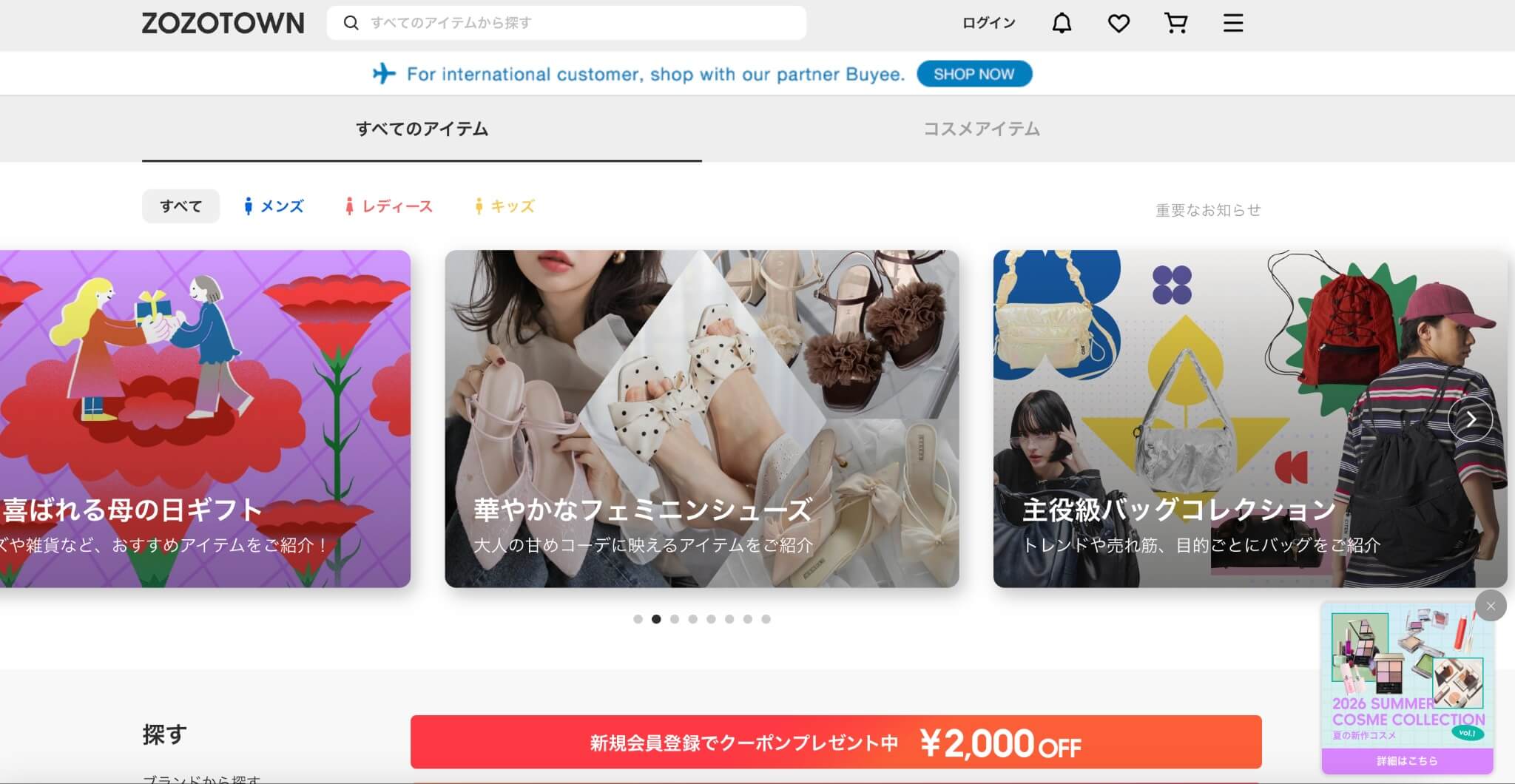
ZozoTown is one of Japan’s leading online fashion platforms, focused on clothing, footwear, and accessories from both local and international brands. It’s widely used by shoppers who follow Japanese streetwear and seasonal fashion trends.
Unlike general marketplaces, ZozoTown is more curated. The platform brings together a large number of fashion labels in one place, making it easier to browse by style, brand, or category. This gives it a more organized shopping experience compared to broader e-commerce sites.
It’s also known for offering early access to new collections and exclusive items from Japanese brands. For anyone interested in local fashion trends or looking to explore Japan’s clothing scene, ZozoTown provides a direct view into what’s popular in the market.
For shoppers focused on apparel and style, ZozoTown stands out as a specialized platform that goes deeper into fashion than most general e-commerce sites.
Key features:
Dedicated fashion platform with a wide range of brands
Strong focus on Japanese streetwear and seasonal trends
Curated browsing experience by category and style
Access to new releases and brand-specific collections
Ideal for clothing, footwear, and accessories
10. Surugaya: Anime, Games & Collectibles Store
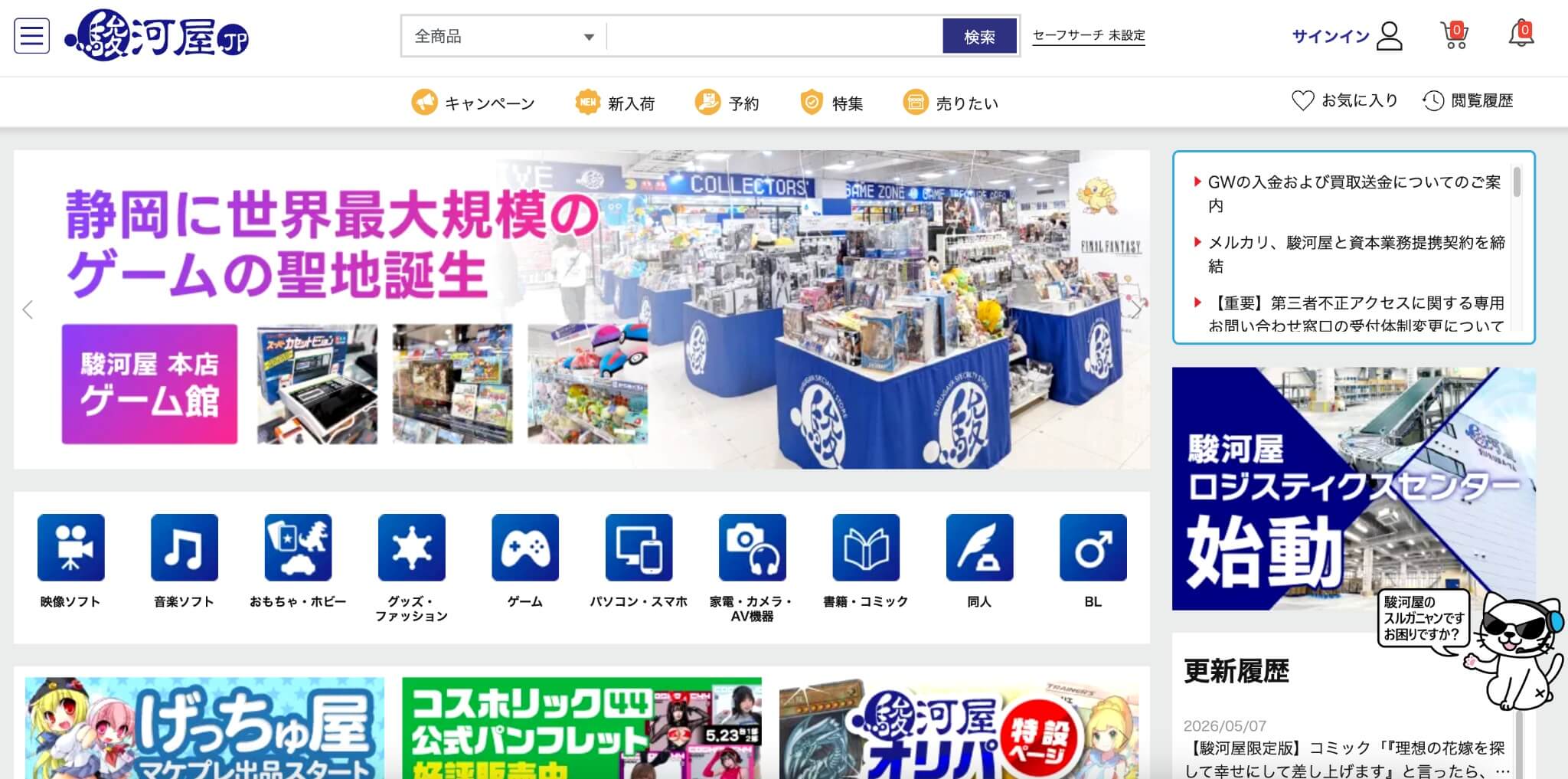
Surugaya is a well-known Japanese retailer that specializes in anime merchandise, video games, and collectible items. It has built a strong reputation among hobbyists and collectors for offering both new and second-hand products across niche categories.
The platform is particularly strong in areas such as figures, trading cards, manga, and game-related goods. Many items are part of limited runs or older releases, which makes Surugaya a useful place to check when something is no longer available through mainstream retailers.
One of its advantages is the range of inventory. You can find both current products and older items that are difficult to track down elsewhere. Listings often include detailed information about condition, which is important when purchasing second-hand collectibles.
For buyers who are interested in anime culture, gaming, or hobby-related items, Surugaya offers access to a focused selection that goes beyond what typical e-commerce platforms provide.
Key features:
Specialized in anime, gaming, and collectible products
Offers both new and second-hand items
Strong inventory of rare and discontinued goods
Detailed condition information for used items
Ideal for collectors and niche hobby categories
Common Challenges When Using a Japanese E-commerce Site
Shopping on a Japanese e-commerce site can feel straightforward at first, but the process often becomes more complicated once you try to complete a purchase, especially if you’re outside Japan.
Language Barriers
Most Japanese e-commerce sites are designed for local users, so the interface, product descriptions, and checkout process are usually written entirely in Japanese. While browser translation can help with basic navigation, it often struggles with product details, sizing, and condition descriptions. This can make it harder to understand exactly what you’re buying.
Payment Restrictions
Many sellers and platforms only accept payment methods issued in Japan. International credit cards may not always work, and some sites require local payment options such as convenience store payments or domestic bank transfers. This creates an extra barrier even if you’ve already found the product you want.
Shipping Limitations
A large number of Japanese sellers only ship within Japan. Even major platforms do not guarantee international delivery for every product. As a result, buyers outside Japan often cannot complete the purchase or need to find another way to receive their items.
How to Access Japanese E-commerce Sites Without Barriers
After going through the common challenges, one thing becomes clear. The difficulty isn’t finding products on a Japanese e-commerce site. The real issue starts when you try to move forward with the purchase.
You might translate a page and understand the item, but then run into payment issues. Or you find a great deal, only to realize the seller does not ship outside Japan. Step by step, the process breaks, and each platform creates a new obstacle.
Because of this, accessing Japanese e-commerce sites effectively is not about using them one by one. It’s about having a way to connect them into a single, workable flow.
Janbox works as a unified Japanese e-commerce platform where you can directly browse and purchase a wide range of products in one place. Instead of relying on multiple websites with different rules, you can explore items across categories, compare options, and complete your order within a single system.
In cases where products come from external marketplaces, the platform also supports the process so you can still complete your purchase without dealing with separate accounts, payment methods, or shipping limitations.
This makes the overall experience more consistent. You’re not switching between platforms or figuring out different processes for each order. Everything is handled in one flow, which makes it easier to move from finding a product to actually receiving it.
At the same time, the platform is built with international users in mind. That includes access to:
100% Made in Japan products across different categories
10,000+ Japanese sellers, giving you a wider range of options
Competitive pricing across multiple marketplaces
Faster and more reliable delivery options
Worldwide shipping support without dealing with individual seller restrictions
When everything is connected in one place, the process changes. Instead of figuring out how to complete a purchase on each site, you can focus on comparing products and choosing the best option.
For international buyers, that shift is what makes Japanese e-commerce sites much easier to access and use.
Conclusion
Shopping from a Japanese e-commerce site gives you access to a wide range of products that are often difficult to find elsewhere, from everyday items to second-hand deals and rare collectibles. Each platform serves a different purpose, so the best choice depends on what you are looking for and how you plan to shop.
For international buyers, the main challenge usually comes down to access rather than product selection. Language, payment, and shipping can quickly turn a simple purchase into a complicated process if you rely on individual platforms.
Hopefully, after reading this guide, you have a clearer idea of where to shop, what each platform offers, and how to choose the right option based on your needs.
FAQS
Can I use a Japanese e-commerce site if I live outside Japan?
Yes, but it depends on the platform. Some Japanese e-commerce sites offer limited international shipping, while many others are designed only for domestic users. Even when international delivery is available, payment methods and account requirements can still create issues.
This is why many international buyers use platforms that help them access multiple Japanese e-commerce sites without dealing with these restrictions individually.
What is the easiest way to shop from Japanese websites internationally?
The easiest way is to use a platform that allows you to browse, purchase, and ship products from Japan in one place. Instead of navigating different websites with different rules, you can manage everything in a single flow.
This reduces the need to deal with language barriers, unsupported payment methods, and sellers who do not ship internationally.
Which Japanese e-commerce site is best for second-hand items?
Resale platforms are usually the best option for second-hand shopping. These sites focus on peer-to-peer transactions, where individuals list items that are often in very good condition.
They are especially popular for categories like fashion, electronics, and collectibles, where you can find lower prices compared to retail platforms.
Do I need a proxy service to buy from Japan?
In many cases, yes. If a seller does not support international shipping or payment, you will need an alternative way to complete the purchase.
Using a platform that connects multiple Japanese e-commerce sites and handles checkout and shipping can make the process much easier, especially if you plan to shop across different marketplaces.
Can I buy from multiple Japanese e-commerce sites in one order?
Normally, no. Each platform operates independently, which means you would need separate accounts, payments, and shipments.
However, some solutions allow you to combine orders from different marketplaces and ship them together. This helps reduce shipping costs and makes the process more efficient.
Table of Contents
- What Is a Japanese e-commerce site?
- Why Shop from a Japanese e-commerce site?
- Top 10 Japanese e-commerce site platforms to Shop from Japan
- 1. Janbox: All-in-One Japanese E-commerce Platform for Global Buyers
- 2. Rakuten: Official Stores & Authentic Brands
- 3. Amazon Japan: Fast Shipping & Wide Selection
- 4. JDirectItems Shopping: Competitive Prices & Daily Deals
- 5. Mercari: Second-Hand Deals & Trending Finds
- 6. Rakuma: Affordable Listings from Local Sellers
- 7. JDirectItems Auction: Rare Items & Collector Bidding
- 8. JDirectItems Fleamarket: Aggregated Deals Across Japan
- 9. ZozoTown: Japanese Fashion & Trendy Brands
- 10. Surugaya: Anime, Games & Collectibles Store
- Common Challenges When Using a Japanese E-commerce Site
- How to Access Japanese E-commerce Sites Without Barriers
- Conclusion
- FAQS
- Can I use a Japanese e-commerce site if I live outside Japan?
- What is the easiest way to shop from Japanese websites internationally?
- Which Japanese e-commerce site is best for second-hand items?
- Do I need a proxy service to buy from Japan?
- Can I buy from multiple Japanese e-commerce sites in one order?